• Fri frakt över 249 kr
  • •
  • Snabba leveranser
  • •
  • Billiga böcker
Kundservice

Du är på sajten för privatpersoner.

Företag, bibliotek eller offentlig verksamhet?

Du handlar på classic.bokus.com, där alla dina funktioner finns intakta.
Till classic.bokus.com
Bokus logotyp. Gå till startsidan.
  • Erbjudanden
  • Nyheter
  • Student
  • Topplistor
  • Barn & ungdom
  • Bokus Play
  • E-böcker
  • Pocketböcker
  • Spel & pussel

10% studentrabatt med kod TERM26

Sidfot

Mina sidor

    Hjälp

    • Kundservice
    • Vanliga frågor och svar
    • Frakt och leverans
    • Retur vid ångerrätt
    • Reklamera vara
    • Betalning
    • Köpvillkor
    • Allmänna villkor
    • Information om webbplatsens tillgänglighet

    Om Bokus

    • Om oss
    • Pressrum
    • För studenter
    • För företag
    • För bibliotek och offentlig verksamhet
    • För leverantörer
    • Hållbarhet

    Populärt

    • Aktuella erbjudanden
    • Presentkort
    • Studentlitteratur
    • Nya böcker
    • Topplistor
    • Signerade böcker
    • Engelska böcker

    Inspiration

    • Boktips
    • BookTok
    • Populära bokserier
    • Barnbokskaraktärer
    • Populära författare
    Logotyp för Bokus
    Följ oss på Facebook (extern länk)Följ oss på Instagram (extern länk)Följ oss på YouTube (extern länk)Följ oss på TikTok (extern länk)
    bokus @ CookiesAnpassa cookiesIntegritetspolicyKöpvillkor
    Till Citymail hemsida (extern länk)Till Budbee hemsida (extern länk)Till Postnord hemsida (extern länk)Till Schenker hemsida (extern länk)Till Early Bird hemsida (extern länk)Till Walleys hemsida (extern länk)
    1. Kultur
    2. Musikböcker

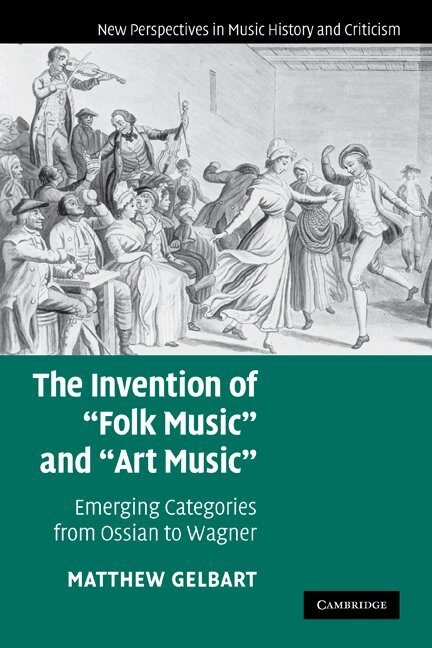
    The Invention of 'Folk Music' and 'Art Music'

    Emerging Categories from Ossian to Wagner

    AvMatthew Gelbart

    Inbunden, Engelska, 2007

    Del 16 i serien New Perspectives in Music History and Criticism

    1 375 kr

    Beställningsvara. Skickas inom 10-15 vardagar. Fri frakt över 249 kr.

    Fler format och utgåvor

    Häftad

    532 kr

    Beskrivning

    We tend to take for granted the labels we put to different forms of music. This study considers the origins and implications of the way in which we categorize music. Whereas earlier ways of classifying music were based on its different functions, for the past two hundred years we have been obsessed with creativity and musical origins, and classify music along these lines. Matthew Gelbart argues that folk music and art music became meaningful concepts only in the late eighteenth and early nineteenth centuries, and only in relation to each other. He examines how cultural nationalism served as the earliest impetus in classifying music by origins, and how the notions of folk music and art music followed - in conjunction with changing conceptions of nature, and changing ideas about human creativity. Through tracing the history of these musical categories, the book confronts our assumptions about different kinds of music.

    Produktinformation

    • Utgivningsdatum:2007-10-11
    • Mått:156 x 234 x 17 mm
    • Vikt:600 g
    • Format:Inbunden
    • Språk:Engelska
    • Serie:New Perspectives in Music History and Criticism
    • Antal sidor:300
    • Förlag:Cambridge University Press
    • ISBN:9780521863032

    Utforska kategorier

    • Musikböcker inom Kultur

    Mer om författaren

    Matthew Gelbart teaches in Boston College Music Department.

    Recensioner i media

    Review of the hardback: 'The Invention of 'Folk Music' and 'Art Music' is an important work with a wealth of interesting things to say to students of the Enlightenment and the Romantic Revival. It represents a major contribution to the field.' William Donaldson, author of The Highland Pipe and Scottish Society, 1750–1950, Eighteenth-Century Scotland

    Innehållsförteckning

    • Introduction; 1. Function to origin: national identity and national genius emerge, c.1700–80; 2. From pastoral to picturesque: nature, art, and genre in the later eighteenth century; 3. Genius versus Art in the creative process: 'national' and 'cultivated' music as categories, 1760–1800; 4. The invention of folk modality, 1775–1840; 5. 'Folk' and 'tradition': authenticity as musical idiom from the late eighteenth century onward; 6. Organic 'art music' and individual original genius: aestheticizing the folk collective; 7. Local nation and universal folk: the legacy of geography in musical categories; 8. Folk and art music in the modern western world.