• Fri frakt över 249 kr
  • •
  • Snabba leveranser
  • •
  • Billiga böcker
Kundservice

Du är på sajten för privatpersoner.

Företag, bibliotek eller offentlig verksamhet?

Du handlar på classic.bokus.com, där alla dina funktioner finns intakta.
Till classic.bokus.com
Bokus logotyp. Gå till startsidan.
  • Erbjudanden
  • Nyheter
  • Student
  • Topplistor
  • Barn & ungdom
  • Bokus Play
  • E-böcker
  • Pocketböcker
  • Spel & pussel

10% rabatt på allt med kod NYSTART10 →

Sidfot

Mina sidor

    Hjälp

    • Kundservice
    • Vanliga frågor och svar
    • Frakt och leverans
    • Retur vid ångerrätt
    • Reklamera vara
    • Betalning
    • Köpvillkor
    • Allmänna villkor
    • Information om webbplatsens tillgänglighet

    Om Bokus

    • Om oss
    • Pressrum
    • För studenter
    • För företag
    • För bibliotek och offentlig verksamhet
    • För leverantörer
    • Hållbarhet

    Populärt

    • Aktuella erbjudanden
    • Presentkort
    • Studentlitteratur
    • Nya böcker
    • Topplistor
    • Signerade böcker
    • Engelska böcker

    Inspiration

    • Boktips
    • BookTok
    • Populära bokserier
    • Barnbokskaraktärer
    • Populära författare
    Logotyp för Bokus
    Följ oss på Facebook (extern länk)Följ oss på Instagram (extern länk)Följ oss på YouTube (extern länk)Följ oss på TikTok (extern länk)
    bokus @ CookiesAnpassa cookiesIntegritetspolicyKöpvillkor
    Till Citymail hemsida (extern länk)Till Budbee hemsida (extern länk)Till Postnord hemsida (extern länk)Till Schenker hemsida (extern länk)Till Early Bird hemsida (extern länk)Till Walleys hemsida (extern länk)
    1. Historia och arkeologi
    2. Historia
    3. Asiens historia

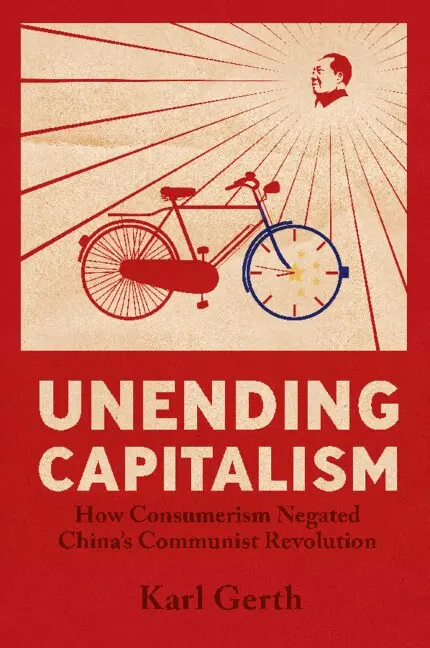
    Unending Capitalism

    How Consumerism Negated China's Communist Revolution

    AvKarl Gerth

    Inbunden, Engelska, 2020

    1 278 kr

    Beställningsvara. Skickas inom 10-15 vardagar. Fri frakt över 249 kr.

    Fler format och utgåvor

    Häftad

    324 kr

    E-bok

    390 kr

    E-bok

    390 kr

    Inbunden

    584 kr

    Häftad

    349 kr

    Beskrivning

    What forces shaped the twentieth-century world? Capitalism and communism are usually seen as engaged in a fight-to-the-death during the Cold War. With the establishment of the People's Republic of China in 1949, the Chinese Communist Party aimed to end capitalism. Karl Gerth argues that despite the socialist rhetoric of class warfare and egalitarianism, Communist Party policies actually developed a variety of capitalism and expanded consumerism. This negated the goals of the Communist Revolution across the Mao era (1949-1976) down to the present. Through topics related to state attempts to manage what people began to desire - wristwatches and bicycles, films and fashion, leisure travel and Mao badges - Gerth challenges fundamental assumptions about capitalism, communism, and countries conventionally labeled as socialist. In so doing, his provocative history of China suggests how larger forces related to the desire for mass-produced consumer goods reshaped the twentieth-century world and remade people's lives.

    Produktinformation

    • Utgivningsdatum:2020-05-14
    • Mått:157 x 235 x 26 mm
    • Vikt:680 g
    • Format:Inbunden
    • Språk:Engelska
    • Antal sidor:394
    • Förlag:Cambridge University Press
    • ISBN:9780521868464

    Utforska kategorier

    • Asiens historia inom Historia och arkeologi

    Mer om författaren

    Karl Gerth is Professor of History at the University of California, San Diego, where he holds the Hwei-Chih and Julia Hsiu Chair in Chinese Studies. His earlier books are As China Goes, So Goes the World (2010) and China Made: Consumer Culture and the Creation of the Nation (2003).

    Recensioner i media

    'A brilliantly researched and analysed account of consumerism during the Mao era. It richly documents the survival of consumer impulses and behaviour amid the puritanical ideology of the early People's Republic. This is a crucial book for understanding the social, economic and political history of the Mao era, and the tensions and tragedies resulting from the Communist Party's state capitalism.' Julia Lovell, author of Maoism: A Global History

    Innehållsförteckning

    • Introduction: consumerism and capitalism; 1. Self-expanding and compulsory consumerism; 2. Building state capitalism across 1949; 3. Soviet influences on state consumerism; 4. State consumerism in advertising, posters, and films; 5. State consumerism in the service sector; 6. Consumerism in the cultural revolution; 7. The Mao badge phenomenon as consumer fad; Afterword; Bibliography; Index.