• Fri frakt över 249 kr
  • •
  • Snabba leveranser
  • •
  • Billiga böcker
Kundservice

Du är på sajten för privatpersoner.

Företag, bibliotek eller offentlig verksamhet?

Du handlar på classic.bokus.com, där alla dina funktioner finns intakta.
Till classic.bokus.com
Bokus logotyp. Gå till startsidan.
  • Erbjudanden
  • Nyheter
  • Student
  • Topplistor
  • Barn & ungdom
  • Bokus Play
  • E-böcker
  • Pocketböcker
  • Spel & pussel

10% rabatt på allt med kod: NYSTART10 →

Sidfot

Mina sidor

    Hjälp

    • Kundservice
    • Vanliga frågor och svar
    • Frakt och leverans
    • Retur vid ångerrätt
    • Reklamera vara
    • Betalning
    • Köpvillkor
    • Allmänna villkor
    • Information om webbplatsens tillgänglighet

    Om Bokus

    • Om oss
    • Pressrum
    • För studenter
    • För företag
    • För bibliotek och offentlig verksamhet
    • För leverantörer
    • Hållbarhet

    Populärt

    • Aktuella erbjudanden
    • Presentkort
    • Studentlitteratur
    • Nya böcker
    • Topplistor
    • Signerade böcker
    • Engelska böcker

    Inspiration

    • Boktips
    • BookTok
    • Populära bokserier
    • Barnbokskaraktärer
    • Populära författare
    Logotyp för Bokus
    Följ oss på Facebook (extern länk)Följ oss på Instagram (extern länk)Följ oss på YouTube (extern länk)Följ oss på TikTok (extern länk)
    bokus @ CookiesAnpassa cookiesIntegritetspolicyKöpvillkor
    Till Citymail hemsida (extern länk)Till Budbee hemsida (extern länk)Till Postnord hemsida (extern länk)Till Schenker hemsida (extern länk)Till Early Bird hemsida (extern länk)Till Walleys hemsida (extern länk)
    1. Samhälle och politik
    2. Sociologi och antropologi

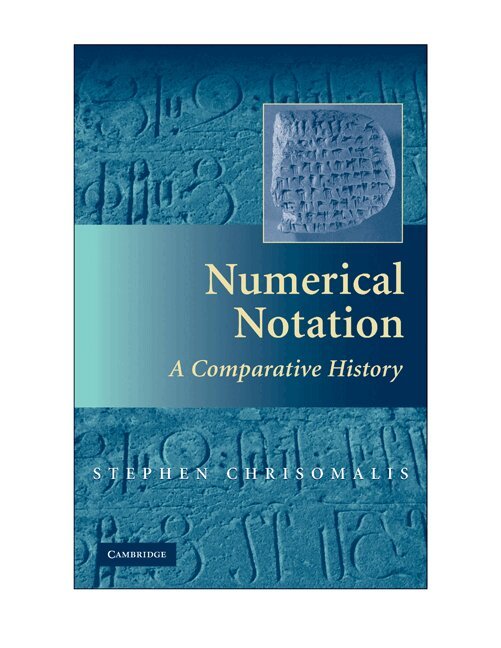
    Numerical Notation

    A Comparative History

    AvStephen Chrisomalis

    Inbunden, Engelska, 2010

    1 764 kr

    Beställningsvara. Skickas inom 10-15 vardagar. Fri frakt över 249 kr.

    Beskrivning

    This book is a cross-cultural reference volume of all attested numerical notation systems (graphic, non-phonetic systems for representing numbers), encompassing more than 100 such systems used over the past 5,500 years. Using a typology that defies progressive, unilinear evolutionary models of change, Stephen Chrisomalis identifies five basic types of numerical notation systems, using a cultural phylogenetic framework to show relationships between systems and to create a general theory of change in numerical systems. Numerical notation systems are primarily representational systems, not computational technologies. Cognitive factors that help explain how numerical systems change relate to general principles, such as conciseness or avoidance of ambiguity, which apply also to writing systems. The transformation and replacement of numerical notation systems relates to specific social, economic, and technological changes, such as the development of the printing press or the expansion of the global world-system.

    Produktinformation

    • Utgivningsdatum:2010-01-18
    • Mått:161 x 236 x 35 mm
    • Vikt:790 g
    • Format:Inbunden
    • Språk:Engelska
    • Antal sidor:496
    • Förlag:Cambridge University Press
    • ISBN:9780521878180

    Utforska kategorier

    • Sociologi och antropologi inom Samhälle och politik

    Mer om författaren

    Stephen Chrisomalis is currently an assistant professor of anthropology at Wayne State University in Detroit, Michigan. He completed his PhD at McGill University in Montreal, Quebec, where he studied under the late Bruce Trigger. His doctoral dissertation (on which this book is founded) was awarded the Prix de l'ADESAQ for the top 2003 dissertation in any arts, social sciences, or fine arts discipline in the province of Quebec. His work has appeared in journals including Antiquity, Cambridge Archaeological Journal, and Cross-Cultural Research. He is the editor of the Stop: Toutes Directions project and the author of the academic weblog Glossographia.

    Recensioner i media

    'Stephen Chrisomalis's Numerical Notation is an extraordinary book, comprehensively assembling information about a central human mode of notation, which is more widespread than writing systems and yet has never been fully explored. The author, who writes in an exceptionally lucid style, also offers cogent interpretations of the patterns that he identifies.' John Baines, University of Oxford

    Innehållsförteckning

    • 1. Introduction; 2. Hieroglyphic systems; 3. Levantine systems; 4. Italic systems; 5. Alphabetic systems; 6. South Asian systems; 7. Mesopotamian systems; 8. East Asian systems; 9. Mesoamerican systems; 10. Miscellaneous systems; 11. Cognitive and structural analysis; 12. Social and historical analysis; 13. Conclusion.