• Fri frakt över 249 kr
  • •
  • Snabba leveranser
  • •
  • Billiga böcker
Kundservice

Du är på sajten för privatpersoner.

Företag, bibliotek eller offentlig verksamhet?

Du handlar på classic.bokus.com, där alla dina funktioner finns intakta.
Till classic.bokus.com
Bokus logotyp. Gå till startsidan.
  • Erbjudanden
  • Nyheter
  • Student
  • Topplistor
  • Barn & ungdom
  • Bokus Play
  • E-böcker
  • Pocketböcker
  • Spel & pussel

10% rabatt på allt med kod NYSTART10 →

Sidfot

Mina sidor

    Hjälp

    • Kundservice
    • Vanliga frågor och svar
    • Frakt och leverans
    • Retur vid ångerrätt
    • Reklamera vara
    • Betalning
    • Köpvillkor
    • Allmänna villkor
    • Information om webbplatsens tillgänglighet

    Om Bokus

    • Om oss
    • Pressrum
    • För studenter
    • För företag
    • För bibliotek och offentlig verksamhet
    • För leverantörer
    • Hållbarhet

    Populärt

    • Aktuella erbjudanden
    • Presentkort
    • Studentlitteratur
    • Nya böcker
    • Topplistor
    • Signerade böcker
    • Engelska böcker

    Inspiration

    • Boktips
    • BookTok
    • Populära bokserier
    • Barnbokskaraktärer
    • Populära författare
    Logotyp för Bokus
    Följ oss på Facebook (extern länk)Följ oss på Instagram (extern länk)Följ oss på YouTube (extern länk)Följ oss på TikTok (extern länk)
    bokus @ CookiesAnpassa cookiesIntegritetspolicyKöpvillkor
    Till Citymail hemsida (extern länk)Till Budbee hemsida (extern länk)Till Postnord hemsida (extern länk)Till Schenker hemsida (extern länk)Till Early Bird hemsida (extern länk)Till Walleys hemsida (extern länk)
    1. Data och IT
    2. Nätverk och kommunikation

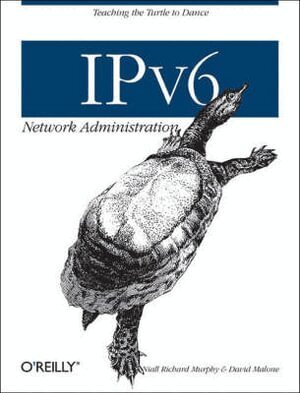
    IPv6 Network Administration

    AvNiall Richard Murphy

    Häftad, Engelska, 2005

    Del i serien O'Reilly Ser.

    373 kr

    Beställningsvara. Skickas inom 5-8 vardagar. Fri frakt över 249 kr.

    Beskrivning

    What once seemed nearly impossible has turned into reality. The number of available Internet addresses is now nearly exhausted, due mostly to the explosion of commercial websites and entries from an expanding number of countries. This growing shortage has effectively put the Internet community--and some of its most brilliant engineers--on alert for the last decade. Their solution was to create IPv6, a new Internet standard which will ultimately replace the current and antiquated IPv4. As the new backbone of the Internet, this new protocol would fix the most difficult problems that the Internet faces today--scalability and management. And even though IPv6's implementation has met with some resistance over the past few years, all signs are now pointing to its gradual worldwide adoption in the very near future. Sooner or later, all network administrators will need to understand IPv6, and now is a good time to get started. IPv6 Network Administration offers administrators the complete inside info on IPv6. This book reveals the many benefits as well as the potential downsides of this next-generation protocol.It also shows readers exactly how to set up and administer an IPv6 network. A must-have for network administrators everywhere, IPv6 Network Administration delivers an even-handed approach to what will be the most fundamental change to the Internet since its inception. Some of the other IPv6 assets that are covered include: * routing * integrated auto-configuration * quality-of-services (QoS) * enhanced mobility * end-to-end securityIPv6 Network Administration explains what works, what doesn't, and most of all, what's practical when considering upgrading networks from the current protocol to IPv6.

    Produktinformation

    • Utgivningsdatum:2005-04-05
    • Mått:180 x 235 x 23 mm
    • Vikt:500 g
    • Format:Häftad
    • Språk:Engelska
    • Serie:O'Reilly Ser.
    • Antal sidor:275
    • Förlag:O'Reilly Media
    • ISBN:9780596009342

    Utforska kategorier

    • Nätverk och kommunikation inom Data och IT

    Mer om författaren

    Niall Murphy has worked in the I.T. and Internet industries since 1995. His initial exposure to computers came with an Amstrad CPC 464 in the early 1980s, from which he never recovered. In college, Niall founded the UCD Internet Society which, at its height, gave Internet access to over two and a half thousand students who would not otherwise have had it. He also played way too much chess. During the process of obtaining a degree in Computer Science and Mathematics, he held down a variety of programming, system and network administration and security-related jobs. After college, he went on to found his own consulting company, and participate in the start-up phase of a large number of companies and projects including Club Internet, Digifone On-Line, and Hutchison 3G. He used to run the root nameservers for Ireland, and is proud of having started five RIPE LIRs. He has experience in networking of almost every kind (with the grateful exception of X.25) UNIX and Windows system administration, C systems programming, Perl, PHP, database creation and management, and Internet/IP services of all kinds, with specialities in database-backed web applications, wireless networking and next-generation networking. As per the old adage, he thinks UNIX is the worst operating system there is, apart from all the others. He is a published poet, RFC co-author and O' Reilly co-author who does landscape photography for fun; you can see some of his work at South Bull Photography. David Malone is a mathematician-cum-sysadmin. He is a researcher in the Hamilton Institute in Maynooth, Ireland, working on mathematical models of communications networks. Since 1994, he's also been a member of the sysadmin team of the School of Mathematics located in Trinity College Dublin, Ireland. There he helps to maintain a Unix-like service provided by FreeBSD and Linux machines. Naturally, they all speak IPv6.

    Innehållsförteckning

    • Foreword Preface Part I. The Character of IPv6 1. The Unforeseen Limitations of IPv4 Addressing Model NAT Security MAC Layer Address Resolution Broadcast Versus Multicast Quality of Service Routing Summary 2. The (Un)foreseen Successes of IPv4 Simplicity Resiliency Scalability Flexibility Autoconfiguration Extensibility In Short- 3. Describing IPv6 Designed for Today and Tomorrow Packets and Structures Address Architecture ICMPv6 Address Selection More About Headers Introduction to Mobile IPv6 Routing Security Quality of Service The Promise of IPv6 Part II. Deploying IPv6 4. Planning Transition Mechanisms Obtaining IPv6 Address Space and Connectivity Network Design Managing IPv4 and IPv6 Coexistence Deploying IPv6 Inputs to Deployment Plans Worked Examples Summary 5. Installation and Configuration Workstations and Servers Routers Enabling, Testing, and Troubleshooting Static Routing Configuring Transition Mechanisms Applications Gotchas Summary 6. Operations DNS IPsec Routing Firewalls Management Providing Transition Mechanisms Summary 7. Services General Notes Inetd/TCP Wrappers HTTP SMTP POP/IMAP NNTP NTP Syslog Printing FTP Remote Login Services If All Else Fails- Summary 8. Programming Relevant Functions Some Simple Examples Case Study: MMDF Other Considerations for Developers Summary 9. The Future Unresolved Issues Up and Coming Subject Areas Summary Glossary Index