E-bok, Engelska, 2006
What Are Syndication Feeds
87 kr
Läs direkt i Bokus Reader – eller ladda ned till din enhet (PDF kräver ofta zoom och scroll på små skärmar).
Beskrivning
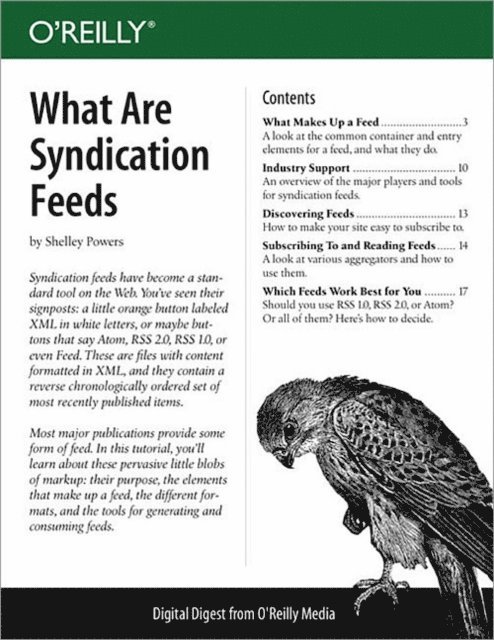
When you enter the world of syndicated content, you''re often faced with the question of what is the "proper" way to do syndication. While syndication feeds have become a standard tool on the Web--you''ve seen their signposts: a little orange button labeled XML in white letters, or maybe buttons that say Atom, RSS 2.0, RSS 1.0, or even Feed--it is important that your syndication feed be an extension of your site. It should reflect your interests, your concerns, and your choices. This edoc will help you learn about these pervasive little blobs of XML markup: their purpose, the elements that make up a feed, the different formats, and the tools for generating and consuming feeds.
The tutorial starts with a succinct description of what a feed really is, then it covers:
- What Makes Up a Feed: A look at the common container and entry elements for a feed, and what they do.
- Industry Support: An overview of the major players and tools for syndication feeds.
- Discovering Feeds: How to make your site easy to subscribe to.
- Subscribing To and Reading Feeds: A look at various aggregators and how to use them.
- Which Feeds Work Best for You: Should you use RSS 1.0, RSS 2.0, or Atom? Or all of them? Here''s how to decide.
This tutorial will help you get your syndication feed up and running, so you can then forget about it and focus instead on what''s really important at your site: the content you are providing to the world.
Produktinformation
- Utgivningsdatum: 2006-01-17
- Språk: Engelska
- Filformat: PDF
- Kopieringsskydd: LCP
- ISBN: 9780596526979
- Förlag: O'Reilly Media
Utforska kategorier
Betyg & recensioner
0 recensioner
Inga recensioner tillgängliga.