• Fri frakt över 249 kr
  • •
  • Snabba leveranser
  • •
  • Billiga böcker
Kundservice

Du är på sajten för privatpersoner.

Företag, bibliotek eller offentlig verksamhet?

Du handlar på classic.bokus.com, där alla dina funktioner finns intakta.
Till classic.bokus.com
Bokus logotyp. Gå till startsidan.
  • Erbjudanden
  • Nyheter
  • Student
  • Topplistor
  • Barn & ungdom
  • Bokus Play
  • E-böcker
  • Pocketböcker
  • Spel & pussel

10% rabatt på allt med kod NYSTART10 →

Sidfot

Mina sidor

    Hjälp

    • Kundservice
    • Vanliga frågor och svar
    • Frakt och leverans
    • Retur vid ångerrätt
    • Reklamera vara
    • Betalning
    • Köpvillkor
    • Allmänna villkor
    • Information om webbplatsens tillgänglighet

    Om Bokus

    • Om oss
    • Pressrum
    • För studenter
    • För företag
    • För bibliotek och offentlig verksamhet
    • För leverantörer
    • Hållbarhet

    Populärt

    • Aktuella erbjudanden
    • Presentkort
    • Studentlitteratur
    • Nya böcker
    • Topplistor
    • Signerade böcker
    • Engelska böcker

    Inspiration

    • Boktips
    • BookTok
    • Populära bokserier
    • Barnbokskaraktärer
    • Populära författare
    Logotyp för Bokus
    Följ oss på Facebook (extern länk)Följ oss på Instagram (extern länk)Följ oss på YouTube (extern länk)Följ oss på TikTok (extern länk)
    bokus @ CookiesAnpassa cookiesIntegritetspolicyKöpvillkor
    Till Citymail hemsida (extern länk)Till Budbee hemsida (extern länk)Till Postnord hemsida (extern länk)Till Schenker hemsida (extern länk)Till Early Bird hemsida (extern länk)Till Walleys hemsida (extern länk)
    1. Språk och ordböcker
    2. Språkvetenskap och lingvistik

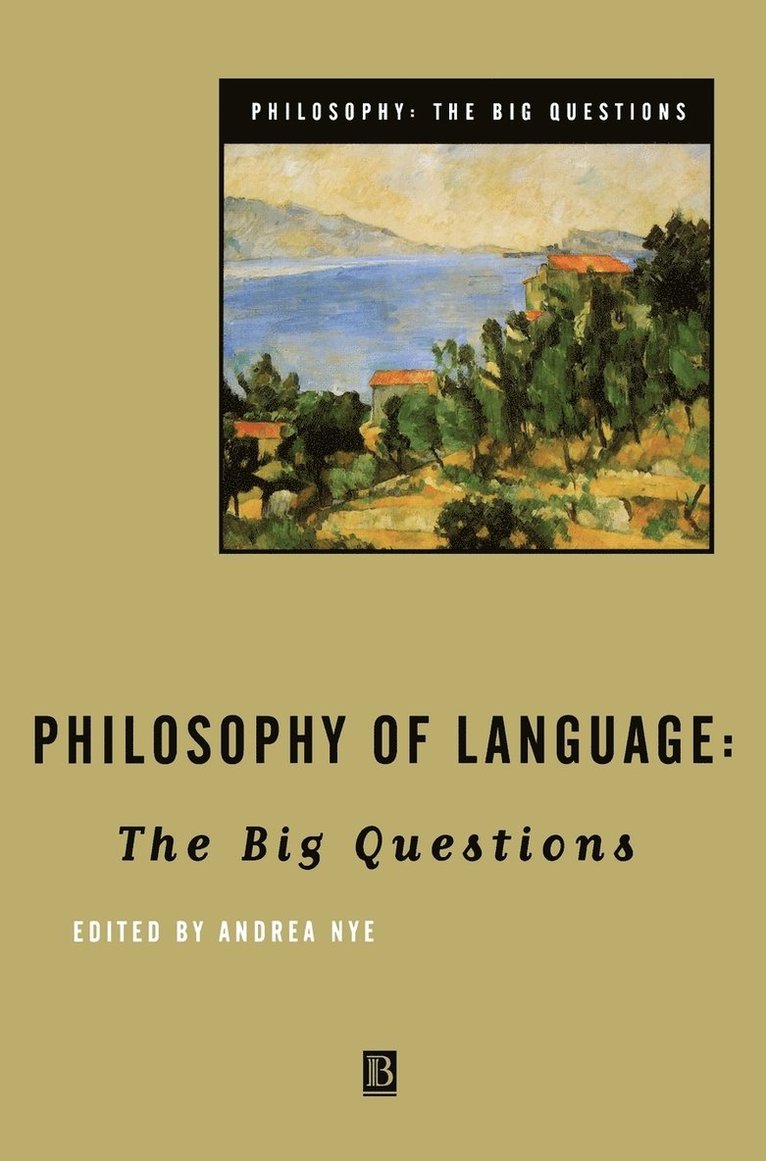
    Philosophy of Language

    The Big Questions

    AvNye,Andrea Nye

    Inbunden, Engelska, 1998

    Del i serien Philosophy: The Big Questions

    1 769 kr

    Beställningsvara. Skickas inom 5-8 vardagar. Fri frakt över 249 kr.

    Fler format och utgåvor

    Häftad

    571 kr

    Beskrivning

    This anthology brings together a diversity of readings in the philosophy of language from the ancient Greeks to contemporary analytic, feminist, and multicultural perspectives. The emphasis is on issues that have a direct bearing on concerns about knowledge, reality, meaning, and understanding. A general introduction and introductions to each group of readings identify both the continuities and differences in the way "big" questions in philosophy of language have been addressed by philosophers of different historical periods, institutional affiliations, races, and genders.

    Produktinformation

    • Utgivningsdatum:1998-01-10
    • Mått:178 x 254 x 28 mm
    • Vikt:699 g
    • Format:Inbunden
    • Språk:Engelska
    • Serie:Philosophy: The Big Questions
    • Antal sidor:320
    • Förlag:John Wiley and Sons Ltd
    • ISBN:9780631206019

    Utforska kategorier

    • Språkvetenskap och lingvistik inom Språk och ordböcker

    Mer om författaren

    Andrea Nye is Professor of Philosophy at the University of Wisconsin-Whitewater. She is the author of Feminist Theory and the Philosophies of Man (1988), Words of Power: a Feminist Reading of the History of Logic (1990), Philosophia: the Thought of Rosa Luxemburg, Simone Weil, Hannah Arendt (1994), Philosophy and Feminism: at the Border (1995).

    Recensioner i media

    "Andrea Nye's anthology in the philosophy of language satisfies a need for a textbook that includes writings from historical and the Fregean traditions, many of which have not been included in other anthologies." Don Levi, University of Oregon "I can scarcely imagine a better primer than this, for an intelligent layperson." The Shetland Times"What makes this volume distinctive for consideration as a text is its inclusion of papers not readily treated in bread-and-butter philosophy of language courses." C. J. Shields, Choice

    Innehållsförteckning

    • General Introduction. Part I: Language: What is it?:.1. Language as the Weaving Together of Forms: Plato.2. The Origins of Language: Jean-Jacques Rousseau.3. On Words: John Locke.4. On the Scientific Justification of a Conceptual Notation: Gottlob Frege.5. The Existential Matrix of Inquiry: John Dewey.6. Picturing Reality: Ludwig Wittgenstein.7. Subjectivity in Language: Emile Benveniste.8. Private Language, Public Languages: Jerry Fodor.9. The Mark of Gender: Monnique Wittig.Part II: Meaning: How do Words get their Sense?:.10. On Sense and Reference: Gottlob Frege.11. The Principle of Verifiability: A.J. Ayer.12. Meaning as Use: Ludwig Wittgenstein.13. Biosemantics: Ruth Millikan.14. How can Language be Sexist?: Merrill and Jaakko Hintikka.Part III: Speaking: What is it to Say Something:.15. Meaning: H.P. Grice.16. Performative Utterances: John Austin.17. Verbal Interaction: V.N. Volosinov.18. Telling as Letting Know: Arindam Chakrabati.19. He I Sought but did not Find: Luce Irigaray.Part IV: Reference: what do we Talk About?:.20. On Denoting: Bertrand Russell.21. Naming and Necessity (excerpts): Saul Kripke.22. The Formation of Objects: Michel Foucault.23. Critically Queer: Judith Butler.24. 'Worlds' and World Travelling: Maria Lugones.Part V: Truth: What is the Reaction Between Language and Reality?:.25. The Semantic Theory of Truth: Alfred Tarski.26. The Method of Truth in Metaphysics: Donald Davidson.27. Truth as Coherence: Linda Alcoff.28. Truth Through Social Praxis: David Theo Goldberg.29. Are Truth Claims Dysfunctional?: Sandra Harding.Part VI: Other Minds and Foreign Tongues: How is it Possible to Understand What Someone Else Says?:.30. The Translation of Unstranslatable Words: Bronislaw Malinowski.31. Indeterminacy of Translation: W.V. Quine.32. On the Very Idea of a Conceptual Scheme: Donald Davidson.33. An American Indian Model of the Universe: Benjamin Whorf.34. How to Tame a Wild Tongue: Gloria Anzaldua.35. Language as Boundary: Wole Soyinka.