• Fri frakt över 249 kr
  • •
  • Snabba leveranser
  • •
  • Billiga böcker
Kundservice

Du är på sajten för privatpersoner.

Företag, bibliotek eller offentlig verksamhet?

Du handlar på classic.bokus.com, där alla dina funktioner finns intakta.
Till classic.bokus.com
Bokus logotyp. Gå till startsidan.
  • Erbjudanden
  • Nyheter
  • Student
  • Topplistor
  • Barn & ungdom
  • Bokus Play
  • E-böcker
  • Pocketböcker
  • Spel & pussel

10% studentrabatt med kod TERM26

Sidfot

Mina sidor

    Hjälp

    • Kundservice
    • Vanliga frågor och svar
    • Frakt och leverans
    • Retur vid ångerrätt
    • Reklamera vara
    • Betalning
    • Köpvillkor
    • Allmänna villkor
    • Information om webbplatsens tillgänglighet

    Om Bokus

    • Om oss
    • Pressrum
    • För studenter
    • För företag
    • För bibliotek och offentlig verksamhet
    • För leverantörer
    • Hållbarhet

    Populärt

    • Aktuella erbjudanden
    • Presentkort
    • Studentlitteratur
    • Nya böcker
    • Topplistor
    • Signerade böcker
    • Engelska böcker

    Inspiration

    • Boktips
    • BookTok
    • Populära bokserier
    • Barnbokskaraktärer
    • Populära författare
    Logotyp för Bokus
    Följ oss på Facebook (extern länk)Följ oss på Instagram (extern länk)Följ oss på YouTube (extern länk)Följ oss på TikTok (extern länk)
    bokus @ CookiesAnpassa cookiesIntegritetspolicyKöpvillkor
    Till Citymail hemsida (extern länk)Till Budbee hemsida (extern länk)Till Postnord hemsida (extern länk)Till Schenker hemsida (extern länk)Till Early Bird hemsida (extern länk)Till Walleys hemsida (extern länk)
    1. Historia och arkeologi
    2. Historia
    3. Historia: särskilda händelser och ämnen
    4. Slaveri

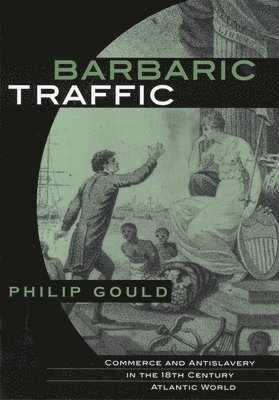
    Barbaric Traffic

    Commerce and Antislavery in the Eighteenth-Century Atlantic World

    AvPhilip Gould

    Inbunden, Engelska, 2003

    923 kr

    Beställningsvara. Skickas inom 10-15 vardagar. Fri frakt över 249 kr.

    Beskrivning

    Eighteenth-century antislavery writers attacked the slave trade as "barbaric traffic"--a practice that would corrupt the mien and manners of Anglo-American culture to its core. Less concerned with slavery than with the slave trade in and of itself, these writings expressed a moral uncertainty about the nature of commercial capitalism. This is the argument Philip Gould advances in Barbaric Traffic. A major work of cultural criticism, the book constitutes a rethinking of the fundamental agenda of antislavery writing from pre-revolutionary America to the end of the British and American slave trades in 1808.Studying the rhetoric of various antislavery genres--from pamphlets, poetry, and novels to slave narratives and the literature of disease--Gould exposes the close relation between antislavery writings and commercial capitalism. By distinguishing between good commerce, or the importing of commodities that refined manners, and bad commerce, like the slave trade, the literature offered both a critique and an outline of acceptable forms of commercial capitalism. A challenge to the premise that objections to the slave trade were rooted in modern laissez-faire capitalism, Gould's work revises--and expands--our understanding of antislavery literature as a form of cultural criticism in its own right.

    Produktinformation

    • Utgivningsdatum:2003-11-27
    • Mått:156 x 235 x undefined mm
    • Vikt:535 g
    • Format:Inbunden
    • Språk:Engelska
    • Antal sidor:272
    • Förlag:Harvard University Press
    • ISBN:9780674011663
    • Utmärkelser:Nominated for American Society for 18th-Century Studies Louis Gotschalk Prize 2004

    Utforska kategorier

    • Slaveri inom Historia och arkeologi
    • Litteraturvetenskap inom Skönlitteratur

    Mer om författaren

    Philip Gould is Professor of English at Brown University.

    Recensioner i media

    This is a very important book which convincingly rethinks the fundamental agenda of Anglo-American anti-slavery literature from 1775 to 1808 (the end of the British slave trade). This is no small feat. Anti-slavery texts, Gould argues, offered less a critique of slavery than a critique of the slave trade. By distinguishing between good commerce (the importing of commodities that refined the manners) and bad commerce (the importation of slaves), these texts both critiqued commercial capitalism and outlined its acceptable and necessary forms. Thus anti-slavery texts endlessly deferred the issue of abolition in order to serve as a site of moral uncertainty about whether commercial capitalism would debase or civilize modern society. Sin is less feared than the depravity of manners which could corrupt Anglo-American culture at its core. Because virtuous and vicious commerce turned on the nature and regulation of passions, much was at stake. Closely attending to a vast number of transatlantic texts, Gould defines and demonstrates a "commercial aesthetic" that inflects the language of race and sentiments with issues of economic and social change. Gould's next move is to argue with reference to what he calls "the commercial jeremiad" that the very ideological discourse of civilization and savagery is rooted in trade. The concept of race is largely produced by this oppositional discourse rather than founded on its prior existence.

    Innehållsförteckning

    • Introduction 1. The Commercial Jeremiad 2. The Poetics of Antislavery 3. American Slaves in North Africa 4. Liberty, Slavery, and Black Atlantic Autobiography 5. Yellow Fever and the Black Market Epilogue Notes Index