• Fri frakt över 249 kr
  • •
  • Snabba leveranser
  • •
  • Billiga böcker
Kundservice

Du är på sajten för privatpersoner.

Företag, bibliotek eller offentlig verksamhet?

Du handlar på classic.bokus.com, där alla dina funktioner finns intakta.
Till classic.bokus.com
Bokus logotyp. Gå till startsidan.
  • Erbjudanden
  • Nyheter
  • Student
  • Topplistor
  • Barn & ungdom
  • Bokus Play
  • E-böcker
  • Pocketböcker
  • Spel & pussel

10% rabatt på allt med kod: NYSTART10 →

Sidfot

Mina sidor

    Hjälp

    • Kundservice
    • Vanliga frågor och svar
    • Frakt och leverans
    • Retur vid ångerrätt
    • Reklamera vara
    • Betalning
    • Köpvillkor
    • Allmänna villkor
    • Information om webbplatsens tillgänglighet

    Om Bokus

    • Om oss
    • Pressrum
    • För studenter
    • För företag
    • För bibliotek och offentlig verksamhet
    • För leverantörer
    • Hållbarhet

    Populärt

    • Aktuella erbjudanden
    • Presentkort
    • Studentlitteratur
    • Nya böcker
    • Topplistor
    • Signerade böcker
    • Engelska böcker

    Inspiration

    • Boktips
    • BookTok
    • Populära bokserier
    • Barnbokskaraktärer
    • Populära författare
    Logotyp för Bokus
    Följ oss på Facebook (extern länk)Följ oss på Instagram (extern länk)Följ oss på YouTube (extern länk)Följ oss på TikTok (extern länk)
    bokus @ CookiesAnpassa cookiesIntegritetspolicyKöpvillkor
    Till Citymail hemsida (extern länk)Till Budbee hemsida (extern länk)Till Postnord hemsida (extern länk)Till Schenker hemsida (extern länk)Till Early Bird hemsida (extern länk)Till Walleys hemsida (extern länk)
    1. Juridik
    2. Särskilda rättsområden

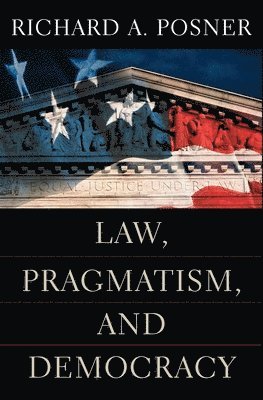
    Law, Pragmatism, and Democracy

    AvRichard A. Posner

    Häftad, Engelska, 2005

    316 kr

    Beställningsvara. Skickas inom 10-15 vardagar. Fri frakt över 249 kr.

    Beskrivning

    A liberal state is a representative democracy constrained by the rule of law. Richard Posner argues for a conception of the liberal state based on pragmatic theories of government. He views the actions of elected officials as guided by interests rather than by reason and the decisions of judges by discretion rather than by rules. He emphasizes the institutional and material, rather than moral and deliberative, factors in democratic decision making.Posner argues that democracy is best viewed as a competition for power by means of regular elections. Citizens should not be expected to play a significant role in making complex public policy regarding, say, taxes or missile defense. The great advantage of democracy is not that it is the rule of the wise or the good but that it enables stability and orderly succession in government and limits the tendency of rulers to enrich or empower themselves to the disadvantage of the public. Posner’s theory steers between political theorists’ concept of deliberative democracy on the left and economists’ public-choice theory on the right. It makes a significant contribution to the theory of democracy—and to the theory of law as well, by showing that the principles that inform Schumpeterian democratic theory also inform the theory and practice of adjudication. The book argues for law and democracy as twin halves of a pragmatic theory of American government.

    Produktinformation

    • Utgivningsdatum:2005-10-01
    • Mått:156 x 235 x 27 mm
    • Vikt:608 g
    • Format:Häftad
    • Språk:Engelska
    • Antal sidor:416
    • Förlag:Harvard University Press
    • ISBN:9780674018495
    • Utmärkelser:Nominated for David and Elaine Spitz Prize 2005

    Utforska kategorier

    • Särskilda rättsområden inom Juridik

    Mer om författaren

    Richard A. Posner retired as a judge of the United States Court of Appeals for the Seventh Circuit in 2017. He was previously a senior lecturer at the University of Chicago Law School.

    Recensioner i media

    This elegant analysis of democratic theory, by a judge on the United States Court of Appeals for the Seventh Circuit in Chicago, argues for a legal pragmatism that pays greater attention to the consequences of what we do than to abstract principle.

    Innehållsförteckning

    • Preface Introduction: Pragmatic Liberalism and the Plan of the Book 1. Pragmatism: Philosophical versus Everyday The Pragmatic Mood and the Rise of Philosophical Pragmatism Orthodox versus Recusant Pragmatism The Influence of Philosophical Pragmatism on Law Everyday Pragmatism 2. Legal Pragmatism Some Principles of Pragmatic Adjudication John Marshall as Pragmatist The Objections to Legal Pragmatism Recapitulated 3. John Dewey on Democracy and Law Deweyan Democracy: From Epistemic to Deliberative Dewey's Concept of Political Democracy Evaluated Dewey's Theory of Law The Theory Extended 4. Two Concepts of Democracy Concept 1 Democracy: Idealistic, Deliberative, Deweyan Concept 2 Democracy: Elite, Pragmatic, Schumpeterian American Democracy Today Democracy and Condescension 5. Democracy Defended The Two Concepts Evaluated But Is the Well Poisoned? Pragmatism and Convergence An Economic Interpretation of Concept 2 Democracy A Behavioralist Interpretation But Is Concept 2 Democracy Legitimate? 6. The Concepts Applied The Impeachment of President Clinton The 2000 Election Deadlock Judges on Democracy Schumpeter, Antitrust, and the Law of Democracy Of Human Nature 7. Kelsen versus Hayek: Pragmatism, Economics, and Democracy Kelsen's Theory of Law Kelsen, Pragmatism, and Economics Kelsen Positivism Contrasted with the Positivist Theories of Hart and Easterbrook Hayek Theory of Adjudication Hayek on Kelsen; Kelsen and Schumpeter 8. Legality and Necessity Crisis Prevention as Pragmatic Adjudication Lawyers' Hubris Clinton v. Jones 9. Pragmatic Adjudication: The Case of Bush v. Gore The Case A Potential Crisis Averted A Pragmatic Donnybrook The Perils of Formalism The Democratic Legitimacy of Pragmatic Adjudication Revisited Coping with Indeterminacy 10. Purposes versus Consequences in First Amendment Analysis The Pragmatic Approach to Free Speech The "Purposivist" Critique of the Pragmatic Approach Conclusion Index