• Fri frakt över 249 kr
  • •
  • Snabba leveranser
  • •
  • Billiga böcker
Kundservice

Du är på sajten för privatpersoner.

Företag, bibliotek eller offentlig verksamhet?

Du handlar på classic.bokus.com, där alla dina funktioner finns intakta.
Till classic.bokus.com
Bokus logotyp. Gå till startsidan.
  • Erbjudanden
  • Student
  • Topplistor
  • Barn & ungdom
  • Bokus Play
  • E-böcker
  • Ljudböcker
  • Pocketböcker
  • Spel och pussel

5% studentrabatt – använd koden KURSBOK27 →

Sidfot

Mina sidor

    Hjälp

    • Kundservice
    • Vanliga frågor och svar
    • Frakt och leverans
    • Retur vid ångerrätt
    • Reklamera vara
    • Betalning
    • Köpvillkor
    • Allmänna villkor
    • Information om webbplatsens tillgänglighet

    Om Bokus

    • Om oss
    • Pressrum
    • För studenter
    • För företag
    • För bibliotek och offentlig verksamhet
    • För leverantörer
    • Hållbarhet

    Populärt

    • Aktuella erbjudanden
    • Presentkort
    • Studentlitteratur
    • Nya böcker
    • Topplistor
    • Signerade böcker
    • Engelska böcker

    Inspiration

    • Boktips
    • BookTok
    • Barnbokskaraktärer
    • Populära författare
    Logotyp för Bokus
    Följ oss på Facebook (extern länk)Följ oss på Instagram (extern länk)Följ oss på YouTube (extern länk)Följ oss på TikTok (extern länk)
    bokus @ CookiesAnpassa cookiesIntegritetspolicyKöpvillkor
    Till Citymail hemsida (extern länk)Till Budbee hemsida (extern länk)Till Postnord hemsida (extern länk)Till Schenker hemsida (extern länk)Till Early Bird hemsida (extern länk)Till Walleys hemsida (extern länk)
    1. Skönlitteratur
    2. Poesi

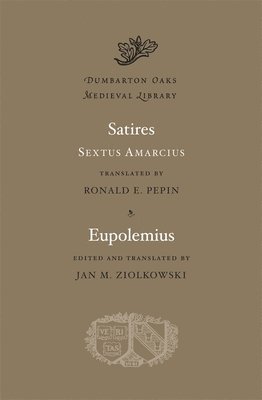
    Satires. Eupolemius

    AvSextus Amarcius,Jan M Ziolkowski

    Inbunden, Engelska, 2011

    Del 9 i serien Dumbarton Oaks Medieval Library

    336 kr

    Beställningsvara. Skickas inom 5-8 vardagar. Fri frakt över 249 kr.

    Beskrivning

    Composed in Germany by a monastic poet steeped in classical lore and letters, the Satires of Amarcius (Sextus Amarcius Gallus Piosistratus) unrelentingly attack both secular vices and ecclesiastical abuses of the late eleventh century. The verses echo Horace and Prudentius, are laced with proverbs and polemic, and portray vividly aspects of contemporary life—the foppery of young nobles, the vainglory of the nouveaux riches, the fastidiousness of debauched gluttons. This is the first English translation of the Satires.The Eupolemius is a late-eleventh-century Latin epic that recasts salvation history, from Lucifer’s fall through Christ’s resurrection. The poem fuses Greek and Hebrew components within a uniquely medieval framework. At once biblical, heroic, and allegorical, it complements the so-called Bible epics in Latin from late antiquity and the refashionings of biblical narrative in Old English verse. It emulates classical Latin epics by Virgil, Lucan, and Statius and responds creatively to the foundational personification allegory by the Christian poet Prudentius. The poem was composed by an anonymous German monk, possibly the author who used the pseudonym Amarcius. Although it focuses on events of both the Hebrew Bible and New Testament, it is also rooted in its own momentous times.

    Produktinformation

    • Utgivningsdatum:2011-11-21
    • Mått:133 x 203 x 28 mm
    • Vikt:567 g
    • Format:Inbunden
    • Språk:Engelska, Latin
    • Serie:Dumbarton Oaks Medieval Library
    • Antal sidor:448
    • Förlag:Harvard University Press
    • ISBN:9780674060029
    • Översättare:Ronald E. Pepin, Ronald E Pepin, Jan M Ziolkowski

    Utforska kategorier

    • Poesi inom Skönlitteratur

    Mer om författaren

    Ronald E. Pepin earned his PhD in Classics at Fordham University. He is Professor Emeritus of Humanities at Capital Community College, Hartford, CT. Jan M. Ziolkowski is Arthur Kingsley Porter Professor of Medieval Latin in the Department of the Classics at Harvard University.

    Recensioner i media

    This ninth volume of the Dumbarton Oaks Medieval Library, taken as a whole, offers a fascinating glimpse at the intellectual and literary accomplishment of German monastic culture in the eleventh century. Both of the texts in the volume contain a multiplicity of styles, topics, and interpretive practices; they look back to the ‘platinum Latin’ of late antiquity and the early Middle Ages as much as they look forward to the combination of humanistic learning and contemporary concerns. We are lucky to have these texts available with introductions, notes, and translations in a handsome and affordable volume… One exciting aspect of the Dumbarton Oaks Medieval Library is its promise to redefine ‘obscurity.’…This new series has the potential to enlarge the broader scholarly conversation by making fascinating and little-studied works like these known and accessible to non-specialists. Ronald Pepin and Jan Ziolkwoski are to be thanked for contributing to this goal.