• Fri frakt över 249 kr
  • •
  • Snabba leveranser
  • •
  • Billiga böcker
Kundservice

Du är på sajten för privatpersoner.

Företag, bibliotek eller offentlig verksamhet?

Du handlar på classic.bokus.com, där alla dina funktioner finns intakta.
Till classic.bokus.com
Bokus logotyp. Gå till startsidan.
  • Erbjudanden
  • Nyheter
  • Student
  • Topplistor
  • Barn & ungdom
  • Bokus Play
  • E-böcker
  • Pocketböcker
  • Spel & pussel

10% rabatt på allt med kod: NYSTART10 →

Sidfot

Mina sidor

    Hjälp

    • Kundservice
    • Vanliga frågor och svar
    • Frakt och leverans
    • Retur vid ångerrätt
    • Reklamera vara
    • Betalning
    • Köpvillkor
    • Allmänna villkor
    • Information om webbplatsens tillgänglighet

    Om Bokus

    • Om oss
    • Pressrum
    • För studenter
    • För företag
    • För bibliotek och offentlig verksamhet
    • För leverantörer
    • Hållbarhet

    Populärt

    • Aktuella erbjudanden
    • Presentkort
    • Studentlitteratur
    • Nya böcker
    • Topplistor
    • Signerade böcker
    • Engelska böcker

    Inspiration

    • Boktips
    • BookTok
    • Populära bokserier
    • Barnbokskaraktärer
    • Populära författare
    Logotyp för Bokus
    Följ oss på Facebook (extern länk)Följ oss på Instagram (extern länk)Följ oss på YouTube (extern länk)Följ oss på TikTok (extern länk)
    bokus @ CookiesAnpassa cookiesIntegritetspolicyKöpvillkor
    Till Citymail hemsida (extern länk)Till Budbee hemsida (extern länk)Till Postnord hemsida (extern länk)Till Schenker hemsida (extern länk)Till Early Bird hemsida (extern länk)Till Walleys hemsida (extern länk)
    1. Juridik
    2. Rättsvetenskap

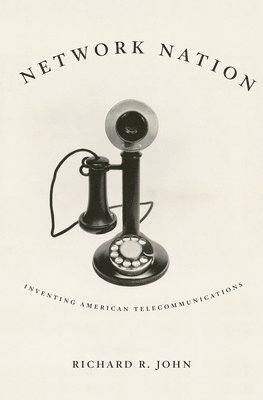
    Network Nation

    Inventing American Telecommunications

    AvRichard R. John

    Häftad, Engelska, 2015

    318 kr

    Beställningsvara. Skickas inom 10-15 vardagar. Fri frakt över 249 kr.

    Beskrivning

    The telegraph and the telephone were the first electrical communications networks to become hallmarks of modernity. Yet they were not initially expected to achieve universal accessibility. In this pioneering history of their evolution, Richard R. John demonstrates how access to these networks was determined not only by technological imperatives and economic incentives but also by political decision making at the federal, state, and municipal levels.In the decades between the Civil War and the First World War, Western Union and the Bell System emerged as the dominant providers for the telegraph and telephone. Both operated networks that were products not only of technology and economics but also of a distinctive political economy. Western Union arose in an antimonopolistic political economy that glorified equal rights and vilified special privilege. The Bell System flourished in a progressive political economy that idealized public utility and disparaged unnecessary waste.The popularization of the telegraph and the telephone was opposed by business lobbies that were intent on perpetuating specialty services. In fact, it wasn’t until 1900 that the civic ideal of mass access trumped the elitist ideal of exclusivity in shaping the commercialization of the telephone. The telegraph did not become widely accessible until 1910, sixty-five years after the first fee-for-service telegraph line opened in 1845.Network Nation places the history of telecommunications within the broader context of American politics, business, and discourse. This engrossing and provocative book persuades us of the critical role of political economy in the development of new technologies and their implementation.

    Produktinformation

    • Utgivningsdatum:2015-10-05
    • Mått:156 x 235 x 34 mm
    • Vikt:846 g
    • Format:Häftad
    • Språk:Engelska
    • Antal sidor:528
    • Förlag:Harvard University Press
    • ISBN:9780674088139
    • Utmärkelser:Nominated for Pulitzer Prizes 2011

    Utforska kategorier

    • Rättsvetenskap inom Juridik
    • Företagsekonomi inom Ekonomi och Ledarskap
    • Media och underhållning inom Ekonomi och Ledarskap

    Mer om författaren

    Richard R. John is Professor of History at Columbia University.

    Recensioner i media

    Could it be that Americans actually like communications monopolists? Do we want dominant firms to run our world? Richard R. John’s splendid book helps to answer that question by telling us just where this American affection for info-monopoly came from. John has produced a detailed study of the grand-daddies of it all: AT&T and Western Union, the first great info-monopolists, whose role in communications history is similar to that of the Allosaurus and the T. rex in the history of the animal kingdom. A work of careful history based on archival research, Network Nation begins with Samuel Morse’s construction of the first electric telegraph line in 1844 and concludes with the establishment of AT&T (or Bell, a term that can be used interchangeably with AT&T) as America’s regulated telephone monopoly… What Network Nation does deliver is a nuanced answer to the basic question, why monopoly?