• Fri frakt över 249 kr
  • •
  • Snabba leveranser
  • •
  • Billiga böcker
Kundservice

Du är på sajten för privatpersoner.

Företag, bibliotek eller offentlig verksamhet?

Du handlar på classic.bokus.com, där alla dina funktioner finns intakta.
Till classic.bokus.com
Bokus logotyp. Gå till startsidan.
  • Erbjudanden
  • Nyheter
  • Student
  • Topplistor
  • Barn & ungdom
  • Bokus Play
  • E-böcker
  • Pocketböcker
  • Spel & pussel

10% rabatt på allt med kod: NYSTART10 →

Sidfot

Mina sidor

    Hjälp

    • Kundservice
    • Vanliga frågor och svar
    • Frakt och leverans
    • Retur vid ångerrätt
    • Reklamera vara
    • Betalning
    • Köpvillkor
    • Allmänna villkor
    • Information om webbplatsens tillgänglighet

    Om Bokus

    • Om oss
    • Pressrum
    • För studenter
    • För företag
    • För bibliotek och offentlig verksamhet
    • För leverantörer
    • Hållbarhet

    Populärt

    • Aktuella erbjudanden
    • Presentkort
    • Studentlitteratur
    • Nya böcker
    • Topplistor
    • Signerade böcker
    • Engelska böcker

    Inspiration

    • Boktips
    • BookTok
    • Populära bokserier
    • Barnbokskaraktärer
    • Populära författare
    Logotyp för Bokus
    Följ oss på Facebook (extern länk)Följ oss på Instagram (extern länk)Följ oss på YouTube (extern länk)Följ oss på TikTok (extern länk)
    bokus @ CookiesAnpassa cookiesIntegritetspolicyKöpvillkor
    Till Citymail hemsida (extern länk)Till Budbee hemsida (extern länk)Till Postnord hemsida (extern länk)Till Schenker hemsida (extern länk)Till Early Bird hemsida (extern länk)Till Walleys hemsida (extern länk)
    1. Skönlitteratur
    2. Litteraturvetenskap
    3. Litteraturvetenskap

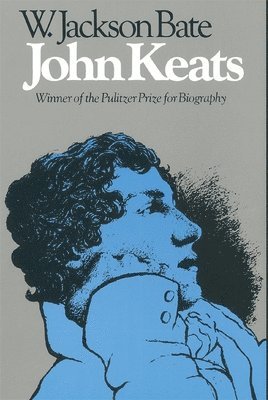
    John Keats

    AvWalter Jackson Bate

    Häftad, Engelska, 1979

    574 kr

    Beställningsvara. Skickas inom 10-15 vardagar. Fri frakt över 249 kr.

    Beskrivning

    The life of Keats provides a unique opportunity for the study of literary greatness and of what permits or encourages its development. Its interest is deeply human and moral, in the most capacious sense of the words. In this authoritative biography—the first full-length life of Keats in almost forty years—the man and the poet are portrayed with rare insight and sympathy. In spite of a scarcity of factual data for his early years, the materials for Keats’s life are nevertheless unusually full. Since most of his early poetry has survived, his artistic development can be observed more closely than is possible with most writers; and there are times during the period of his greatest creativity when his personal as well as his artistic life can be followed week by week.The development of Keats’s poetic craftsmanship proceeds simultaneously with the steady growth of qualities of mind and character. Walter Jackson Bate has been concerned to show the organic relationship between the poet’s art and his larger, more broadly humane development. Keats’s great personal appeal—his spontaneity, vigor, playfulness, and affection—are movingly recreated; at the same time, his valiant attempt to solve the problem faced by all modern poets when they attempt to achieve originality and amplitude in the presence of their great artistic heritage is perceptively presented.In discussing this matter, Mr. Bate says, “The pressure of this anxiety and the variety of reactions to it constitute one of the great unexplored factors in the history of the arts since 1750. And in no major poet, near the beginning of the modern era, is this problem met more directly than it is in Keats. The way in which Keats was somehow able, after the age of twenty-two, to confront this dilemma, and to transcend it, has fascinated every major poet who has used the English language since Keats’s death and also every major critic since the Victorian era.”Mr. Bate has availed himself of all new biographical materials, published and unpublished, and has used them selectively and without ostentation, concentrating on the things that were meaningful to Keats. Similarly, his discussions of the poetry are not buried beneath the controversies of previous critics. He approaches the poems freshly and directly, showing their relation to Keats’s experience and emotions, to premises and values already explored in the biographical narrative. The result is a book of many dimensions, not a restricted critical or biographical study but a fully integrated whole.

    Produktinformation

    • Utgivningsdatum:1979-01-01
    • Mått:156 x 236 x 46 mm
    • Vikt:993 g
    • Format:Häftad
    • Språk:Engelska
    • Antal sidor:780
    • Förlag:Harvard University Press
    • ISBN:9780674478251

    Utforska kategorier

    • Litteraturvetenskap inom Skönlitteratur

    Mer om författaren

    Walter Jackson Bate was Abbott Lawrence Lowell Professor of the Humanities at Harvard University. He authored several books, including The Achievement of Samuel Johnson, winner of the Christian Gauss Award of Phi Beta Kappa in 1956.

    Recensioner i media

    Mr. Bate has a great story to tell, a story far greater than any predecessor has discovered, for he has made himself completely informed on everything that pertains to Keats—as completely, it would seem, as Keats himself was. All the many persons who come into the story are seen steadily and whole, with sympathy as well as with a wise impartiality. But all this is subordinate to the main theme—the events of Keats’s mental life in all their glowing intensity. That mental life was expressed in letters and poems, and Mr. Bate has written not only the best biography of Keats but the best criticism of his writings. The moment was ripe for a culminating book on Keats and the moment has found the man.

    Innehållsförteckning

    • The First Years (1795-1810) Abbey's Wards (1810-1815) Guy's Hospital (1815-1816) An Adventure in Hope (Summer 1816) The Commitment to Poetry: Chapman's Homer, Hunt, and Haydon (Autumn 1816) Completing the First Volume (November and December, 1816) The Laurel Crown and the Vision of Greatness (December 1816 to March 1817) A Trial of Invention: Endymion An Act of Will (June to December, 1817) Negative Capability Another Beginning (December and January, 1817-18) Devonshire and Isabella (February to April, 1818) The Burden of the Mystery: the Emergence of a Modern Poet (Spring 1818) The Departure of George Keats and the Scottish Tour (Summer 1818) Reviews, the Writing of Hyperion, the Death of Tom Keats (Autumn 1818) Hyperion and a New Level of Writing Fanny Brawne; The Eve of St. Agnes (Winter 1818-19) A Period of Uncertainty (February to April, 1819) The Odes of April and May, 1819 The Final Beginning: Lamia (May to July, 1819) The Close of the Fertile Year: "To Autumn" and The Fall of Hyperion (July to September, 1819) Illness (Autumn and Winter, 1819) Adrift (January to August, 1820) The Voyage to Italy (August to November, 1820) Rome and the Last Months (November 1820 to February 1821) Appendices I. Family Origins II. The Length of Keats's Apprenticeship III. The Keats Children's Inheritance Index