• Fri frakt över 249 kr
  • •
  • Snabba leveranser
  • •
  • Billiga böcker
Kundservice

Du är på sajten för privatpersoner.

Företag, bibliotek eller offentlig verksamhet?

Du handlar på classic.bokus.com, där alla dina funktioner finns intakta.
Till classic.bokus.com
Bokus logotyp. Gå till startsidan.
  • Erbjudanden
  • Nyheter
  • Student
  • Topplistor
  • Barn & ungdom
  • Bokus Play
  • E-böcker
  • Pocketböcker
  • Spel & pussel

Må bättre, för mindre! Upp till 50% rabatt på hälsoböcker

Sidfot

Mina sidor

    Hjälp

    • Kundservice
    • Vanliga frågor och svar
    • Frakt och leverans
    • Retur vid ångerrätt
    • Reklamera vara
    • Betalning
    • Köpvillkor
    • Allmänna villkor
    • Information om webbplatsens tillgänglighet

    Om Bokus

    • Om oss
    • Pressrum
    • För studenter
    • För företag
    • För bibliotek och offentlig verksamhet
    • För leverantörer
    • Hållbarhet

    Populärt

    • Aktuella erbjudanden
    • Presentkort
    • Studentlitteratur
    • Nya böcker
    • Topplistor
    • Signerade böcker
    • Engelska böcker

    Inspiration

    • Boktips
    • BookTok
    • Populära bokserier
    • Barnbokskaraktärer
    • Populära författare
    Logotyp för Bokus
    Följ oss på Facebook (extern länk)Följ oss på Instagram (extern länk)Följ oss på YouTube (extern länk)Följ oss på TikTok (extern länk)
    bokus @ CookiesAnpassa cookiesIntegritetspolicyKöpvillkor
    Till Citymail hemsida (extern länk)Till Budbee hemsida (extern länk)Till Postnord hemsida (extern länk)Till Schenker hemsida (extern länk)Till Early Bird hemsida (extern länk)Till Walleys hemsida (extern länk)
    1. Data och IT
    2. Systemvetenskap och AI

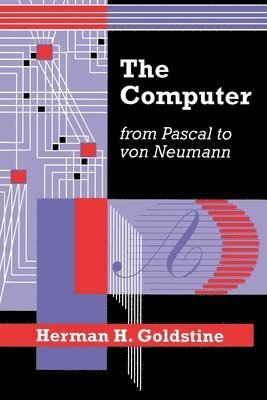
    Computer from Pascal to von Neumann

    AvHerman H. Goldstine

    Häftad, Engelska, 1980

    806 kr

    Beställningsvara. Skickas inom 5-8 vardagar. Fri frakt över 249 kr.

    Fler format och utgåvor

    E-bok

    1 105 kr

    Beskrivning

    In 1942, Lt. Herman H. Goldstine, a former mathematics professor, was stationed at the Moore School of Electrical Engineering at the University of Pennsylvania. It was there that he assisted in the creation of the ENIAC, the first electronic digital computer. The ENIAC was operational in 1945, but plans for a new computer were already underway. The principal source of ideas for the new computer was John von Neumann, who became Goldstine's chief collaborator. Together they developed EDVAC, successor to ENIAC. After World War II, at the Institute for Advanced Study, they built what was to become the prototype of the present-day computer. Herman Goldstine writes as both historian and scientist in this first examination of the development of computing machinery, from the seventeenth century through the early 1950s. His personal involvement lends a special authenticity to his narrative, as he sprinkles anecdotes and stories liberally through his text.

    Produktinformation

    • Utgivningsdatum:1980-10-21
    • Mått:155 x 230 x 25 mm
    • Vikt:497 g
    • Format:Häftad
    • Språk:Engelska
    • Antal sidor:365
    • Förlag:Princeton University Press
    • ISBN:9780691023670

    Utforska kategorier

    • Systemvetenskap och AI inom Data och IT
    • Hårdvara inom Data och IT

    Mer om författaren

    Herman H. Goldstine is currently Executive Officer of the American Philosophical Society.

    Recensioner i media

    Winner of the Award in Science, Phi Beta Kappa "The book is first-rate: it is written in a style that all can understand."--Nature "Herman Goldstine is himself a pioneer of the computer... [He] writes with disarming candor and good humor."--Scientific American

    Innehållsförteckning

    • *FrontMatter, pg. i*Contents, pg. v*Illustrations, pg. vii*Preface (1893), pg. ix*Preface, pg. xi*I. Beginnings, pg. 3*2. Cllarles Babhage and His Analytical Engine, pg. 10*3. The Astronolnical Ephemeris, pg. 27*4. The Universities: Maxwell and Boole, pg. 31*5, Integrators and Planin~c.ters, pg. 39*6. Michelsori, Fourier Coc~ffic~ientasn, d the Gibbs Phenomenon, pg. 52*7. Boolean Algebra: x2 = xx = x, pg. 60*8. Billings, IIollerith, and the. Census, pg. 65*9. Rallistics ancl the Rise of the Great Mathematicians, pg. 72*10. Blish's Differential Analyzer and Other Analog IJcvices, pg. 84*11. Adaptation to Scientific Needs, pg. 106*12. Renascenrbe and Triumph of Digital Means of Computation, pg. 115*1. Electronic, EAi~rtsp rior to the EN1AC, pg. 123*2. The Ballistic Research Laboratory, pg. 127*3. Differences between Analog and Digital Machines, pg. 140*4. Beginnings of the ENIA(:, pg. 148*5. The ENIAC as a Matl~errratical Instrument, pg. 157*6. Jolln von Nel~mann ant1 the Computer, pg. 167*7. Beyond the ENIAC, pg. 184*8. Tlte Structure of the EDVAC, pg. 204*9. The Spread of Ideas, pg. 211*10. First Calculations on the ENIAC, pg. 225*1. Post-EIIVAC Days, pg. 239*2. The Institute for Advanced Study Computer, pg. 252*3. Automata Theory and Logic Machines, pg. 271*4. Numerical Mathematics, pg. 286*5. Nun~ericalM eteorology, pg. 300*6. Engineering Activities and Achievements, pg. 306*7. The Computer and UNESCO, pg. 321*8. The Early Industrial Scene, pg. 325*9. Programming Languages, pg. 333*10. Conclusions, pg. 342*APPENDIX: World-Wide Developments, pg. 349*Index, pg. 363