• Fri frakt över 249 kr
  • •
  • Snabba leveranser
  • •
  • Billiga böcker
Kundservice

Du är på sajten för privatpersoner.

Företag, bibliotek eller offentlig verksamhet?

Du handlar på classic.bokus.com, där alla dina funktioner finns intakta.
Till classic.bokus.com
Bokus logotyp. Gå till startsidan.
  • Erbjudanden
  • Nyheter
  • Student
  • Topplistor
  • Barn & ungdom
  • Bokus Play
  • E-böcker
  • Pocketböcker
  • Spel & pussel

10% rabatt på allt med kod: NYSTART10 →

Sidfot

Mina sidor

    Hjälp

    • Kundservice
    • Vanliga frågor och svar
    • Frakt och leverans
    • Retur vid ångerrätt
    • Reklamera vara
    • Betalning
    • Köpvillkor
    • Allmänna villkor
    • Information om webbplatsens tillgänglighet

    Om Bokus

    • Om oss
    • Pressrum
    • För studenter
    • För företag
    • För bibliotek och offentlig verksamhet
    • För leverantörer
    • Hållbarhet

    Populärt

    • Aktuella erbjudanden
    • Presentkort
    • Studentlitteratur
    • Nya böcker
    • Topplistor
    • Signerade böcker
    • Engelska böcker

    Inspiration

    • Boktips
    • BookTok
    • Populära bokserier
    • Barnbokskaraktärer
    • Populära författare
    Logotyp för Bokus
    Följ oss på Facebook (extern länk)Följ oss på Instagram (extern länk)Följ oss på YouTube (extern länk)Följ oss på TikTok (extern länk)
    bokus @ CookiesAnpassa cookiesIntegritetspolicyKöpvillkor
    Till Citymail hemsida (extern länk)Till Budbee hemsida (extern länk)Till Postnord hemsida (extern länk)Till Schenker hemsida (extern länk)Till Early Bird hemsida (extern länk)Till Walleys hemsida (extern länk)
    1. Skönlitteratur
    2. Litteraturvetenskap
    3. Litteraturvetenskap

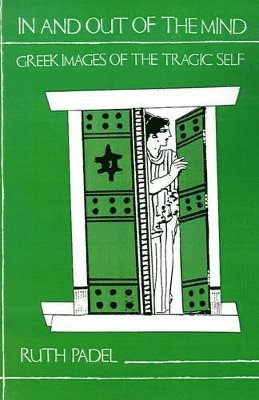
    In and Out of the Mind

    Greek Images of the Tragic Self

    AvRuth Padel

    Häftad, Engelska, 1994

    581 kr

    Beställningsvara. Skickas inom 5-8 vardagar. Fri frakt över 249 kr.

    Fler format och utgåvor

    E-bok

    713 kr

    Beskrivning

    Ruth Padel explores Greek conceptions of human innerness and the way in which Greek tragedy shaped European notions of mind and self. Arguing that Greek poetic language connects images of consciousness, even male consciousness, with the darkness attributed to Hades and to women, Padel analyzes tragedy's biological and daemonological metaphors for what is within.

    Produktinformation

    • Utgivningsdatum:1994-11-06
    • Mått:197 x 254 x 17 mm
    • Vikt:363 g
    • Format:Häftad
    • Språk:Engelska
    • Antal sidor:230
    • Förlag:Princeton University Press
    • ISBN:9780691037660
    • Utmärkelser:Runner-up for Choice Magazine Outstanding Reference/Academic Book Award 1992

    Utforska kategorier

    • Litteraturvetenskap inom Skönlitteratur

    Mer om författaren

    Ruth Padel, recently Visiting Professor in the Modern Greek Program at Princeton University, has taught classics at the University of Oxford and the University of London. She is the author of two books of poems and of Whom Gods Destroy: Elements of Greek and Tragic Madness.

    Recensioner i media

    One of Choice's Outstanding Academic Titles for 1992 "A rich and brilliant study... [Padel] helps us to see not just that Greek ways of thinking are so profoundly alien, but also how they make sense and could be coherently lived. Her skill as a writer ... make[s] those foreign patterns of thought compellingly vivid."--Malcolm Heath, The Times Literary Supplement "Unfamiliar connections and perspectives will make [this] book important for professionals, and the vivid portrayal of an intense and exotic mental world will appeal to the serious general reader."--Jasper Griffin, The New York Review of Books "An intriguing book... Padel ranges widely over the medical writers, epic, comedy, and philosophy. She fortifies and enriches her arguments with the work of scholars in anthropology, psychology, and religion... A poet herself, she is very sensitive to the possibilities and associations of language."--Michael R. Halleran, Bryn Mawr Classical Review "Ruth Padel's close reading of the language of the extant plays will be helpful to scholars and provide a window onto ancient Greek ideas of the mind for the general reader."--The Washington Times

    Innehållsförteckning

    • PrefaceAcknowledgmentsAbbreviationsCh. 1Introduction: The Divinity of Inside and Outside3Ch. 2Innards12Entrails: Learning, Feeling, Dividing12Heart, Liver, Phrenes, Inner Liquids18"Spirit," "Soul," "Mind"27Metaphor and "Anatomical Details"33Concreteness of the Innards: Poroi and Pre-Socratics40Insight into Disunity44Ch. 3Disease and Divination: Knowing the Causes of Pain49External and Internal Forces of Disease49Channels to the Soul: The Vulnerability of Sight and Hearing59Inner Movement: Source of Knowledge, Sign of Pain65Black Prophetic Innards68Discourse of Darkness75Ch. 4The Flux of Feeling78Death, Sleep, Dream, and Underground Rivers78Flow and Storm81Breaths of Passion88Ch. 5Inner World, Underworld, and Gendered Images of "Mind"99"Mind," Earth, Womb, Hades99Inner Impurities and Emissions: "Good" Turned "Bad"102The Mainly Female "Mind"106Ch. 6The Zoology and Daemonology of Emotion114Daemonic Weather, Wind, Fire114Goads, Whips, Pursuit117Biting, Eating119Oistros, Poison, Snakes, Dogs120The Mobile Adversary One Cannot Fight125The Aerial Terrorist129These Inner Wounds Are Real132The Alternative: Growth Within134Ch. 7Animal, Daimon: Bringers of Death and Definition138Nonhuman: What We Defend Ourselves Against138Animal Weaponry141Using Animal Is Using Daimon144Nonhuman Definition of the Human147Gods' Weapons152Personifications157States of Mind: Multiple, Daemonic, Female159Ch. 8Blood in the Mind162Ate, Lyssa: Madness Personified162Epic Erinyes164Tragic Erinyes: Damage "from the Ground"168Blood, Murder, Madness172Erinyes Seen179The Most Polluted Day182Erinyes Unseen185Where the Terrible Is Good189Works Cited193Index205