• Fri frakt över 249 kr
  • •
  • Snabba leveranser
  • •
  • Billiga böcker
Kundservice

Du är på sajten för privatpersoner.

Företag, bibliotek eller offentlig verksamhet?

Du handlar på classic.bokus.com, där alla dina funktioner finns intakta.
Till classic.bokus.com
Bokus logotyp. Gå till startsidan.
  • Erbjudanden
  • Nyheter
  • Student
  • Topplistor
  • Barn & ungdom
  • Bokus Play
  • E-böcker
  • Pocketböcker
  • Spel & pussel

10% rabatt på allt med kod: NYSTART10 →

Sidfot

Mina sidor

    Hjälp

    • Kundservice
    • Vanliga frågor och svar
    • Frakt och leverans
    • Retur vid ångerrätt
    • Reklamera vara
    • Betalning
    • Köpvillkor
    • Allmänna villkor
    • Information om webbplatsens tillgänglighet

    Om Bokus

    • Om oss
    • Pressrum
    • För studenter
    • För företag
    • För bibliotek och offentlig verksamhet
    • För leverantörer
    • Hållbarhet

    Populärt

    • Aktuella erbjudanden
    • Presentkort
    • Studentlitteratur
    • Nya böcker
    • Topplistor
    • Signerade böcker
    • Engelska böcker

    Inspiration

    • Boktips
    • BookTok
    • Populära bokserier
    • Barnbokskaraktärer
    • Populära författare
    Logotyp för Bokus
    Följ oss på Facebook (extern länk)Följ oss på Instagram (extern länk)Följ oss på YouTube (extern länk)Följ oss på TikTok (extern länk)
    bokus @ CookiesAnpassa cookiesIntegritetspolicyKöpvillkor
    Till Citymail hemsida (extern länk)Till Budbee hemsida (extern länk)Till Postnord hemsida (extern länk)Till Schenker hemsida (extern länk)Till Early Bird hemsida (extern länk)Till Walleys hemsida (extern länk)
    1. Naturvetenskap och teknik
    2. Geovetenskap
    3. Geografi

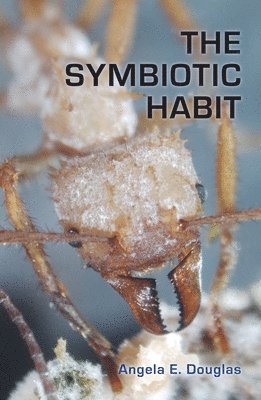
    Symbiotic Habit

    AvAngela E. Douglas

    Häftad, Engelska, 2014

    276 kr

    Beställningsvara. Skickas inom 5-8 vardagar. Fri frakt över 249 kr.

    Fler format och utgåvor

    E-bok

    387 kr

    Beskrivning

    Throughout the natural world, organisms have responded to predators, inadequate resources, or inclement conditions by forming ongoing mutually beneficial partnerships--or symbioses--with different species. Symbiosis is the foundation for major evolutionary events, such as the emergence of eukaryotes and plant eating among vertebrates, and is also a crucial factor in shaping many ecological communities. The Symbiotic Habit provides an accessible and authoritative introduction to symbiosis, describing how symbioses are established, function, and persist in evolutionary and ecological time. Angela Douglas explains the evolutionary origins and development of symbiosis, and illustrates the principles of symbiosis using a variety of examples of symbiotic relationships as well as nonsymbiotic ones, such as parasitic or fleeting mutualistic associations. Although the reciprocal exchange of benefit is the key feature of symbioses, the benefits are often costly to provide, causing conflict among the partners.Douglas shows how these conflicts can be managed by a single controlling organism that may selectively reward cooperative partners, control partner transmission, and employ recognition mechanisms that discriminate between beneficial and potentially harmful or ineffective partners. The Symbiotic Habit reveals the broad uniformity of symbiotic process across many different symbioses among organisms with diverse evolutionary histories, and demonstrates how symbioses can be used to manage ecosystems, enhance food production, and promote human health.

    Produktinformation

    • Utgivningsdatum:2014-12-08
    • Mått:152 x 235 x 14 mm
    • Vikt:308 g
    • Format:Häftad
    • Språk:Engelska
    • Antal sidor:232
    • Förlag:Princeton University Press
    • ISBN:9780691113425

    Utforska kategorier

    • Geografi inom Naturvetenskap och teknik

    Mer om författaren

    Angela E. Douglas is the Daljit S. and Elaine Sarkaria Professor of Insect Physiology and Toxicology at Cornell University. She is the author of Symbiotic Interactions and the coauthor of The Biology of Symbiosis.

    Recensioner i media

    "Douglas, an established symbiosis authority, revisits the subject with new research data on the evolutionary origins of the well-studied mutualistic symbioses... She convincingly illustrates the impact of symbiosis on evolutionary diversification, coevolution and cospeciation, and speciation. The book correctly highlights harnessing symbioses for human benefits including novel bioactive compounds and strategies for pest control management; it also discusses the role of microbiota in human health."--Choice "In The Symbiotic Habit, the reader will find an authoritative glimpse into the fascinating world of symbiosis and the concepts that are emerging from recent advances."--John J. Stachowicz, BioScience "The Symbiotic Habit is a masterpiece of decisive empirical studies covering a wide range of symbioses... The beauty of the Symbiotic Habit is that the book focuses on big questions, even if the answers are not yet clear... Douglas' newest book is helping to create a research environment that asks all the right questions."--Toby Kiers, Ecology "Angela Douglas raises questions and issues which are common to all or nearly all symbioses and so her book should be read by symbiologists and also by those interested in ecology or evolution. The wide range of topics discussed should provoke researchers in all these fields to look at their own pet system in a new light."--D. H. S. Richardson, Symbiosis "I would recommend The Symbiotic Habit to any ecologist wanting to widen their understanding of the complexity of species interactions and the ecosystems, which are made up of these interdependent species."--Sapphire McMullan-Fisher, Austral Ecology "I would recommend this book as a very good summary of modern symbiosis research."--Klaus Hovemeyer, Basic and Applied Ecology

    Innehållsförteckning

    • Preface vii Chapter 1: The Significance of Symbiosis 1 Chapter 2: Evolutionary Origins and Fates of Organisms in Symbiosis 24 Chapter 3: Conflict and Conflict Resolution 56 Chapter 4: Choosing and Chosen: Establishment and Persistence of Symbioses 91 Chapter 5: The Success of Symbiosis 125 Chapter 6: Perspectives 164 References 171 Index 193