• Fri frakt över 249 kr
  • •
  • Snabba leveranser
  • •
  • Billiga böcker
Kundservice

Du är på sajten för privatpersoner.

Företag, bibliotek eller offentlig verksamhet?

Du handlar på classic.bokus.com, där alla dina funktioner finns intakta.
Till classic.bokus.com
Bokus logotyp. Gå till startsidan.
  • Erbjudanden
  • Nyheter
  • Student
  • Topplistor
  • Barn & ungdom
  • Bokus Play
  • E-böcker
  • Pocketböcker
  • Spel & pussel

10% rabatt på allt med kod NYSTART10 →

Sidfot

Mina sidor

    Hjälp

    • Kundservice
    • Vanliga frågor och svar
    • Frakt och leverans
    • Retur vid ångerrätt
    • Reklamera vara
    • Betalning
    • Köpvillkor
    • Allmänna villkor
    • Information om webbplatsens tillgänglighet

    Om Bokus

    • Om oss
    • Pressrum
    • För studenter
    • För företag
    • För bibliotek och offentlig verksamhet
    • För leverantörer
    • Hållbarhet

    Populärt

    • Aktuella erbjudanden
    • Presentkort
    • Studentlitteratur
    • Nya böcker
    • Topplistor
    • Signerade böcker
    • Engelska böcker

    Inspiration

    • Boktips
    • BookTok
    • Populära bokserier
    • Barnbokskaraktärer
    • Populära författare
    Logotyp för Bokus
    Följ oss på Facebook (extern länk)Följ oss på Instagram (extern länk)Följ oss på YouTube (extern länk)Följ oss på TikTok (extern länk)
    bokus @ CookiesAnpassa cookiesIntegritetspolicyKöpvillkor
    Till Citymail hemsida (extern länk)Till Budbee hemsida (extern länk)Till Postnord hemsida (extern länk)Till Schenker hemsida (extern länk)Till Early Bird hemsida (extern länk)Till Walleys hemsida (extern länk)
    1. Ekonomi och Ledarskap
    2. Nationalekonomi

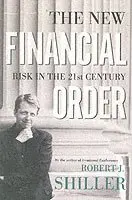
    New Financial Order

    Risk in the 21st Century

    AvRobert J. Shiller

    Häftad, Engelska, 2004

    384 kr

    Beställningsvara. Skickas inom 5-8 vardagar. Fri frakt över 249 kr.

    Fler format och utgåvor

    E-bok

    541 kr

    Beskrivning

    In his best-selling Irrational Exuberance, Robert Shiller cautioned that society's obsession with the stock market was fueling the volatility that has since made a roller coaster of the financial system. Less noted was Shiller's admonition that our infatuation with the stock market distracts us from more durable economic prospects. These lie in the hidden potential of real assets, such as income from our livelihoods and homes. But these "ordinary riches," so fundamental to our well-being, are increasingly exposed to the pervasive risks of a rapidly changing global economy. This compelling and important new book presents a fresh vision for hedging risk and securing our economic future. Shiller describes six fundamental ideas for using modern information technology and advanced financial theory to temper basic risks that have been ignored by risk management institutions--risks to the value of our jobs and our homes, to the vitality of our communities, and to the very stability of national economies.Informed by a comprehensive risk information database, this new financial order would include global markets for trading risks and exploiting myriad new financial opportunities, from inequality insurance to intergenerational social security. Just as developments in insuring risks to life, health, and catastrophe have given us a quality of life unimaginable a century ago, so Shiller's plan for securing crucial assets promises to substantially enrich our condition. Once again providing an enormous service, Shiller gives us a powerful means to convert our ordinary riches into a level of economic security, equity, and growth never before seen. And once again, what Robert Shiller says should be read and heeded by anyone with a stake in the economy.

    Produktinformation

    • Utgivningsdatum:2004-07-26
    • Mått:152 x 235 x 23 mm
    • Vikt:510 g
    • Format:Häftad
    • Språk:Engelska
    • Antal sidor:384
    • Förlag:Princeton University Press
    • ISBN:9780691120119
    • Utmärkelser:Commended for Association of American Publishers/Professional and Scholarly Publishing Awards: Economics 2003

    Utforska kategorier

    • Nationalekonomi inom Ekonomi och Ledarskap
    • Finansiering inom Ekonomi och Ledarskap

    Mer om författaren

    Robert J. Shiller is the Stanley B. Resor Professor of Economics at Yale University. He is the author of "Macro Markets", which won the first annual Paul A. Samuelson Award of TIAA-CREF, and "Irrational Exuberance" (Princeton), which was a "New York Times" bestseller.

    Recensioner i media

    Robert J. Shiller, Co-Winner of the 2013 Nobel Prize in Economics Co-Winner of the 2005 Kulp-Wright Book Award, American Risk and Insurance Association, Inc. Winner of the 2003 Business Book Award, Financial Times Germany/getAbstract Winner of the 2004 Wilmott Book Of The Year Award for General Finance Honorable Mention for the 2003 Award for Best Professional/Scholarly Book in Economics, Association of American Publishers "Shiller's ambition is exhilarating, and gives his work something that most business books lack; a deep sense of how economic ideas might transform people's everyday lives."--The New Yorker "The New Financial Order [is] ... easily accessible and pleasantly utopian."--Washington Post "Certain to be controversial."--Publishers Weekly "It is an understatement to say Shiller's book raises complex political, legal and economic questions. Some will probably never happen. But The New Financial Order is still worth a look. It casts some long-standing social problems in a new light, and it puts some fascinating ideas on the table."--Andrew Cassel, Philadelphia Inquirer "While [his] ideas may sound unfamiliar--even radical--Shiller's reasoned case recalls earlier financial innovations such as stock and futures markets, life and unemployment insurance, and earned income tax credits. The earlier innovations addressed the financial and risk management needs of individuals and societies in the same way Shiller proposes for his concepts."--Library Journal "The good news, on Professor Shiller's analysis, is that it is now possible to conceive and construct trade-able indices that will allow insurers to offer protection against such things as industrial decline and demographically-induced pension shortfalls. If we all knew such insurance was available, we could afford more risks with our choice of career, to the benefit of the economy. Creativity is the lifeblood of capitalist economics. Emotional worries about the risk of unemployment are one of the biggest threats to continued innovation... The data and technology to make a market in such things exists. All that is lacking, Professor Shiller says, is the will to make them a commercial reality."--Jonathan Davis, The Independent "There are financial markets that help us manage fluctuations in corporate profitability and commodity prices. But there are no markets to help manage risks from fluctuations in labor markets and housing markets, even though these have a much bigger impact on most peoples' financial security. How could we design markets to help manage such risks? This challenging problem is examined in Robert J. Shiller's book The New Financial Order."--Hal R. Varian, New York Times "[A] though-provoking book."--Risk "Livelihood insurance. Income-linked loans. Inequality insurance. These are some of the bold and imaginative ideas suggested by Robert Shiller... [W]hile the practical barriers to some of Shiller's suggestions may be immense, there is much that is stimulating in this book. If one were to look 30 years ahead, it would be foolish to bet against at least one of his ideas being widely adopted."--Philip Coggan, Financial Times "[Shiller's] ideas are striking, to put it mildly... Mr. Shiller himself is doubtful that all his ideas will be adopted. But his book, which contains some fascinating history, is at the very least thought-provoking."--The Economist "Unemployment is up. Housing sales are weakening. Oil prices continue to fluctuate, and the stock market remains volatile. There's no doubt we live in risky times, yet our tools for managing risk are limited... How could we design markets to help manage such risks? This challenging problem is examined in Robert J. Shiller's book... Here Mr. Shiller turns to the role of financial institutions in managing risk... It is said that behind every successful man is a surprised mother-in-law. If so, there could be quite a large market for such securities."--Hal R. Varian, New York Times "Millions of individual investors could have saved themselves enormous sums of money, and an equivalent amount of grief, by taking Robert Shiller's advice three years ago... Now Shiller is back with another book that also holds warnings of sorts--this time about societal wealth inequalities and the need to mitigate what he calls 'the risks that rally matter in our lives.' If Irrational Exuberance was a sober assessment of a situation that was well known yet widely defended--the nation's infatuation with stocks--The New Financial Order is a dissertation on problems many people don't know they have... Shiller, however, has let his imagination run in this book."--Tom Petruno, Los Angeles Times "In a non-technical way, Shiller engages readers in a wide-ranging consideration of risk and introduces novel ideas concerning the ways people identify, view, and guard against risk... This topic may seem to appeal to a limited audience, but the author's style enables him to broach what might have been tedious topics in an entertaining way."--Choice

    Innehållsförteckning

    • *FrontMatter, pg. i*Contents, pg. vii*Preface, pg. ix*Acknowledgments, pg. xiii*Introduction: The Promise of Economic Security, pg. 1*Part One: Economic Risks in an Advancing World, pg. 19*Part Two: How Science and Technology Create New Opportunities in Finance, pg. 67*Part Three: Six Ideas for a New Financial Order, pg. 105*Part Four: Deploying the New Financial Order, pg. 187*Part Five: The New Financial Order as a Continuation of a Historical Process, pg. 229*Epilogue: A Model of Radical Financial Innovation, pg. 269*Notes, pg. 277*References, pg. 325*Index, pg. 351