• Fri frakt över 249 kr
  • •
  • Snabba leveranser
  • •
  • Billiga böcker
Kundservice

Du är på sajten för privatpersoner.

Företag, bibliotek eller offentlig verksamhet?

Du handlar på classic.bokus.com, där alla dina funktioner finns intakta.
Till classic.bokus.com
Bokus logotyp. Gå till startsidan.
  • Erbjudanden
  • Student
  • Topplistor
  • Barn & ungdom
  • Bokus Play
  • E-böcker
  • Ljudböcker
  • Pocketböcker
  • Spel & pussel

10% rabatt på allt med kod NYSTART10 →

Sidfot

Mina sidor

    Hjälp

    • Kundservice
    • Vanliga frågor och svar
    • Frakt och leverans
    • Retur vid ångerrätt
    • Reklamera vara
    • Betalning
    • Köpvillkor
    • Allmänna villkor
    • Information om webbplatsens tillgänglighet

    Om Bokus

    • Om oss
    • Pressrum
    • För studenter
    • För företag
    • För bibliotek och offentlig verksamhet
    • För leverantörer
    • Hållbarhet

    Populärt

    • Aktuella erbjudanden
    • Presentkort
    • Studentlitteratur
    • Nya böcker
    • Topplistor
    • Signerade böcker
    • Engelska böcker

    Inspiration

    • Boktips
    • BookTok
    • Populära bokserier
    • Barnbokskaraktärer
    • Populära författare
    Logotyp för Bokus
    Följ oss på Facebook (extern länk)Följ oss på Instagram (extern länk)Följ oss på YouTube (extern länk)Följ oss på TikTok (extern länk)
    bokus @ CookiesAnpassa cookiesIntegritetspolicyKöpvillkor
    Till Citymail hemsida (extern länk)Till Budbee hemsida (extern länk)Till Postnord hemsida (extern länk)Till Schenker hemsida (extern länk)Till Early Bird hemsida (extern länk)Till Walleys hemsida (extern länk)
    1. Ekonomi och Ledarskap
    2. Nationalekonomi

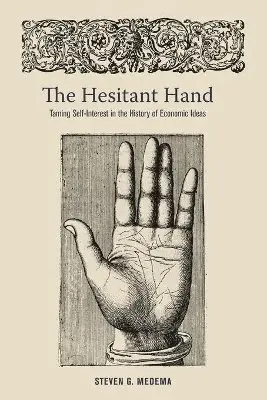
    Hesitant Hand

    Taming Self-Interest in the History of Economic Ideas

    AvSteven G. Medema

    Häftad, Engelska, 2011

    425 kr

    Beställningsvara. Skickas inom 5-8 vardagar. Fri frakt över 249 kr.

    Fler format och utgåvor

    E-bok

    598 kr

    Beskrivning

    Adam Smith turned economic theory on its head in 1776 when he declared that the pursuit of self-interest mediated by the market itself--not by government--led, via an invisible hand, to the greatest possible welfare for society as a whole. The Hesitant Hand examines how subsequent economic thinkers have challenged or reaffirmed Smith's doctrine, some contending that society needs government to intervene on its behalf when the marketplace falters, others arguing that government interference ultimately benefits neither the market nor society. Steven Medema explores what has been perhaps the central controversy in modern economics from Smith to today. He traces the theory of market failure from the 1840s through the 1950s and subsequent attacks on this view by the Chicago and Virginia schools. Medema follows the debate from John Stuart Mill through the Cambridge welfare tradition of Henry Sidgwick, Alfred Marshall, and A. C. Pigou, and looks at Ronald Coase's challenge to the Cambridge approach and the rise of critiques affirming Smith's doctrine anew.He shows how, following the marginal revolution, neoclassical economists, like the preclassical theorists before Smith, believed government can mitigate the adverse consequences of self-interested behavior, yet how the backlash against this view, led by the Chicago and Virginia schools, demonstrated that self-interest can also impact government, leaving society with a choice among imperfect alternatives. The Hesitant Hand demonstrates how government's economic role continues to be bound up in questions about the effects of self-interest on the greater good.

    Produktinformation

    • Utgivningsdatum:2011-03-06
    • Mått:152 x 235 x 20 mm
    • Vikt:358 g
    • Format:Häftad
    • Språk:Engelska
    • Antal sidor:248
    • Förlag:Princeton University Press
    • ISBN:9780691150000
    • Utmärkelser:Winner of European Society for the History of Economic Thought Best Book Award 2010

    Utforska kategorier

    • Nationalekonomi inom Ekonomi och Ledarskap

    Mer om författaren

    Steven G. Medema is professor of economics at the University of Colorado Denver. His many books include "Economics and the Law: From Posner to Post-Modernism and Beyond" (Princeton).

    Recensioner i media

    Winner of the 2010 Best Book Prize, European Society for the History of Economic Thought "Adam Smith's 'invisible hand' and the notion that self-interest can be best tamed by market interaction have been the center of policy disputes since the late 18th century... Medema chronicles the linkages between the debates of Smith's time and those of today... Highly recommended."--R. B. Emmett, Choice "In a way [The Hesitant Hand is] very specialist, being about the evolution of the approach to economic welfare since the Ancient Greeks, but particularly since Adam Smith. But ... I'm finding it unexpectedly thought-provoking. The different perspectives on the definition and assessment of welfare over the ages does indeed shed light on current debates about welfare, market failure and the role of the state."--Diane Coyle, The Enlightened Economist "This is an excellent book on an important topic, the history of which is fascinating."--Peter Groenewegen, Economic History Review "The Hesitant Hand gives readers a wonderfully accessible and stimulating overview that is rich in methodological and historical insights, suggesting potential paths for further inquiries... The Hesitant Hand is highly recommended."--Susan Schroeder, Australian Economic History Review "I hope this book shall be read widely by those who study the history of economic thought and those who seek an examination of an important fundamental economic problem: the linkage between self-interested behavior and the appropriate role of government."--Daisuke Nakai, History of Economic Thought "There are too few nuanced accounts of economic policy, so Steven Medema's The Hesitant Hand: Taming Self-Interest in the History of Economic Ideas is a welcome addition to the economics literature. It should be widely read and discussed... I strongly encourage anyone interested in thinking about economists and government policy to read this book; it gives a much better sense of how economists should think of policy analysis than just about any textbook."--David Colander, Eastern Economic Journal "I finished reading Medema's book eager of a more complete picture of the microeconomic theorizing about the 'hesitant hand' in the twentieth century. I hope that in a future work Medema will give us this broader picture, displaying again the exemplary scholarship and outstanding narrative skills that he showed in this book."--Ivan Moscati, History of Economic Ideas "The reader is offered a thought-provoking and beautifully written journey along three centuries of economic ideas... Medema has produced a masterful example of how the traditional, 'thin' methodology of doing the history of economic thought may still be extremely useful and fertile... The volume will also prove excellent as a teaching tool at graduate and undergraduate level and, at the same time, will cater to the needs of economists and other social scientists."--Nicola Giocoli, Journal of Economic Methodology

    Innehållsförteckning

    • Acknowledgments xi Prologue 1 Chapter One: Adam Smith and His Ancestors 5 Chapter Two: Harnessing Self-Interest: Mill, Sidgwick, and the Evolution of the Theory of Market Failure 26 Chapter Three: Marginalizing the Market: Marshall, Pigou, and the Pigovian Tradition 54 Chapter Four: Marginalizing Government I: From La Scienza delle Finanze to Wicksell 77 Chapter Five: Coase's Challenge 101 Chapter Six: Marginalizing Government II: The Rise of Public Choice Analysis 125 Chapter Seven: Legal Fiction: The Coase Theorem and the Evolution of Law and Economics 160 Epilogue: Everywhere, Self-Interest? 197 References 201 Index 225