• Fri frakt över 249 kr
  • •
  • Snabba leveranser
  • •
  • Billiga böcker
Kundservice

Du är på sajten för privatpersoner.

Företag, bibliotek eller offentlig verksamhet?

Du handlar på classic.bokus.com, där alla dina funktioner finns intakta.
Till classic.bokus.com
Bokus logotyp. Gå till startsidan.
  • Erbjudanden
  • Nyheter
  • Student
  • Topplistor
  • Barn & ungdom
  • Bokus Play
  • E-böcker
  • Pocketböcker
  • Spel & pussel

Må bättre, för mindre! Upp till 50% rabatt på hälsoböcker

Sidfot

Mina sidor

    Hjälp

    • Kundservice
    • Vanliga frågor och svar
    • Frakt och leverans
    • Retur vid ångerrätt
    • Reklamera vara
    • Betalning
    • Köpvillkor
    • Allmänna villkor
    • Information om webbplatsens tillgänglighet

    Om Bokus

    • Om oss
    • Pressrum
    • För studenter
    • För företag
    • För bibliotek och offentlig verksamhet
    • För leverantörer
    • Hållbarhet

    Populärt

    • Aktuella erbjudanden
    • Presentkort
    • Studentlitteratur
    • Nya böcker
    • Topplistor
    • Signerade böcker
    • Engelska böcker

    Inspiration

    • Boktips
    • BookTok
    • Populära bokserier
    • Barnbokskaraktärer
    • Populära författare
    Logotyp för Bokus
    Följ oss på Facebook (extern länk)Följ oss på Instagram (extern länk)Följ oss på YouTube (extern länk)Följ oss på TikTok (extern länk)
    bokus @ CookiesAnpassa cookiesIntegritetspolicyKöpvillkor
    Till Citymail hemsida (extern länk)Till Budbee hemsida (extern länk)Till Postnord hemsida (extern länk)Till Schenker hemsida (extern länk)Till Early Bird hemsida (extern länk)Till Walleys hemsida (extern länk)
    1. Juridik
    2. Rättsvetenskap
    3. Juristyrken

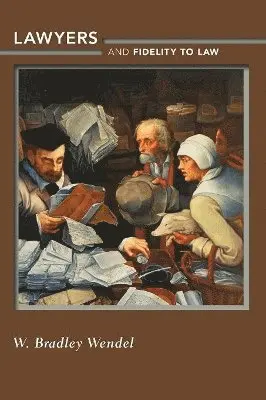
    Lawyers and Fidelity to Law

    AvW. Bradley Wendel

    Häftad, Engelska, 2012

    301 kr

    Beställningsvara. Skickas inom 5-8 vardagar. Fri frakt över 249 kr.

    Fler format och utgåvor

    E-bok

    416 kr

    Beskrivning

    Even lawyers who obey the law often seem to act unethically--interfering with the discovery of truth, subverting justice, and inflicting harm on innocent people. Standard arguments within legal ethics attempt to show why it is permissible to do something as a lawyer that it would be wrong to do as an ordinary person. But in the view of most critics these arguments fail to turn wrongs into rights. Even many lawyers think legal ethics is flawed because it does not accurately describe the considerable moral value of their work. In Lawyers and Fidelity to Law, Bradley Wendel introduces a new conception of legal ethics that addresses the concerns of lawyers and their critics alike. Wendel proposes an ethics grounded on the political value of law as a collective achievement that settles intractable conflicts, allowing people who disagree profoundly to live together in a peaceful, stable society. Lawyers must be loyal and competent client representatives, Wendel argues, but these obligations must always be exercised within the law that constitutes their own roles and confers rights and duties upon their clients.Lawyers act unethically when they treat the law as an inconvenient obstacle to be worked around and when they twist and distort it to help their clients do what they are not legally entitled to do. Lawyers and Fidelity to Law challenges lawyers and their critics to reconsider the nature and value of ethical representation.

    Produktinformation

    • Utgivningsdatum:2012-08-26
    • Mått:152 x 235 x 20 mm
    • Vikt:458 g
    • Format:Häftad
    • Språk:Engelska
    • Antal sidor:304
    • Förlag:Princeton University Press
    • ISBN:9780691156217
    • Utmärkelser:Short-listed for Choice Magazine Outstanding Reference/Academic Book Award 2011

    Utforska kategorier

    • Juristyrken inom Juridik
    • Filosofiska discipliner inom Filosofi och religion

    Mer om författaren

    W. Bradley Wendel is professor of law at Cornell Law School.

    Recensioner i media

    One of Choice's Outstanding Academic Titles for 2011 "This ambitious project is carefully executed and trenchantly defended. The book is especially good when confronting cases in which fidelity to the law appears to lead to perverse outcomes, such as encouraging obedience to unjust laws or making disobedience to unjust laws more difficult."--Choice

    Innehållsförteckning

    • Acknowledgments ix Introduction 1 Chapter One: The Standard Conception, For and Against 17 1.1 Introduction: Law, Morality, Ethics, and Legal Ethics 17 1.2 Ordinary and Professional Moralities 20 1.3 The Standard Conception 29 1.4 Traditional Justifications for the Standard Conception and Moral Critiques 31 1.4.1 Client Autonomy 31 1.4.2 Partiality to Clients and the Value of Dignity 37 1.5 Simon's Legalist Critique of the Standard Conception 44 Chapter Two: From Partisanship to Legal Entitlements Putting the Law Back into Lawyering 49 2.1 Lawyers as Agents 49 2.1.1 Legal, Not Moral, Rights 54 2.1.2 Rights, Not Power 59 2.2 Legal Ethics as Interpretation 66 2.2.1 Loophole Lawyering 66 2.2.2 Mistakes, Institutional Malfunctions, and Windfalls 72 2.2.3 A Note on "Zealous" Representation 77 2.2.4 Legal Uncertainty and Lawyering Roles 81 Chapter Three: From Neutrality to Public Reason Moral Conflict and the Law 86 3.1 Legality and Legitimacy 86 3.2 The Circumstances of Politics 89 3.2.1 Disagreement and the Need for Settlement 92 3.2.2 Rough Equality and Tolerably Fair Procedures 98 3.3 Moral Reasons and Legal Obligation 105 3.3.1 Obligation, Authority, and Exclusionary Reasons 107 3.3.2 Presumptive or Conclusive Obligations? 113 Chapter Four: Legal Entitlements and Public Reason in Practice 122 4.1 Disobedience and Nullification 123 4.1.1 Civil Disobedience and Conscientious Objection 124 4.1.2 Legal Permissions vs. Legal Duties 125 4.1.3 Lawyering for Change 129 4.1.4 Nullification and Subversion 131 4.2 Morally Grounded Client Counseling 135 4.3 Morally Motivated Client Selection 143 Chapter Five: From Nonaccountability to Tragedy The Remaining Claims of Morality 156 5.1 The Ideal of Innocence 156 5.2 Harmonizing the Demands of Role and Personal Integrity: The "Incorporationist" Solution 159 5.3 The Problem of Dirty Hands 169 Chapter Six: Legal Ethics as Craft 176 6.1 The Case of the Torture Memos 177 6.2 Interpretive Judgment 184 6.3 The Jurisprudence of Lawyering 194 6.4 Some Legal-Interpretive Puzzles 200 6.4.1 Enforcement Practices and Legal Interpretation 200 6.4.2 Negotiated Compliance and the Endogeneity of Law 203 Conclusion 208 Notes 213 Bibliography 269 Index 283