• Fri frakt över 249 kr
  • •
  • Snabba leveranser
  • •
  • Billiga böcker
Kundservice

Du är på sajten för privatpersoner.

Företag, bibliotek eller offentlig verksamhet?

Du handlar på classic.bokus.com, där alla dina funktioner finns intakta.
Till classic.bokus.com
Bokus logotyp. Gå till startsidan.
  • Erbjudanden
  • Nyheter
  • Student
  • Topplistor
  • Barn & ungdom
  • Bokus Play
  • E-böcker
  • Pocketböcker
  • Spel & pussel

10% rabatt på allt med kod NYSTART10 →

Sidfot

Mina sidor

    Hjälp

    • Kundservice
    • Vanliga frågor och svar
    • Frakt och leverans
    • Retur vid ångerrätt
    • Reklamera vara
    • Betalning
    • Köpvillkor
    • Allmänna villkor
    • Information om webbplatsens tillgänglighet

    Om Bokus

    • Om oss
    • Pressrum
    • För studenter
    • För företag
    • För bibliotek och offentlig verksamhet
    • För leverantörer
    • Hållbarhet

    Populärt

    • Aktuella erbjudanden
    • Presentkort
    • Studentlitteratur
    • Nya böcker
    • Topplistor
    • Signerade böcker
    • Engelska böcker

    Inspiration

    • Boktips
    • BookTok
    • Populära bokserier
    • Barnbokskaraktärer
    • Populära författare
    Logotyp för Bokus
    Följ oss på Facebook (extern länk)Följ oss på Instagram (extern länk)Följ oss på YouTube (extern länk)Följ oss på TikTok (extern länk)
    bokus @ CookiesAnpassa cookiesIntegritetspolicyKöpvillkor
    Till Citymail hemsida (extern länk)Till Budbee hemsida (extern länk)Till Postnord hemsida (extern länk)Till Schenker hemsida (extern länk)Till Early Bird hemsida (extern länk)Till Walleys hemsida (extern länk)
    1. Samhälle och politik
    2. Politik och statsskick
    3. Internationella relationer

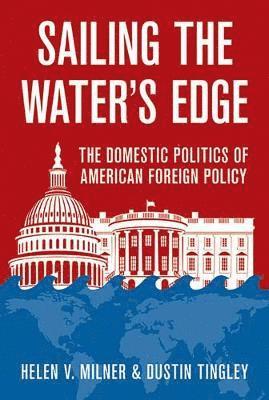
    Sailing the Water's Edge

    The Domestic Politics of American Foreign Policy

    AvHelen V. Milner,Dustin Tingley

    Inbunden, Engelska, 2015

    398 kr

    Beställningsvara. Skickas inom 5-8 vardagar. Fri frakt över 249 kr.

    Fler format och utgåvor

    Häftad

    308 kr

    Beskrivning

    When engaging with other countries, the U.S. government has a number of different policy instruments at its disposal, including foreign aid, international trade, and the use of military force. But what determines which policies are chosen? Does the United States rely too much on the use of military power and coercion in its foreign policies? Sailing the Water's Edge focuses on how domestic U.S. politics--in particular the interactions between the president, Congress, interest groups, bureaucratic institutions, and the public--have influenced foreign policy choices since World War II and shows why presidents have more control over some policy instruments than others. Presidential power matters and it varies systematically across policy instruments. Helen Milner and Dustin Tingley consider how Congress and interest groups have substantial material interests in and ideological divisions around certain issues and that these factors constrain presidents from applying specific tools. As a result, presidents select instruments that they have more control over, such as use of the military. This militarization of U.S. foreign policy raises concerns about the nature of American engagement, substitution among policy tools, and the future of U.S. foreign policy. Milner and Tingley explore whether American foreign policy will remain guided by a grand strategy of liberal internationalism, what affects American foreign policy successes and failures, and the role of U.S. intelligence collection in shaping foreign policy. The authors support their arguments with rigorous theorizing, quantitative analysis, and focused case studies, such as U.S. foreign policy in Sub-Saharan Africa across two presidential administrations. Sailing the Water's Edge examines the importance of domestic political coalitions and institutions on the formation of American foreign policy.

    Produktinformation

    • Utgivningsdatum:2015-09-15
    • Mått:152 x 235 x 319 mm
    • Vikt:635 g
    • Format:Inbunden
    • Språk:Engelska
    • Antal sidor:352
    • Förlag:Princeton University Press
    • ISBN:9780691165479

    Utforska kategorier

    • Internationella relationer inom Samhälle och politik

    Mer om författaren

    Helen V. Milner is the B.C. Forbes Professor of Politics and International Affairs at Princeton University. Her books include Votes, Vetoes, and the Political Economy of International Trade Agreements and Interests, Institutions, and Information (both Princeton). Dustin Tingley is professor of government at Harvard University.

    Recensioner i media

    Winners of the 2016 Gladys M. Kammerer Award, American Political Science Association "Milner and Tingley provide a thorough examination of how presidential power in foreign policy is contingent on relations with domestic actors (Congress, interest groups, and the public). Their book is a welcome addition to the literature as the dominant assumption is that presidents are impervious to domestic pressure."--Choice

    Innehållsförteckning

    • List of Tables viii List of Figures ix Preface xi 1 INTRODUCTION 1 Motivation and Focus1 Core Contributions 6 What Is Foreign Policy? 7 Presidential Power in Foreign Policy 10 Overview of Our Theory 18 Implications for US Foreign Policy 21 Organization of the Book 27 Conclusion 30 2 A THEORY OF PRESIDENTIAL POWER AND US FOREIGN POLICY 33 Foreign Policy Instruments 35 Distributive Politics and US Foreign Policy 39 Political Ideology and the Extent of Ideological Divisions over US Foreign Policy 56 Connecting to Policy Substitution 67 Hypotheses: Presidential Influence and the Characteristics of Policy Instruments 69 Alternative Explanations 71 Conclusion 74 3 FOLLOW THE SAND DOLLARS: Interest Groups and American Foreign Policy Instruments 77 What Are Interest Groups and What Do They Do? 82 Testimony and Lobbying Data about Interest Groups across Foreign Policy Instruments 83 Interest Groups and International Engagement 85 Who Gets Lobbied? 104 Conclusion 119 4 FROM THE FLOOR TO THE SHORE: Budget Politics and Roll Call Voting on US Foreign Policy 121 When Do Presidents Get the Budgets They Request? 123 The Voting-Legislating Connection 129 Conclusion 153 5 CONTROLLING THE SAND CASTLE: The Design and Control of US Foreign Policy Agencies 157 Institutional Design 159 Analyzing Bureaucratic Control 162 Case Studies 168 Implications for Substitution 180 Conclusion 182 6 THE VIEW FROM THE PUBLIC BEACH: Presidential Power and Substitution in American Public Opinion 185 Public Opinion and Foreign Policy 186 Chapter Outline 188 The Role of the President: Information and Impact 189 Ideological Divisions and Substitution across Foreign Policy Instruments 196 Conclusion 206 7 AMERICAN FOREIGN POLICY TOWARD SUB-SAHARAN AFRICA, 1993-2009: A Case Study of Policy Instrument Politics and Substitution 209 Sub-Saharan Africa Policy (1993-2001): The Clinton Years 212 Sub-Saharan Africa Policy during the George W Bush Administration (2001-2009) 234 Conclusion 252 8 CONCLUSIONS 255 Our Argument and Findings 255 Important Implications for IR Theory 263 Domestic Politics, Foreign Policy, Polarization, and Bipartisanship 266 How Does Our Argument Apply to Other Countries? 267 Limitations and Future Research 269 Implications for American Foreign Policy 272 Works Cited 285 Index 319