• Fri frakt över 249 kr
  • •
  • Snabba leveranser
  • •
  • Billiga böcker
Kundservice

Du är på sajten för privatpersoner.

Företag, bibliotek eller offentlig verksamhet?

Du handlar på classic.bokus.com, där alla dina funktioner finns intakta.
Till classic.bokus.com
Bokus logotyp. Gå till startsidan.
  • Erbjudanden
  • Nyheter
  • Student
  • Topplistor
  • Barn & ungdom
  • Bokus Play
  • E-böcker
  • Pocketböcker
  • Spel & pussel

Må bättre, för mindre! Upp till 50% rabatt på hälsoböcker

Sidfot

Mina sidor

    Hjälp

    • Kundservice
    • Vanliga frågor och svar
    • Frakt och leverans
    • Retur vid ångerrätt
    • Reklamera vara
    • Betalning
    • Köpvillkor
    • Allmänna villkor
    • Information om webbplatsens tillgänglighet

    Om Bokus

    • Om oss
    • Pressrum
    • För studenter
    • För företag
    • För bibliotek och offentlig verksamhet
    • För leverantörer
    • Hållbarhet

    Populärt

    • Aktuella erbjudanden
    • Presentkort
    • Studentlitteratur
    • Nya böcker
    • Topplistor
    • Signerade böcker
    • Engelska böcker

    Inspiration

    • Boktips
    • BookTok
    • Populära bokserier
    • Barnbokskaraktärer
    • Populära författare
    Logotyp för Bokus
    Följ oss på Facebook (extern länk)Följ oss på Instagram (extern länk)Följ oss på YouTube (extern länk)Följ oss på TikTok (extern länk)
    bokus @ CookiesAnpassa cookiesIntegritetspolicyKöpvillkor
    Till Citymail hemsida (extern länk)Till Budbee hemsida (extern länk)Till Postnord hemsida (extern länk)Till Schenker hemsida (extern länk)Till Early Bird hemsida (extern länk)Till Walleys hemsida (extern länk)
    1. Samhälle och politik
    2. Politik och statsskick
    3. Internationella relationer

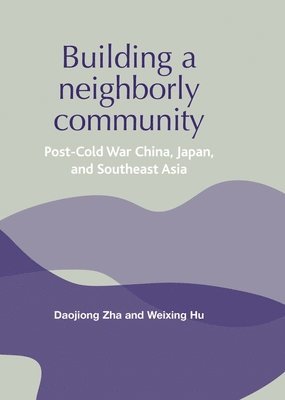
    Building a neighborly community

    Post-cold war China, Japan, and Southeast Asia

    AvDaojiong Zha,Weixing Hu

    Häftad, Engelska, 2013

    360 kr

    Beställningsvara. Skickas inom 5-8 vardagar. Fri frakt över 249 kr.

    Beskrivning

    Building a neighborly community, available for the first time in paperback, explores the political economy of post-cold war East Asian co-operation by examining the history of intra-regional co-operation, against the background of China’s rise and Japan’s relative decline, both real and perceived. The book in particular examines how East Asian states have dealt with the South China Sea as a region-wide security challenge and the imperative for self-help after the 1997 economic crisis. The book builds on the explanatory strength of analytical eclecticism, and ultimately concludes that China, South Korea, Japan, and ASEAN states have aimed for constructing a neighborly community. The fundamental differences between a neighborly community and the kind of community that has emerged in Europe and North America are that qualification for membership is not conditional, the process of routine interactions is itself one of reassurance, the aim of inter-state interactions is to foster acceptance of each other, and changes in a member’s foreign policy behaviour are accepted.

    Produktinformation

    • Utgivningsdatum:2013-02-28
    • Mått:156 x 234 x 15 mm
    • Vikt:386 g
    • Format:Häftad
    • Språk:Engelska
    • Antal sidor:272
    • Förlag:Manchester University Press
    • ISBN:9780719070655

    Utforska kategorier

    • Internationella relationer inom Samhälle och politik

    Mer om författaren

    Daojiong Zha is Associate Professor of International Studies at the Renmin University of China. Weixing Hu is Associate Professor of Political Science in the Department of Politics and Public Administration at the University of Hong KongDaojiong Zha is Professor of International Studies at the Renmin University of ChinaWeixing Hu is Associate Professor of Political Science at the University of Hong Kong

    Innehållsförteckning

    • 1. Introduction2. East Asian community building in theoretical perspectives3. China and Southeast Asia4. Japan and Southeast Asia5. Engaging China and Japan the “ASEAN way”6. Managing security challenges: the South China Sea7. Economic diplomacy and the ASEAN+3 process8. ASEAN and Sino-Japanese relations9. Conclusion: building a neighborly community