• Fri frakt över 249 kr
  • •
  • Snabba leveranser
  • •
  • Billiga böcker
Kundservice

Du är på sajten för privatpersoner.

Företag, bibliotek eller offentlig verksamhet?

Du handlar på classic.bokus.com, där alla dina funktioner finns intakta.
Till classic.bokus.com
Bokus logotyp. Gå till startsidan.
  • Erbjudanden
  • Nyheter
  • Student
  • Topplistor
  • Barn & ungdom
  • Bokus Play
  • E-böcker
  • Pocketböcker
  • Spel & pussel

10% rabatt på allt med kod NYSTART10 →

Sidfot

Mina sidor

    Hjälp

    • Kundservice
    • Vanliga frågor och svar
    • Frakt och leverans
    • Retur vid ångerrätt
    • Reklamera vara
    • Betalning
    • Köpvillkor
    • Allmänna villkor
    • Information om webbplatsens tillgänglighet

    Om Bokus

    • Om oss
    • Pressrum
    • För studenter
    • För företag
    • För bibliotek och offentlig verksamhet
    • För leverantörer
    • Hållbarhet

    Populärt

    • Aktuella erbjudanden
    • Presentkort
    • Studentlitteratur
    • Nya böcker
    • Topplistor
    • Signerade böcker
    • Engelska böcker

    Inspiration

    • Boktips
    • BookTok
    • Populära bokserier
    • Barnbokskaraktärer
    • Populära författare
    Logotyp för Bokus
    Följ oss på Facebook (extern länk)Följ oss på Instagram (extern länk)Följ oss på YouTube (extern länk)Följ oss på TikTok (extern länk)
    bokus @ CookiesAnpassa cookiesIntegritetspolicyKöpvillkor
    Till Citymail hemsida (extern länk)Till Budbee hemsida (extern länk)Till Postnord hemsida (extern länk)Till Schenker hemsida (extern länk)Till Early Bird hemsida (extern länk)Till Walleys hemsida (extern länk)
    1. Kultur
    2. Scenkonst och film
    3. Film

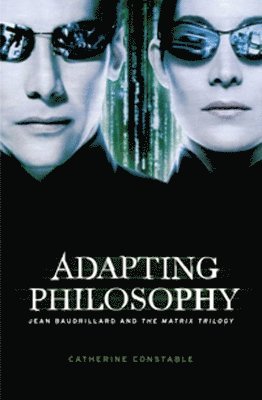
    Adapting Philosophy

    Jean Baudrillard and *the Matrix Trilogy*

    AvCatherine Constable

    Inbunden, Engelska, 2009

    1 155 kr

    Tillfälligt slut

    Fler format och utgåvor

    Häftad

    348 kr

    Beskrivning

    Adapting Philosophy looks at the ways in which The Matrix Trilogy adapts Jean Baudrillard’s Simulacra and Simulation, and in doing so creates its own distinctive philosophical position. Where previous work in the field has presented the trilogy as a simple ‘beginner’s guide’ to philosophy, this study offers a new methodology for inter-relating philosophy and film texts, focusing on the conceptual role played by imagery in both types of text. This focus on the figurative enables a new-found appreciation of the liveliness of philosophical writing and the multiple philosophical dimensions of Hollywood films. The book opens with a critical overview of existing philosophical writing on The Matrix Trilogy and goes on to draw on adaptation theory and feminist philosophy in order to create a new methodology for interlinking philosophical and filmic texts. Three chapters are devoted to detailed textual analyses of the films, tracing the ways in which the imagery that dominates Baudrillard’s writing is adapted and transformed by the trilogy’s complex visuals and soundtrack. The conclusion situates the methodology developed throughout the book in relation to other approaches currently emerging in the new field of Film-Philosophy. The book’s multi-disciplinary approach encompasses Philosophy, Film Studies and Adaptation Theory and will be of interest to undergraduates and postgraduates studying these subjects. It also forms part of the developing interdisciplinary field of Film-Philosophy. The detailed textual analyses of The Matrix Trilogy will also be of interest to anyone wishing to deepen their understanding of the multi-faceted nature of this seminal work.

    Produktinformation

    • Utgivningsdatum:2009-05-01
    • Mått:129 x 198 x 10 mm
    • Vikt:295 g
    • Format:Inbunden
    • Språk:Engelska
    • Antal sidor:192
    • Förlag:Manchester University Press
    • ISBN:9780719075315

    Utforska kategorier

    • Film inom Kultur

    Mer om författaren

    Catherine Constable is Associate Professor in Film Studies at the University of Warwick

    Innehållsförteckning

    • AcknowledgementsIntroduction 1. Good example, bad philosophy2. Adapting philosophy/philosophy as adaptation3. Mirrors and screens4. Codes5. Beyond nihilismConclusionBibliographyIndex