• Fri frakt över 249 kr
  • •
  • Snabba leveranser
  • •
  • Billiga böcker
Kundservice

Du är på sajten för privatpersoner.

Företag, bibliotek eller offentlig verksamhet?

Du handlar på classic.bokus.com, där alla dina funktioner finns intakta.
Till classic.bokus.com
Bokus logotyp. Gå till startsidan.
  • Erbjudanden
  • Nyheter
  • Student
  • Topplistor
  • Barn & ungdom
  • Bokus Play
  • E-böcker
  • Pocketböcker
  • Spel & pussel

10% studentrabatt med kod TERM26

Sidfot

Mina sidor

    Hjälp

    • Kundservice
    • Vanliga frågor och svar
    • Frakt och leverans
    • Retur vid ångerrätt
    • Reklamera vara
    • Betalning
    • Köpvillkor
    • Allmänna villkor
    • Information om webbplatsens tillgänglighet

    Om Bokus

    • Om oss
    • Pressrum
    • För studenter
    • För företag
    • För bibliotek och offentlig verksamhet
    • För leverantörer
    • Hållbarhet

    Populärt

    • Aktuella erbjudanden
    • Presentkort
    • Studentlitteratur
    • Nya böcker
    • Topplistor
    • Signerade böcker
    • Engelska böcker

    Inspiration

    • Boktips
    • BookTok
    • Populära bokserier
    • Barnbokskaraktärer
    • Populära författare
    Logotyp för Bokus
    Följ oss på Facebook (extern länk)Följ oss på Instagram (extern länk)Följ oss på YouTube (extern länk)Följ oss på TikTok (extern länk)
    bokus @ CookiesAnpassa cookiesIntegritetspolicyKöpvillkor
    Till Citymail hemsida (extern länk)Till Budbee hemsida (extern länk)Till Postnord hemsida (extern länk)Till Schenker hemsida (extern länk)Till Early Bird hemsida (extern länk)Till Walleys hemsida (extern länk)
    1. Djur och Natur
    2. Naturböcker
    3. Växtböcker

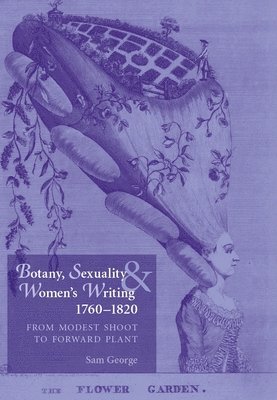
    Botany, sexuality and women's writing, 1760–1830

    From modest shoot to forward plant

    AvSam George

    Häftad, Engelska, 2012

    414 kr

    Beställningsvara. Skickas inom 5-8 vardagar. Fri frakt över 249 kr.

    Fler format och utgåvor

    Inbunden

    1 251 kr

    Beskrivning

    In this fascinating study, Samantha George explores the cultivation of the female mind and the feminised discourse of botanical literature in eighteenth-century Britain. In particular, she discusses British women’s engagement with the Swedish botanist, Carl Linnaeus, and his unsettling discovery of plant sexuality.Previously ignored primary texts of an extraordinary nature are rescued from obscurity and assigned a proper place in the histories of science, eighteenth-century literature, and women’s writing. The result is groundbreaking: the author explores nationality and sexuality debates in relation to botany and charts the appearance of a new literary stereotype, the sexually precocious female botanist. She uncovers an anonymous poem on Linnaean botany, handwritten in the eighteenth century, and subsequently traces the development of a new genre of women’s writing — the botanical poem with scientific notes.The book is indispensable reading for all scholars of the eighteenth century, especially those interested in Romantic women’s writing, or the relationship between literature and science.

    Produktinformation

    • Utgivningsdatum:2012-10-30
    • Mått:156 x 234 x 15 mm
    • Vikt:386 g
    • Format:Häftad
    • Språk:Engelska
    • Antal sidor:272
    • Förlag:Manchester University Press
    • ISBN:9780719088452

    Utforska kategorier

    • Växtböcker inom Djur och Natur
    • Botanik inom Naturvetenskap och teknik
    • Genusvetenskap inom Samhälle och politik

    Mer om författaren

    Samantha George teaches eighteenth-century and Romantic period literature in the Department of English Literature at the University of Sheffield

    Innehållsförteckning

    • List of figuresAcknowledgementsIntroduction1. ‘The Sweet Flowers that Smile in the Walk of Man’: floral femininity and female education2. ‘Unveiling the mysteries of vegetation’: botany and the feminine3. Sex, class and order in Flora’s army4. Forward plants and wanton women: botany and sexual anxiety in the late eighteenth century5. ‘Botany in an English dress’: British flora and the ‘fair daughters of Albion’ConclusionAppendices: Botanical poems by womenBibliographyIndex