• Fri frakt över 249 kr
  • •
  • Snabba leveranser
  • •
  • Billiga böcker
Kundservice

Du är på sajten för privatpersoner.

Företag, bibliotek eller offentlig verksamhet?

Du handlar på classic.bokus.com, där alla dina funktioner finns intakta.
Till classic.bokus.com
Bokus logotyp. Gå till startsidan.
  • Erbjudanden
  • Nyheter
  • Student
  • Topplistor
  • Barn & ungdom
  • Bokus Play
  • E-böcker
  • Pocketböcker
  • Spel & pussel

10% studentrabatt med kod TERM26

Sidfot

Mina sidor

    Hjälp

    • Kundservice
    • Vanliga frågor och svar
    • Frakt och leverans
    • Retur vid ångerrätt
    • Reklamera vara
    • Betalning
    • Köpvillkor
    • Allmänna villkor
    • Information om webbplatsens tillgänglighet

    Om Bokus

    • Om oss
    • Pressrum
    • För studenter
    • För företag
    • För bibliotek och offentlig verksamhet
    • För leverantörer
    • Hållbarhet

    Populärt

    • Aktuella erbjudanden
    • Presentkort
    • Studentlitteratur
    • Nya böcker
    • Topplistor
    • Signerade böcker
    • Engelska böcker

    Inspiration

    • Boktips
    • BookTok
    • Populära bokserier
    • Barnbokskaraktärer
    • Populära författare
    Logotyp för Bokus
    Följ oss på Facebook (extern länk)Följ oss på Instagram (extern länk)Följ oss på YouTube (extern länk)Följ oss på TikTok (extern länk)
    bokus @ CookiesAnpassa cookiesIntegritetspolicyKöpvillkor
    Till Citymail hemsida (extern länk)Till Budbee hemsida (extern länk)Till Postnord hemsida (extern länk)Till Schenker hemsida (extern länk)Till Early Bird hemsida (extern länk)Till Walleys hemsida (extern länk)
    1. Hem och Trädgård
    2. Heminredning

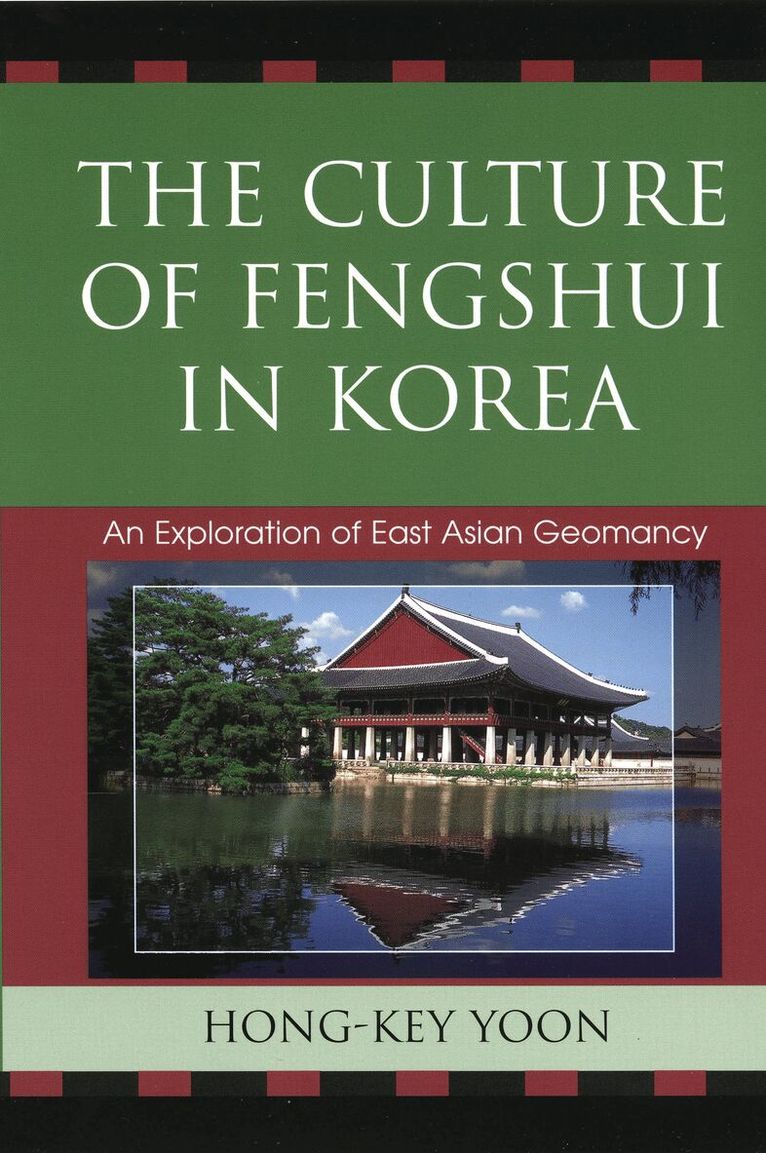
    Culture of Fengshui in Korea

    An Exploration of East Asian Geomancy

    AvHong-Key Yoon

    Häftad, Engelska, 2008

    Del i serien AsiaWorld

    771 kr

    Beställningsvara. Skickas inom 10-15 vardagar. Fri frakt över 249 kr.

    Beskrivning

    The term Fengshui, which literally means 'wind and water,' is the ancient Chinese art of selecting an auspicious site to provide the most harmonious relationship between human and earth. The term is generally translated as "geomancy," and has had a deep and extensive impact on Korean, Chinese, and other East Asian cultures. Hong-key Yoon's book explores the nature of geomantic principles and the culture of practicing them in Korean cultural contexts. Yoon first examines the nature and historical background of geomancy, geomantic principles for auspicious sites (houses, graves, and cities) and provides an interpretation of geomantic principles as practiced in Korea. Yoon looks at geomancy's influence on cartography, religion and philosophy, and urban development in both Korea and China. Finally, Yoon debates the role of geomancy in the iconographical warfare between Japanese colonialism and Korean nationalism as it affected the cultural landscape of Kyongbok Palace in Seoul.

    Produktinformation

    • Utgivningsdatum:2008-05-06
    • Mått:153 x 230 x 26 mm
    • Vikt:517 g
    • Format:Häftad
    • Språk:Engelska
    • Serie:AsiaWorld
    • Antal sidor:350
    • Förlag:Bloomsbury Publishing Plc
    • ISBN:9780739113493

    Utforska kategorier

    • Heminredning inom Hem och Trädgård

    Mer om författaren

    Hong-key Yoon is associate professor in the School of Geography and Environmental Science at the University of Auckland, New Zealand.

    Recensioner i media

    This book provides valuable resources and should be helpful for other researchers in understanding the cultural development of Feng Shui in Korea. It should also encourage more research in this area.

    Innehållsförteckning

    • Chapter 1 PrefacePart 2 Part I: The Nature And Historical Background Of GeomancyChapter 3 Chapter 1: IntroductionChapter 4 Chapter 2: The Origin and Evolution of Geomancy in KoreaChapter 5 Chapter 3: The Introduction and Development of Geomancy in KoreaPart 6 Part II: Geomantic Principles Into PracticeChapter 7 Chapter 4: Yin-Yang Theory and GeomancyChapter 8 Chapter 5: The Geomantic Principles for and Auspicious SiteChapter 9 Chapter 6: The Principles of House GeomancyChapter 10 Chapter 7: Grave Geomancy LandscapeChapter 11 Chapter 8: An Interpretation of Geomantic PrinciplesChapter 12 Chapter 9: The Cartography of GeomancyPart 13 Part III: Geomancy And ReligionChapter 14 Chapter 10: Geomancy's Interaction with BuddhismChapter 15 Chapter 11: Confucian Ethos and GeomancyPart 16 Part IV: Geomancy And SettlementChapter 17 Chapter 12: The Use of Geomantic Ideas in Chinese, Japanese, and Korean CitiesChapter 18 Chapter 13: Seoul: A New Dynasty's Search for an Auspicious SiteChapter 19 Chapter 14: The Social Construction of KaesongPart 20 Part V: Geomancy and IconographyChapter 21 Chapter 15: Iconographic Warfare and the Geomantic Landscape of SeoulChapter 22 Chapter 16: Conclusion