• Fri frakt över 249 kr
  • •
  • Snabba leveranser
  • •
  • Billiga böcker
Kundservice

Du är på sajten för privatpersoner.

Företag, bibliotek eller offentlig verksamhet?

Du handlar på classic.bokus.com, där alla dina funktioner finns intakta.
Till classic.bokus.com
Bokus logotyp. Gå till startsidan.
  • Erbjudanden
  • Nyheter
  • Student
  • Topplistor
  • Barn & ungdom
  • Bokus Play
  • E-böcker
  • Pocketböcker
  • Spel & pussel

10% rabatt på allt med kod: NYSTART10 →

Sidfot

Mina sidor

    Hjälp

    • Kundservice
    • Vanliga frågor och svar
    • Frakt och leverans
    • Retur vid ångerrätt
    • Reklamera vara
    • Betalning
    • Köpvillkor
    • Allmänna villkor
    • Information om webbplatsens tillgänglighet

    Om Bokus

    • Om oss
    • Pressrum
    • För studenter
    • För företag
    • För bibliotek och offentlig verksamhet
    • För leverantörer
    • Hållbarhet

    Populärt

    • Aktuella erbjudanden
    • Presentkort
    • Studentlitteratur
    • Nya böcker
    • Topplistor
    • Signerade böcker
    • Engelska böcker

    Inspiration

    • Boktips
    • BookTok
    • Populära bokserier
    • Barnbokskaraktärer
    • Populära författare
    Logotyp för Bokus
    Följ oss på Facebook (extern länk)Följ oss på Instagram (extern länk)Följ oss på YouTube (extern länk)Följ oss på TikTok (extern länk)
    bokus @ CookiesAnpassa cookiesIntegritetspolicyKöpvillkor
    Till Citymail hemsida (extern länk)Till Budbee hemsida (extern länk)Till Postnord hemsida (extern länk)Till Schenker hemsida (extern länk)Till Early Bird hemsida (extern länk)Till Walleys hemsida (extern länk)
    1. Skönlitteratur
    2. Litteraturvetenskap
    3. Litteraturvetenskap

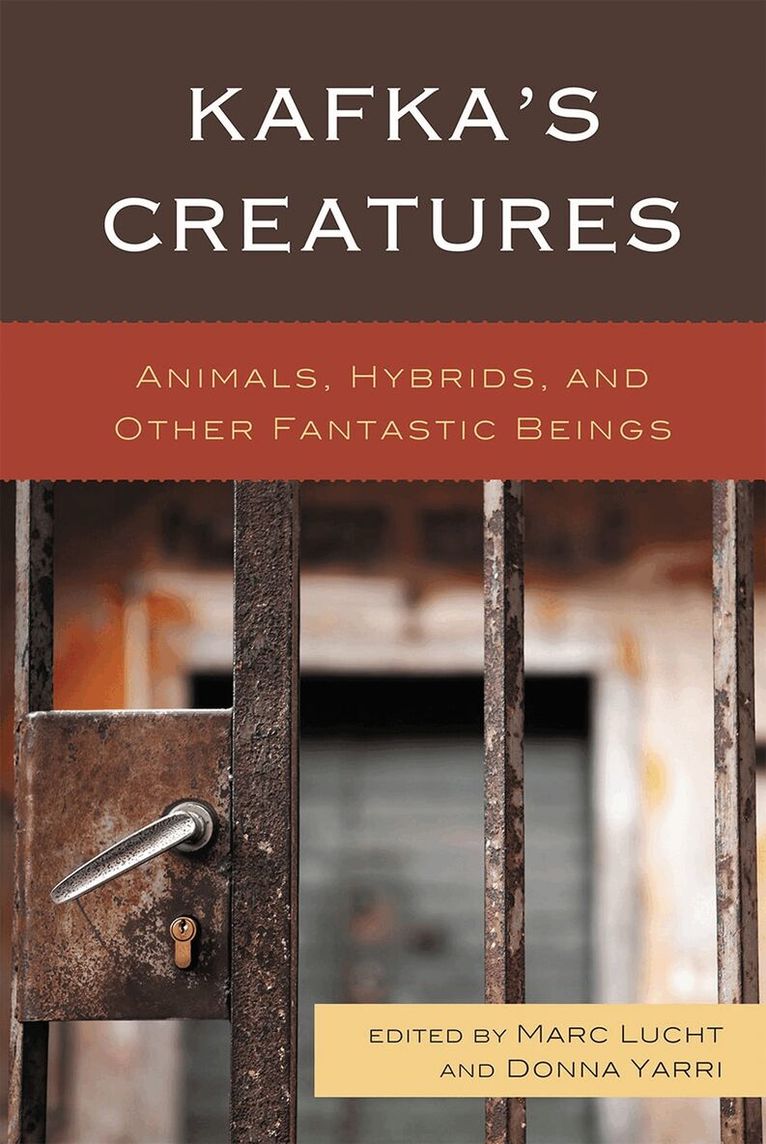
    Kafka's Creatures

    Animals, Hybrids, and Other Fantastic Beings

    AvMarc Lucht,Donna Yarri

    Inbunden, Engelska, 2010

    1 765 kr

    Beställningsvara. Skickas inom 10-15 vardagar. Fri frakt över 249 kr.

    Beskrivning

    There are few literary authors in whose work animals and other creatures play as prominent a role as they do in Franz Kafka's. Exploring multiple dimensions of Kafka's incorporation of nonhuman creatures into his writing, this volume is the first collection in English of essays devoted to illuminating this important and ubiquitous dimension of his work. The chapters here are written by an array of international scholars from various fields, and represent a diversity of interpretive approaches. In the course of exploring the roles played by nonhuman animals and other creatures in Kafka's writing, they help make sense of the literary and philosophical significance of his preoccupation with animals, and make clear that careful investigation of those creatures illuminates his core concerns: the nature of power; the inescapability of history and guilt; the dangers, promise, and strangeness of the alienation endemic to modern life; the human propensity for cruelty and oppression; the limits and conditions of humanity and the risks of dehumanization; the nature of authenticity; family life; Jewishness; and the nature of language and art. Thus the essays in this volume enrich our understanding of Kafka's work as a whole. Especially striking is the extent to which the articles collected here bring into focus the ways in which Kafka anticipated many of the recent developments in contemporary thinking about nonhuman animals.

    Produktinformation

    • Utgivningsdatum:2010-06-22
    • Mått:166 x 246 x 22 mm
    • Vikt:608 g
    • Format:Inbunden
    • Språk:Engelska
    • Antal sidor:306
    • Förlag:Bloomsbury Publishing Plc
    • ISBN:9780739143940

    Utforska kategorier

    • Litteraturvetenskap inom Skönlitteratur

    Mer om författaren

    Marc Lucht is visiting assistant professor of philosophy at Virginia Polytechnic Institute and State University. Donna Yarri is associate professor of theology at Alvernia University.

    Recensioner i media

    Kafka's affinity and empathy for animals led him to write numerous tales in which the central characters are thinking animals, human-animal hybrids, or fantastic creatures. These tales have traditionally been interpreted allegorically, as fables that reduce the human condition to its basic, enigmatic features. Lucht (philosophy, Virginia Tech) and Yarri (theology, Alvernia Univ.) have gathered suggestive, insightful critical analyses (representing a diversity of approaches) that for the most part challenge this allegorical assumption about Kafka's creatures. In treating Kafka's animal stories more as stories about animals, the contributors not so much overthrow the time-honored allegory assumption but augment it by exploring Kafka's provocative blurring of the boundaries between species and creatures. At its best, the volume sheds light on Kafka's subversion of anthropocentric prejudices and sociocultural values, thus generating new perspectives on his meditations on power, guilt and history, Jewish identity, and the alienating, dehumanizing forces of the modern/postmodern world. And in elaborating the narrative stance and creaturely perspectives of these tales, these essays elucidate ways in which Kafka anticipated study of ethnicity, non-human subjectivity, and animal rights. Summing Up: Recommended. Upper-division undergraduates through faculty.

    Innehållsförteckning

    • Chapter 1. IntroductionChapter 2. Kafka's Hybrids: Thinking Animals and Mirrored HumansChapter 3. "Czechs, Jews and Dogs Not Allowed": Identity, Boundary and Moral Stance in Kafka's "A Crossbreed" and "Jackals and Arabs"Chapter 4. De-allegorizing Kafka's Ape: Two Animalistic ContextsChapter 5. Agents of the Forgotten: Animals as the Vehicles of Shame in KafkaChapter 6. The Difficult Task of Being Real: Odradek, the Kittenlamb, and the Historical IndividualChapter 7. Consolation in Your Neighbour's Fur: On Kafka's Animal ParablesChapter 8. Crowds, Animals, and Aesthetic Language in Kafka's "Josephine"Chapter 9. Performative Emotion in Kafka's "Josephine, the Singer; or, the Mouse Folk" and Freud's "The Creative Writer and Daydreamer"Chapter 10. The Power of the Look: Franz Kafka's "The Cares of a Family Man"Chapter 11. Four Hands Good, Two Hands BadChapter 12. Who identified the animal? The rhetoric behind the hybrid in Kafka's "The Metamorphosis" and Amerika (The man who disappeared)Ch