• Fri frakt över 249 kr
  • •
  • Snabba leveranser
  • •
  • Billiga böcker
Kundservice

Du är på sajten för privatpersoner.

Företag, bibliotek eller offentlig verksamhet?

Du handlar på classic.bokus.com, där alla dina funktioner finns intakta.
Till classic.bokus.com
Bokus logotyp. Gå till startsidan.
  • Erbjudanden
  • Nyheter
  • Student
  • Topplistor
  • Barn & ungdom
  • Bokus Play
  • E-böcker
  • Pocketböcker
  • Spel & pussel

10% rabatt på allt med kod: NYSTART10 →

Sidfot

Mina sidor

    Hjälp

    • Kundservice
    • Vanliga frågor och svar
    • Frakt och leverans
    • Retur vid ångerrätt
    • Reklamera vara
    • Betalning
    • Köpvillkor
    • Allmänna villkor
    • Information om webbplatsens tillgänglighet

    Om Bokus

    • Om oss
    • Pressrum
    • För studenter
    • För företag
    • För bibliotek och offentlig verksamhet
    • För leverantörer
    • Hållbarhet

    Populärt

    • Aktuella erbjudanden
    • Presentkort
    • Studentlitteratur
    • Nya böcker
    • Topplistor
    • Signerade böcker
    • Engelska böcker

    Inspiration

    • Boktips
    • BookTok
    • Populära bokserier
    • Barnbokskaraktärer
    • Populära författare
    Logotyp för Bokus
    Följ oss på Facebook (extern länk)Följ oss på Instagram (extern länk)Följ oss på YouTube (extern länk)Följ oss på TikTok (extern länk)
    bokus @ CookiesAnpassa cookiesIntegritetspolicyKöpvillkor
    Till Citymail hemsida (extern länk)Till Budbee hemsida (extern länk)Till Postnord hemsida (extern länk)Till Schenker hemsida (extern länk)Till Early Bird hemsida (extern länk)Till Walleys hemsida (extern länk)
    1. Samhälle och politik
    2. Politik och statsskick
    3. Internationella relationer

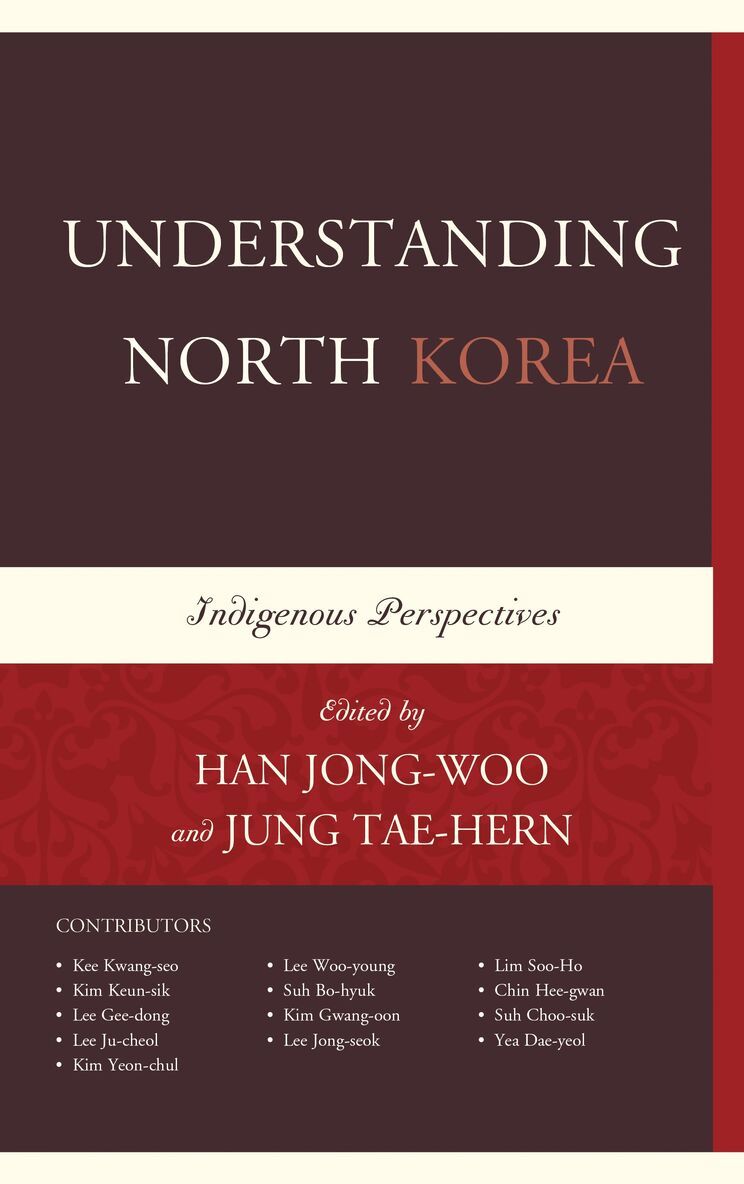
    Understanding North Korea

    Indigenous Perspectives

    AvJongwoo Han,Jung Tae-hern

    Inbunden, Engelska, 2013

    1 811 kr

    Beställningsvara. Skickas inom 10-15 vardagar. Fri frakt över 249 kr.

    Beskrivning

    Why does North Korea want to possess nuclear capabilities? In order to find the answer to this question, we must have an accurate understanding of the history and structure of the North Korean regime. So far, we have only formed conjectures and predictions regarding North Korea based on our own perspectives; we now need to deal with and consider North Korea “as is” to reach viable solutions to the issues North Korea presents. This volume contains analyses of the most salient, critical issues pertinent to understanding the North Korean regime, penned by representative Korean scholars of North Korea. As such, the book examines the historical formation of North Korea, the identities of those power elite, and the relative stability (or instability, as the case may be) of the new regime under Kim Jong-un.Also an important aspect to consider is the possibility of socio-economic change in North Korea. Though North Korea has remained relatively static vis-à-vis its political and military systems, it is in the process of becoming rapidly marketized, having continued various attempts to modify its economic policy. In the social realm, said economic shift has elicited the polarization of the disparate classes and the expansion of individualism. Such social transformations, obscured by the easily visible political reality of North Korea, can provide solid grounds for determining the future of the North Korea regime. Moreover, it is imperative that we accurately understand the motivation behind North Korea’s intention to develop nuclear weapons—namely, the expansion of deterrence. We must recognize the reasons for the North Korean hostility toward the United States from the very beginning of the DPRK formation and the North Korean fixation on nuclear weapons development. Further, we need to understand the nature of relations between China and North Korea—relations on which the international community has focused since North Korea began its nuclear testing—as well as the history and structure of relations between North and South Korea. Only when we accurately understand North Korea can we reach solutions to the North Korean nuclear issue. The studies in this volume by Korean scholars will reveal the veiled background of the visible phenomena and thereby help the readers to correctly understand the North Korean behaviors hitherto misunderstood (or even those that were impossible to understand).

    Produktinformation

    • Utgivningsdatum:2013-12-04
    • Mått:162 x 238 x 36 mm
    • Vikt:807 g
    • Format:Inbunden
    • Språk:Engelska
    • Antal sidor:428
    • Förlag:Bloomsbury Publishing Plc
    • ISBN:9780739179208

    Utforska kategorier

    • Internationella relationer inom Samhälle och politik

    Mer om författaren

    Han Jong-woo is visiting professor of the Graduate Institute of Peace Studies, Kyunghee University, project architect of Syracuse University’s information technology project with DPRK’s Kim Chaek University of Technology, and president of the Korean War Veterans Digital Memorial Foundation, Inc. Jung Tae-hern is professor in the Korean History Department, Korea University, chairman of the Center for Korean History, Korea University, and vice chairman of Inter-Korea Historian Association.

    Recensioner i media

    This is a fascinating collection of articles on North Korea by top-notch native South Korean specialists. Balanced, penetrating, and empirically rich analyses. The book is a must read for those who are interested in contemporary North Korea.

    Innehållsförteckning

    • Chapter 1 – Introduction Is US Policy toward North Korea Actually Beneficial to the United States? On the Significance of Introducing South Korean Scholarship on North Korea to Anglophone ReadersJung Tae-hern (Department of Korean History, Korea University) and Han Jong-woo (Graduate Institute of Peace Studies, Kyunghee University)PART 1 – Historical Evolution of North Korea’s Monolithic Political System and Its Main Characteristics Chapter 2 The Historical Origins and Formation of the Monolithic Political System in North Korea Kee Kwang-seo (Chosun University)Chapter 3 The Stability of the Monolithic System under Kim Jong-un: An Analysis Kim Keun-sik (Kyungnam University) and Lee Gee-dong (Institute for National Security Strategy) Chapter 4 The Power Elite of North Korea’s Monolithic System Lee Ju-cheol (Korea Broadcasting System)PART 2 – Change in North Korean Society from the View of Economic Policy and Social TransformationChapter 5Potential for Economic Reform in North Korea Kim Yeon-chul (Inje University)Chapter 6 North Korean Economy in Transition: Market FeudalismHan Jong-woo (Graduate Institute of Peace Studies, Kyung Hee University)Chapter 7 The Process of Social Change in North Korea Lee Woo-young (University of North Korean Studies)PART 3 – North Korea’s Foreign Policy, Perception of the United States, and Its Relations with the United States and China (G2) Chapter 8 Surviving in the Face of Hegemony: North Korea’s Post-Cold War American Policy Suh Bo-hyuk (Seoul National University)Chapter 9 The Formation and Development of North Korea’s Understanding of the United States Kim Kwang-un (National Institute of Korean History)Chapter 10 The Transformation of China-North Korea Relations and Its Implications Lee Jong-seok (Sejong Institute)Chapter 11 Twenty Years of the North Korean Nuclearization Problem: The North Korean Perspective Lim Soo-ho (Samsung Economic Research Institute)Part 4 – The Inter-Korean Relationship, United States and North East AsiaChapter 12 Change in North Korea’s Policy toward South Korea and Its Implications Chin Hee-gwan (Inje University)Chapter 13 Understanding Conflict on the Korean Peninsula: A Focus on the Yellow Sea Incident Suh Choo-suk (Korea Institute for Defense Analyses)Chapter 14 Economic Cooperation between the Two Koreas: Present and FutureKim Yeon-chul (Inje University)Chapter 15 The Irony of American Policy Toward North Korea: Regime Denial Han Jong-woo (Graduate Institute of Peace Studies, Kyung Hee University)Chapter 16 – Conclusion Comprehensive Summary and Prospects for a Better FutureJung Tae-hern (Department of Korean History, Korea University) and Han Jong-woo (Graduate Institute of Peace Studies, Kyung Hee University)Appendices Major Indicators and Statistics and Current Inter-Korean RelationsYea Dae-yeol (Korea University)