• Fri frakt över 249 kr
  • •
  • Snabba leveranser
  • •
  • Billiga böcker
Kundservice

Du är på sajten för privatpersoner.

Företag, bibliotek eller offentlig verksamhet?

Du handlar på classic.bokus.com, där alla dina funktioner finns intakta.
Till classic.bokus.com
Bokus logotyp. Gå till startsidan.
  • Erbjudanden
  • Nyheter
  • Student
  • Topplistor
  • Barn & ungdom
  • Bokus Play
  • E-böcker
  • Pocketböcker
  • Spel & pussel

10% rabatt på allt med kod: NYSTART10 →

Sidfot

Mina sidor

    Hjälp

    • Kundservice
    • Vanliga frågor och svar
    • Frakt och leverans
    • Retur vid ångerrätt
    • Reklamera vara
    • Betalning
    • Köpvillkor
    • Allmänna villkor
    • Information om webbplatsens tillgänglighet

    Om Bokus

    • Om oss
    • Pressrum
    • För studenter
    • För företag
    • För bibliotek och offentlig verksamhet
    • För leverantörer
    • Hållbarhet

    Populärt

    • Aktuella erbjudanden
    • Presentkort
    • Studentlitteratur
    • Nya böcker
    • Topplistor
    • Signerade böcker
    • Engelska böcker

    Inspiration

    • Boktips
    • BookTok
    • Populära bokserier
    • Barnbokskaraktärer
    • Populära författare
    Logotyp för Bokus
    Följ oss på Facebook (extern länk)Följ oss på Instagram (extern länk)Följ oss på YouTube (extern länk)Följ oss på TikTok (extern länk)
    bokus @ CookiesAnpassa cookiesIntegritetspolicyKöpvillkor
    Till Citymail hemsida (extern länk)Till Budbee hemsida (extern länk)Till Postnord hemsida (extern länk)Till Schenker hemsida (extern länk)Till Early Bird hemsida (extern länk)Till Walleys hemsida (extern länk)
    1. Ekonomi och Ledarskap
    2. Nationalekonomi

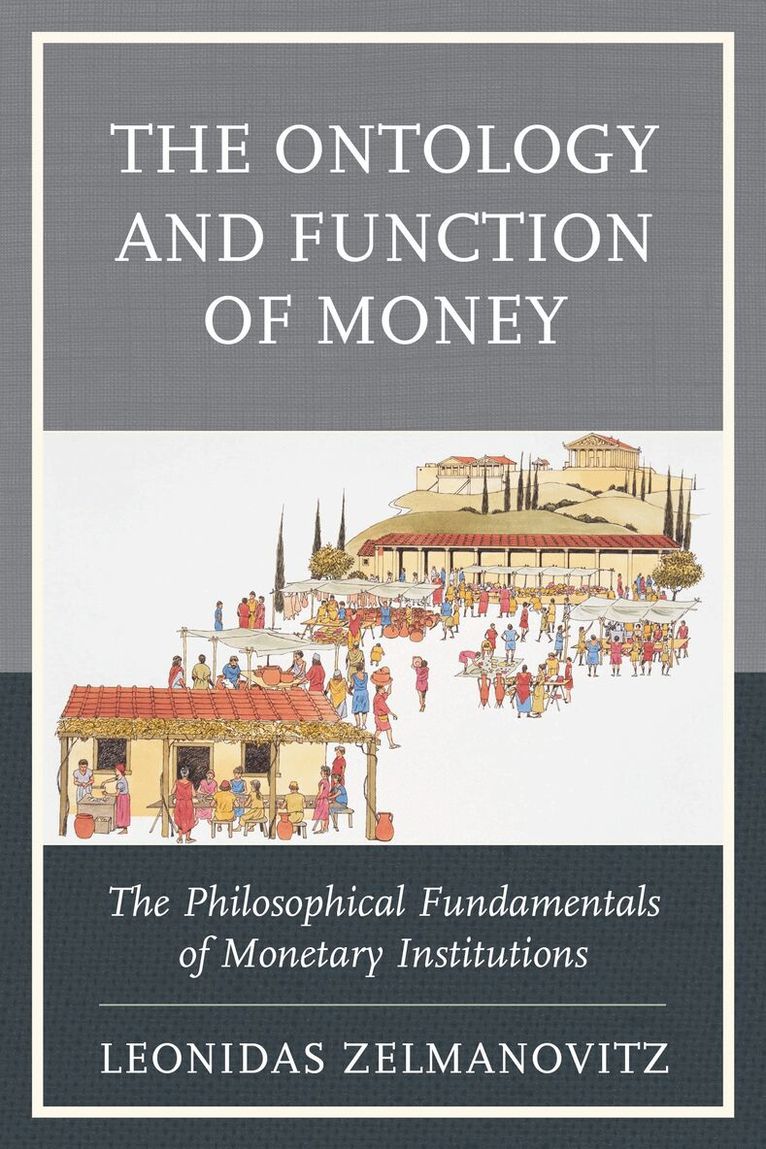
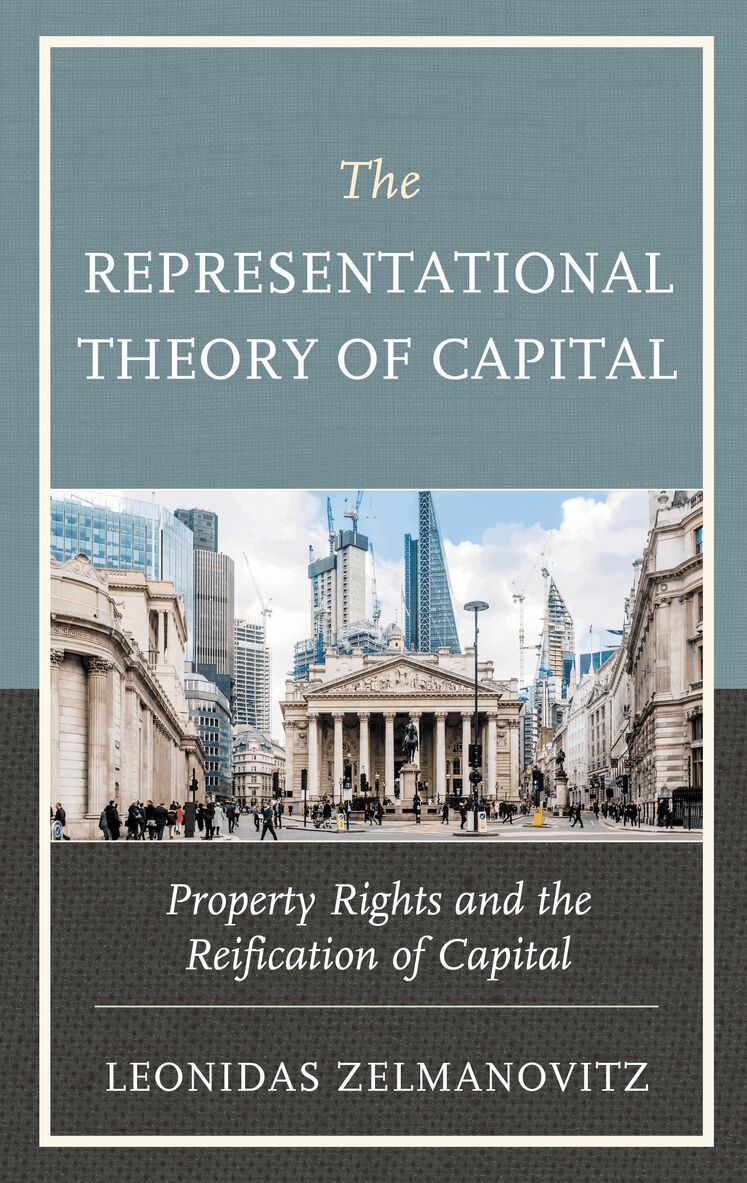
    Ontology and Function of Money

    The Philosophical Fundamentals of Monetary Institutions

    AvLeonidas Zelmanovitz

    Häftad, Engelska, 2017

    Del i serien Capitalist Thought: Studies in Philosophy, Politics, and Economics

    770 kr

    Beställningsvara. Skickas inom 10-15 vardagar. Fri frakt över 249 kr.

    Fler format och utgåvor

    Inbunden

    2 008 kr

    Beskrivning

    The central thesis of the book is that in order to evaluate monetary policy, one should have a clear idea about the characteristics and functions of money as it evolved and in its current form. That is to say that without an understanding about how money evolved as a social institution, what it is today, and what is possible to know about monetary phenomena, it is not possible to develop a meaningful ethics for money; or, to put it differently, to find what kind of institutional arrangements may be deemed good money for the kind of society we are in. And without that, one faces severe limitations in offering a normative position about monetary policy. The project is, consequently, an interdisciplinary one. Its main thread is an inquiry of moral philosophy and its foundations, as applied to money, in order to create tools to evaluate public policy in regard to money, banking, and public finance; and the views of different schools on those topics are discussed. The book is organized in parts on metaphysics, epistemology, ethics and politics of money to facilitate the presentation of all the subjects discussed to an educated readership (and not necessarily just one with a background in economics).

    Produktinformation

    • Utgivningsdatum:2017-07-17
    • Mått:151 x 231 x 35 mm
    • Vikt:708 g
    • Format:Häftad
    • Språk:Engelska
    • Serie:Capitalist Thought: Studies in Philosophy, Politics, and Economics
    • Antal sidor:488
    • Förlag:Bloomsbury Publishing Plc
    • ISBN:9780739195130

    Utforska kategorier

    • Nationalekonomi inom Ekonomi och Ledarskap
    • Finansiering inom Ekonomi och Ledarskap
    • Makroekonomi inom Ekonomi och Ledarskap

    Mer om författaren

    Leonidas Zelmanovitz is fellow at the Liberty Fund.

    Recensioner i media

    Austrian economists whose research deals with the intersection of monetary economics and political economy will benefit from reading this volume. . . .The author’s work is genuinely raising new questions, and reframing old questions in a way that makes them relevant to the current debate over monetary institutions. I encourage Austrian economists working on monetary economics with an institutional focus . . . to engage this work, to build further both positive and normative arguments for robust monetary institutions.

    Innehållsförteckning

    • 1. The Origin and Essence of Money2. Brief Account of the Intellectual History of Money, Starting with Aristotle3. Menger, Simmel, and Mises on Money Value4. Comte’s Positivist Epistemology and Politics in a Comparative Analysis with the Austrian School of Economics5. What is it Possible to Know about Money?6. The Ethics of Money7. Are There Unsurmountable Arguments for Monetary Prerogatives?8. The Demand for Money, The Business Cycle, And The Current Monetary Regime9. Incentives to Supply an Optimum Amount of Credit Under a 100% Reserve Requirement10. “Inflation Targeting”: Neither New nor Effective11. The Future of Money12. Concluding Chapter