• Fri frakt över 249 kr
  • •
  • Snabba leveranser
  • •
  • Billiga böcker
Kundservice

Du är på sajten för privatpersoner.

Företag, bibliotek eller offentlig verksamhet?

Du handlar på classic.bokus.com, där alla dina funktioner finns intakta.
Till classic.bokus.com
Bokus logotyp. Gå till startsidan.
  • Erbjudanden
  • Nyheter
  • Student
  • Topplistor
  • Barn & ungdom
  • Bokus Play
  • E-böcker
  • Pocketböcker
  • Spel & pussel

10% rabatt på allt med kod: NYSTART10 →

Sidfot

Mina sidor

    Hjälp

    • Kundservice
    • Vanliga frågor och svar
    • Frakt och leverans
    • Retur vid ångerrätt
    • Reklamera vara
    • Betalning
    • Köpvillkor
    • Allmänna villkor
    • Information om webbplatsens tillgänglighet

    Om Bokus

    • Om oss
    • Pressrum
    • För studenter
    • För företag
    • För bibliotek och offentlig verksamhet
    • För leverantörer
    • Hållbarhet

    Populärt

    • Aktuella erbjudanden
    • Presentkort
    • Studentlitteratur
    • Nya böcker
    • Topplistor
    • Signerade böcker
    • Engelska böcker

    Inspiration

    • Boktips
    • BookTok
    • Populära bokserier
    • Barnbokskaraktärer
    • Populära författare
    Logotyp för Bokus
    Följ oss på Facebook (extern länk)Följ oss på Instagram (extern länk)Följ oss på YouTube (extern länk)Följ oss på TikTok (extern länk)
    bokus @ CookiesAnpassa cookiesIntegritetspolicyKöpvillkor
    Till Citymail hemsida (extern länk)Till Budbee hemsida (extern länk)Till Postnord hemsida (extern länk)Till Schenker hemsida (extern länk)Till Early Bird hemsida (extern länk)Till Walleys hemsida (extern länk)
    1. Samhälle och politik
    2. Politik och statsskick

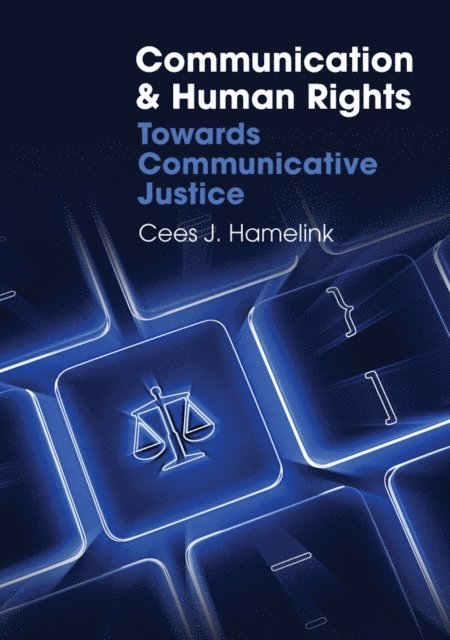
    Communication and Human Rights

    Towards Communicative Justice

    AvCees J. Hamelink

    Häftad, Engelska, 2023

    253 kr

    Beställningsvara. Skickas inom 5-8 vardagar. Fri frakt över 249 kr.

    Fler format och utgåvor

    Inbunden

    714 kr

    E-bok

    285 kr

    Beskrivning

    Human rights and communication are deeply connected: human rights need communication to expose violations and to offer platforms for dialogue, while communication needs human rights to provide standards for free speech and confidentiality. Together, they confront the reality of today’s social and international order in which justice and understanding often seem unattainable.In this book, Cees J. Hamelink guides the reader through the historical evolution of communication and human rights. In this original framework, he discusses topics such as the right to communicate and freedom of expression, as well as major challenges posed by the environmental crisis and digital technologies. With authority, he passionately argues that ‘communicative justice’ is the ultimate goal of applying the international human rights regime to different forms of communication. This goal can only be achieved if we manage to move from the prevailing ‘thin’ liberal conception of human rights to a ‘thick’ cosmopolitan conception of them.Written by one of the world’s leading scholars in this area, this wide-ranging book will be of interest to students of media and communication, human rights scholars, as well as practitioners, activists and anyone interested in applying the notion of justice to the basis of human existence: communication.

    Produktinformation

    • Utgivningsdatum:2023-06-23
    • Mått:152 x 229 x 15 mm
    • Vikt:318 g
    • Format:Häftad
    • Språk:Engelska
    • Antal sidor:208
    • Förlag:John Wiley and Sons Ltd
    • ISBN:9780745649849

    Utforska kategorier

    • Politik och statsskick inom Samhälle och politik

    Mer om författaren

    Cees J. Hamelink is Athena Professor of Human Rights and Global Health at the Vrije Universiteit of Amsterdam, and Emeritus Professor of Global Communication at the University of Amsterdam.

    Recensioner i media

    "An accessibly written, rich and compelling argumentation for communicative justice. Global and inclusive in perspective, with a refined reconciliation of legal and ethical approaches, the book's search for new communicational practices aligned with human rights simply requires global attention."Nico Carpentier, Charles University, Prague"This is essential reading for understanding the power of compassionate, dialogical conversation to enable people to realise dignity, equality, freedom and security, guided in their liberation by a human right to communication and an ethics of human togetherness embracing all humans and nature."Robin Mansell, London School of Economics and Political Science

    Innehållsförteckning

    • Preface Overview of the chapters1 Human Rights Before Human RightsIntroductionBefore human rightsThe ancient Middle EastAfricaAsiaLatin America and the CaribbeanJudaismIslamChristianityEuropean EnlightenmentA short history of normative principles for human communicationThe principle of respect for human dignityTruth as a sign of respect for human dignityThe principle of protection of privacy and confidentiality of communicationThe confidentiality of communicationThe principle of freedomConclusionNotes2 Human Rights and CommunicationIntroductionThe history of a remarkable documentThe Universal Declaration of Human RightsThe Preamble of the Universal DeclarationThe commitmentThe implementationThe nature of the Declaration and future action Article 19 of the Universal Declaration of Human Rights: Freedom of inform on Freedom of thoughtThe protection of confidentiality of communicative behaviourProhibition of discriminationThe presumption of innocenceThe prohibition of war propagandaThe prohibition of incitement to genocideThe public exposure of prisoners of warConclusionNotes3 Communication RightsIntroductionOn the communication rights of womenOn the communication rights of childrenOn the communication rights of indigenous peoplesCultural rightsProtection of cultural identityKnowledgeOn the communication rights of migrantsThe migrant issueIdentity and languageThe right to communicateThe World Summit on the Information Society (WSIS)Final declaration of the WSISConclusionNotes4 Challenges and Communication RightsIntroductionChallenges of technologyChallenges of the InternetThe Internet governance challengeThe surveillance challengeThe digital traceThe CloudNew rights?Artificial IntelligenceThinking machinesConversations with your robotHuman rights in robotic timesA new set of human rights?The challenge of declining biodiversityConclusionNotes5 The Trouble with Human RightsIntroductionHalfway?UniversalityNon-citizensFreedom of speechEmpowermentThe state-centric paradigmEpistemic colonialityDevelopment as an interventionist projectLimited visions on human rightsThe first visionThe second visionAbstract notions and sociopolitical realitiesReligionEconomics: GlobalizationRights versus rightsRights versus significant interestsRights versus cultural valuesRights versus human inclinationsInclusion versus the tribal instinctCompassion versus hostilityActively listening versus silencingCooperative communication versus competitive communicationChange versus fearThe politicization of humanitarian interventionsEnforcementUnwilling statesFailureThe United NationsBureaucracies and human rightsConclusionNotes6 Communicative JusticeIntroductionThe building blocksThe concept of communicative justiceThe human right to communicationWhat kind of right?Social orderMoral imbalanceRespect for dignity and humiliationRight to freedom and institutionalized censorshipRight to equality and institutionalized discriminationRight to security and the institutionalization of fearImagining alternativesA caring social orderA convivial social orderAn egalitarian social orderA secure social orderA tall orderTransformation and communicationThe caring social order and communication practiceThe egalitarian social order and communication practiceThe convivial social order and communication practiceThe secure social order and communication practiceImaginationConclusionNotes7 The Practice of Communicative JusticeIntroductionPolitical ethicsThe bioethical imperativeThe eccentric positionalityThe ethics of liberationMoral intuitionismTowards an ethics of ‘liberating togetherness’CommunicationCooperative spiritAmor mundiConclusionNotesReferencesIndex