• Fri frakt över 249 kr
  • •
  • Snabba leveranser
  • •
  • Billiga böcker
Kundservice

Du är på sajten för privatpersoner.

Företag, bibliotek eller offentlig verksamhet?

Du handlar på classic.bokus.com, där alla dina funktioner finns intakta.
Till classic.bokus.com
Bokus logotyp. Gå till startsidan.
  • Erbjudanden
  • Nyheter
  • Student
  • Topplistor
  • Barn & ungdom
  • Bokus Play
  • E-böcker
  • Pocketböcker
  • Spel & pussel

10% rabatt på allt med kod: NYSTART10 →

Sidfot

Mina sidor

    Hjälp

    • Kundservice
    • Vanliga frågor och svar
    • Frakt och leverans
    • Retur vid ångerrätt
    • Reklamera vara
    • Betalning
    • Köpvillkor
    • Allmänna villkor
    • Information om webbplatsens tillgänglighet

    Om Bokus

    • Om oss
    • Pressrum
    • För studenter
    • För företag
    • För bibliotek och offentlig verksamhet
    • För leverantörer
    • Hållbarhet

    Populärt

    • Aktuella erbjudanden
    • Presentkort
    • Studentlitteratur
    • Nya böcker
    • Topplistor
    • Signerade böcker
    • Engelska böcker

    Inspiration

    • Boktips
    • BookTok
    • Populära bokserier
    • Barnbokskaraktärer
    • Populära författare
    Logotyp för Bokus
    Följ oss på Facebook (extern länk)Följ oss på Instagram (extern länk)Följ oss på YouTube (extern länk)Följ oss på TikTok (extern länk)
    bokus @ CookiesAnpassa cookiesIntegritetspolicyKöpvillkor
    Till Citymail hemsida (extern länk)Till Budbee hemsida (extern länk)Till Postnord hemsida (extern länk)Till Schenker hemsida (extern länk)Till Early Bird hemsida (extern länk)Till Walleys hemsida (extern länk)
    1. Ekonomi och Ledarskap
    2. Industrier och branscher
    3. Media och underhållning

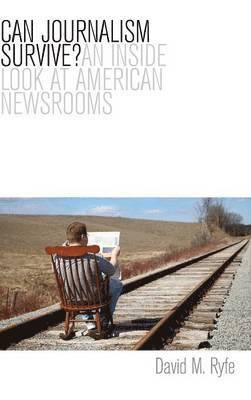
    Can Journalism Survive?

    An Inside Look at American Newsrooms

    AvDavid M. Ryfe

    Inbunden, Engelska, 2012

    911 kr

    Beställningsvara. Skickas inom 5-8 vardagar. Fri frakt över 249 kr.

    Fler format och utgåvor

    Häftad

    261 kr

    E-bok

    284 kr

    Beskrivning

    Journalists have failed to respond adequately to the challenge of the Internet, with far-reaching consequences for the future of journalism and democracy. This is the compelling argument set forth in this timely new text, drawing on the most extensive ethnographic fieldwork in American newsrooms since the 1970s.David Ryfe argues that journalists are unable or unwilling to innovate for a variety of reasons: in part because habits are sticky and difficult to dislodge; in part because of their strategic calculation that the cost of change far exceeds its benefit; and in part because basic definitions of what journalism is, and what it is for, anchor journalism to tradition even when journalists prefer to change. The result is that journalism is unraveling as an integrated social field; it may never again be a separate and separable activity from the broader practice of producing news. One thing is certain: whatever happens next, it will have dramatic consequences for the role journalism plays in democratic society and perhaps will transform its basic meaning and purpose.Can Journalism Survive? is essential and provocative reading for all concerned with the future of journalism and society.

    Produktinformation

    • Utgivningsdatum:2012-08-31
    • Mått:158 x 236 x 23 mm
    • Vikt:490 g
    • Format:Inbunden
    • Språk:Engelska
    • Antal sidor:256
    • Förlag:John Wiley and Sons Ltd
    • ISBN:9780745654270

    Utforska kategorier

    • Media och underhållning inom Ekonomi och Ledarskap

    Mer om författaren

    David Ryfe is Associate Professor of Journalism at the University of Nevada, Reno.

    Recensioner i media

    "One of the finest and more in-depth portrayals of the struggle of newspapers to reinvent themselves."Digital Journalism"Ryfe offers compelling evidence that the success of new forms of public interaction - social media, blogs, crowdsourcing, data mining, etc - can, and are, mobilising local communities in the interests of greater transparency and accountability. He identifies a key role for journalists in this process: "Crowds need people who can catalyze the community, organize its work in granular form and put the pieces together when finished." And although he accepts that there are some journalists, maybe the majority, who will find it difficult to accept this new gatekeeping role, he is adamant: this is the future, whether they like it or not."Times Higher Education"This is a book which demands attention within the media industry and with all those interested in the development of society in a changing social era."Orange Standard"For all our academic debates about what journalism should do to survive in the digital age, David Ryfe has done the invaluable research needed to have this discussion in the first place: he looked at what journalists do to make it work, and why."Mark Deuze, Indiana University"David Ryfe has written an accessible and thoughtful book about US press journalism as it faces the drawn-out challenge of finding new business models in the face of the digital revolution. With its first-person style and lively ethnographic detail, it is written to appeal to a new generation of students facing many professional uncertainties."Philip Schlesinger, University of Glasgow"'There will always be newspapers,' journalists told David Ryfe a half dozen years ago. Now they are not so sure what that could possibly mean, as Ryfe shows in this study of a profession in crisis. A masterful portrait of three different newsrooms close-up, warts and all, this is an original, readable, and important work."Michael Schudson, Columbia University

    Innehållsförteckning

    • Detailed Contents viList of Figures viiiPreface ixAcknowledgments xiiiIntroduction 11 Backstory 292 Habits 563 Investments 844 Defi nitions 1145 The Future 1386 Worries 167Conclusion 195Notes 199References 202Index 217