• Fri frakt över 249 kr
  • •
  • Snabba leveranser
  • •
  • Billiga böcker
Kundservice

Du är på sajten för privatpersoner.

Företag, bibliotek eller offentlig verksamhet?

Du handlar på classic.bokus.com, där alla dina funktioner finns intakta.
Till classic.bokus.com
Bokus logotyp. Gå till startsidan.
  • Erbjudanden
  • Nyheter
  • Student
  • Topplistor
  • Barn & ungdom
  • Bokus Play
  • E-böcker
  • Pocketböcker
  • Spel & pussel

10% rabatt på allt med kod NYSTART10 →

Sidfot

Mina sidor

    Hjälp

    • Kundservice
    • Vanliga frågor och svar
    • Frakt och leverans
    • Retur vid ångerrätt
    • Reklamera vara
    • Betalning
    • Köpvillkor
    • Allmänna villkor
    • Information om webbplatsens tillgänglighet

    Om Bokus

    • Om oss
    • Pressrum
    • För studenter
    • För företag
    • För bibliotek och offentlig verksamhet
    • För leverantörer
    • Hållbarhet

    Populärt

    • Aktuella erbjudanden
    • Presentkort
    • Studentlitteratur
    • Nya böcker
    • Topplistor
    • Signerade böcker
    • Engelska böcker

    Inspiration

    • Boktips
    • BookTok
    • Populära bokserier
    • Barnbokskaraktärer
    • Populära författare
    Logotyp för Bokus
    Följ oss på Facebook (extern länk)Följ oss på Instagram (extern länk)Följ oss på YouTube (extern länk)Följ oss på TikTok (extern länk)
    bokus @ CookiesAnpassa cookiesIntegritetspolicyKöpvillkor
    Till Citymail hemsida (extern länk)Till Budbee hemsida (extern länk)Till Postnord hemsida (extern länk)Till Schenker hemsida (extern länk)Till Early Bird hemsida (extern länk)Till Walleys hemsida (extern länk)
    1. Filosofi och religion
    2. Filosofi

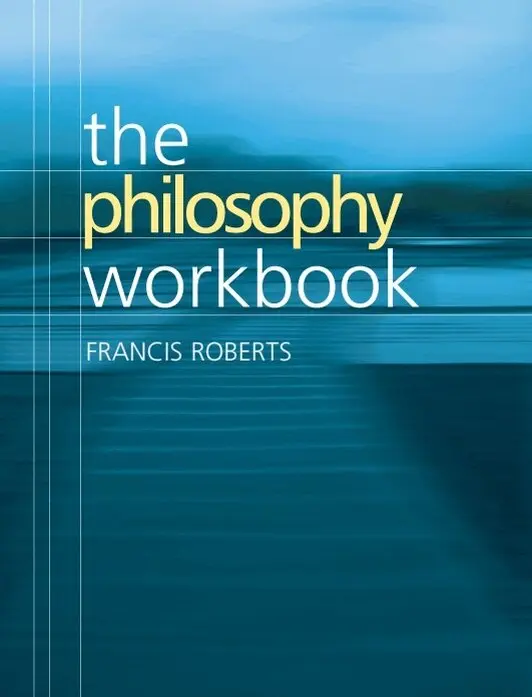
    Philosophy Workbook

    AvFrancis Roberts

    Häftad, Engelska, 2003

    409 kr

    Beställningsvara. Skickas inom 11-20 vardagar. Fri frakt över 249 kr.

    Beskrivning

    A practical, hands-on introduction to philosophy written in jargon-free language, this book introduces philosophy using a step-by-step approach. It both engages the reader in philosophical activity and explains the subject matter of philosophy without diluting it. The book is designed to develop skills which promote independent thought. The learning aims, concepts and skills for each chapter are clearly set out and are followed by a series of graded exercises which guide readers through the central topics of philosophy. At each stage, readers are encouraged to react to suggested answers and to complete revision tasks. Users of the workbook will learn how to ‘do’ philosophy: analyse philosophical questions, distinguish between analytic and continental approaches and assess the arguments developed by philosophers ranging from Plato, Descartes, Kant and Nietzsche to Aristotle, Duns Scotus, Mill and de Beauvoir.The extensive and fully cross-referenced glossary of names and philosophical terms not only provides definitions, it also allows for a quick recap of the topics which have been previously introduced.Features* Comprehensive introduction to the major issues in philosophy* Practical workbook format with summary boxes, exercises, revision tasks* Engaging and clearly written * Analytical skills developed alongside philosophical understanding* Establishes links between analytic and Continental traditions * Encyclopaedic reference glossary

    Produktinformation

    • Utgivningsdatum:2003-04-24
    • Mått:189 x 246 x 29 mm
    • Vikt:986 g
    • Format:Häftad
    • Språk:Engelska
    • Antal sidor:416
    • Förlag:Edinburgh University Press
    • ISBN:9780748616961

    Utforska kategorier

    • Filosofi inom Filosofi och religion

    Mer om författaren

    Francis Roberts teaches in the European School in Varese, Italy. From 1991-2000 he was an Associate Lecturer at the Open University to which he is still affiliated.

    Innehållsförteckning

    • HOW TO USE THIS BOOK; CHAPTER 1: Laying the Foundations - The Philosopher's Stone; The Philosopher's Stone; The Structure of the Chapters; The Order of the Chapters; PART I: WHAT IS PHILOSOPHY?; CHAPTER 2: Philosophy as an Activity; 'Philosophy' - Two meanings; Understanding Philosophy as an Activity - A first step; A Philosophical Question about Philosophy; CHAPTER 3: The Origins of European Philosophy in Ancient Greece; Setting the scene; What Exists (i) - Thales' problem; What Exists (ii) - The Primary Substance and its Transformation; What Exists (iii)- The search for Reality; What Exists (iv)- 'Justice' and the search for Values; CHAPTER 4: Philosophy as a Subject; The Study of what Really Exists; The Study of the Values Associated with Reality; (i) Moral Values and their Associated Fields of Study; (ii) Aesthetic values; PART I: A SUMMARY; REVISION EXERCISES PART I; Further Reading; PART II: REALITY, PERCEPTION and BELIEF; CHAPTER 5: The Senses, Action and Reality; Real Things; Methods (i) Assessing claims about what really exists; Seeing and Hearing Real Things; Sensing Real Things; Touching Real Things; CHAPTER 6: Philosophical Analysis and Reality; Methods (ii) Answering real questions; Methods (iii) Transcendental analysis: a first step*; CHAPTER 7: Thought, Belief and Reality; You are a metaphysician. Bah!; Thought and Reality*; Belief and Reality*; The story so far: a brief review; Ontological Commitment*; CHAPTER 8: The Reality of People and Ideas; Real People - Introducing Existentialism*; Real Ideas and Plato's Theory of Forms; PART II: A SUMMARY; REVISION EXERCISES PART II; Further Reading; PART III: VALUES and OBLIGATIONS; CHAPTER 9: Value and Values; Value and the Search for Values; Types of Values (Principles); Intrinsic and Extrinsic Value; Summary of Chapter; CHAPTER 10: Theories of Art, Beauty and Taste; The Birth of Aesthetics; What is Beauty?; What is Art?; CHAPTER 11: Moral Value, Moral Values and Duty; Aristotle - a Background; Aristotle - Virtue and Moral Value; Kant - Duty and Moral Values; J S Mill - Utilitarianism and Moral Values; Henry Sidgwick - Ethical Egoism; Nietzsche and Sartre - Moral Value as Freedom; Methods (iv) Assessing Theories in Ethics*; PART III: A SUMMARY; REVISION EXERCISES PART III; Further Reading; PART IV: KNOWLEDGE and BELIEF; CHAPTER 12: EPISTEMOLOGY - The Sources and Status of Knowledge; The Sources of Knowledge; Knowledge and Belief; Analytic and Synthetic Judgements*; A priori and a posteriori Knowledge; Epistemology - a Summary; CHAPTER 13: The Philosophy of Science; Science distinguished from non-science; Explanation in Science; The Development of Science; CHAPTER 14: The Existence of God; The Ontological Argument; The Argument from Design (Teleological Argument); The Cosmological Argument*; Transcendent and Transcendental Arguments; PART IV: A SUMMARY; REVISION EXERCISES PART IV; Further Reading; PART V: PEOPLE and FREEDOM; CHAPTER 15: Personal Identity; What is a person?; Dualism - mind and body; Continuity - body and consciousness; Materialism - mind as body; Summary; CHAPTER 16: Freedom and Responsibility*; Freedom of thought and action; Responsibility; PART V: A SUMMARY; REVISION EXERCISES PART V; Further Reading; SUGGESTED ANSWERS - PART I; SUGGESTED ANSWERS - PART II; SUGGESTED ANSWERS - PART III; SUGGESTED ANSWERS - PART IV; SUGGESTED ANSWERS - PART V; GLOSSARY OF NAMES; GLOSSARY OF TERMS; BIBLIOGRAPHY; INDEX.