• Fri frakt över 249 kr
  • •
  • Snabba leveranser
  • •
  • Billiga böcker
Kundservice

Du är på sajten för privatpersoner.

Företag, bibliotek eller offentlig verksamhet?

Du handlar på classic.bokus.com, där alla dina funktioner finns intakta.
Till classic.bokus.com
Bokus logotyp. Gå till startsidan.
  • Erbjudanden
  • Student
  • Topplistor
  • Barn & ungdom
  • Bokus Play
  • Bokus Play
  • E-böcker
  • Ljudböcker
  • Pocketböcker
  • Spel & pussel

10% rabatt på allt med kod NYSTART10 →

Sidfot

Mina sidor

    Hjälp

    • Kundservice
    • Vanliga frågor och svar
    • Frakt och leverans
    • Retur vid ångerrätt
    • Reklamera vara
    • Betalning
    • Köpvillkor
    • Allmänna villkor
    • Information om webbplatsens tillgänglighet

    Om Bokus

    • Om oss
    • Pressrum
    • För studenter
    • För företag
    • För bibliotek och offentlig verksamhet
    • För leverantörer
    • Hållbarhet

    Populärt

    • Aktuella erbjudanden
    • Presentkort
    • Studentlitteratur
    • Nya böcker
    • Topplistor
    • Signerade böcker
    • Engelska böcker

    Inspiration

    • Boktips
    • BookTok
    • Populära bokserier
    • Barnbokskaraktärer
    • Populära författare
    Logotyp för Bokus
    Följ oss på Facebook (extern länk)Följ oss på Instagram (extern länk)Följ oss på YouTube (extern länk)Följ oss på TikTok (extern länk)
    bokus @ CookiesAnpassa cookiesIntegritetspolicyKöpvillkor
    Till Citymail hemsida (extern länk)Till Budbee hemsida (extern länk)Till Postnord hemsida (extern länk)Till Schenker hemsida (extern länk)Till Early Bird hemsida (extern länk)Till Walleys hemsida (extern länk)
    1. Språk och ordböcker
    2. Språkvetenskap och lingvistik

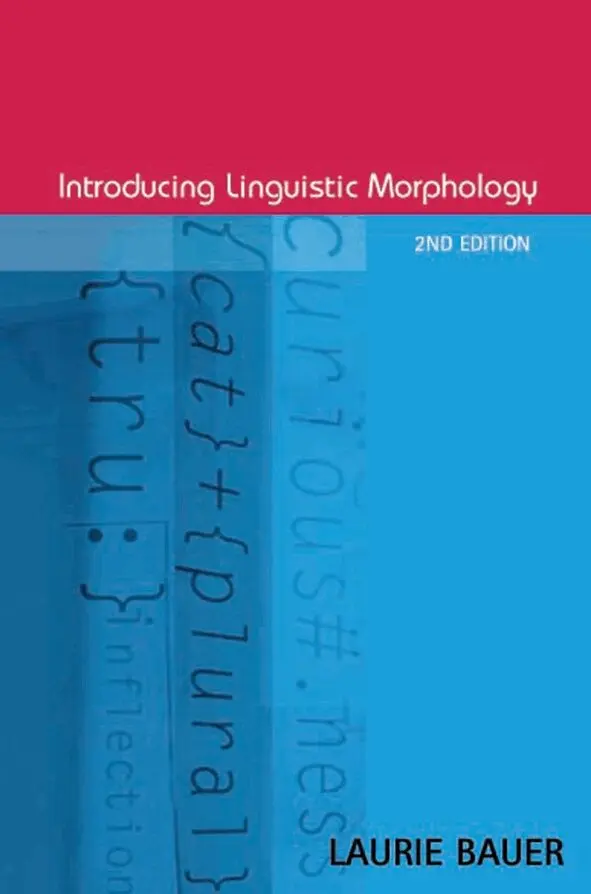
    Introducing Linguistic Morphology

    AvLaurie Bauer

    Häftad, Engelska, 2003

    373 kr

    Beställningsvara. Skickas inom 11-20 vardagar. Fri frakt över 249 kr.

    Fler format och utgåvor

    Häftad

    612 kr

    Inbunden

    Tillf. slut

    Beskrivning

    An expanded and updated new edition of this best-selling introduction to linguistic morphology. The text guides the reader from the very first principles of the internal structure of words through to advanced issues of current controversy. The first part of the book introduces basic concepts, with the help of examples from a range of familiar and exotic languages. The second section highlights particularly important topics, and discusses them in more detail. These include the definition of the word-form, productivity, the vexed problems of inflection versus derivation and the nature of the morpheme, and the position of morphology in relation to phonology and syntax. The third section looks at the theory of morphology, considering fundamental problems such as the nature of morphological universals, how the brain deals with morphologically complex words and how morphology changes over time, but also with individual ways of looking at morphology, including natural morphology, word-and-paradigm and level-ordered models. Features:* New chapters on morphology and the brain and diachronic morphology* Exercises added at the end of each chapter* Includes a glossary of key terms

    Produktinformation

    • Utgivningsdatum:2003-06-12
    • Mått:138 x 216 x 23 mm
    • Vikt:477 g
    • Format:Häftad
    • Språk:Engelska
    • Antal sidor:376
    • Upplaga:2
    • Förlag:Edinburgh University Press
    • ISBN:9780748617050

    Utforska kategorier

    • Språkvetenskap och lingvistik inom Språk och ordböcker

    Mer om författaren

    Laurie Bauer is Professor of Linguistics at the Victoria University of Wellington. He is on the editorial board of the journal Word Structure.

    Recensioner i media

    This revision of Laurie Bauer's popular textbook is most welcome. Like the first edition it's clear, reliable and interesting, but it's been updated to take account of the new interest in morphology. New chapters provide an excellent way into recent work informed by non-linear phonology, by diachronic typology and - most interesting of all - by psycholinguistics. Anyone who wants a quick explanation of grammaticalisation, autosegmental morphology or the dual-route theory need look no further. The book also gains from the new exercises and three appendices (including a glossary). An excellent book for the student who really wants to understand. -- Dick Hudson, Professor of Linguistics, University College London In the second edition of this well-known textbook, Laurie Bauer provides a thorough introduction to such basic notions as segmentability, the nature of the word-form, inflection vs. derivation and productivity of patterns and processes, carefully discussing controversial issues in each case, using examples that students may well encounter early when they confront the more technical literature. In this area, there is arguably no single dominant theoretical approach, so he is at pains to present both lexicalist and word-and-paradigm morphology, to contrast them, and to show that natural morphology, an approach with rather different goals, is broadly compatible with both. New chapters and sections of others deal with new proposals arising from the problematic status of the morpheme, with non-linear morphology (an approach developed more fully since the first edition), with the historical status of morphology in grammar, and with the relations between the constructs of theoretical morphology and psycholinguistic processes. All these are clearly introduced and the reasons for controversy spelt out. The result is an accessible handy and reliable comprehensive guide to the basics. There are useful suggestions for further reading, and appendices containing quite challenging questions for reflection and a recapitulation with worked examples of some of the key concepts. -- Richard Coates, Professor of Linguistics, University of Sussex This revision of Laurie Bauer's popular textbook is most welcome. Like the first edition it's clear, reliable and interesting, but it's been updated to take account of the new interest in morphology. New chapters provide an excellent way into recent work informed by non-linear phonology, by diachronic typology and - most interesting of all - by psycholinguistics. Anyone who wants a quick explanation of grammaticalisation, autosegmental morphology or the dual-route theory need look no further. The book also gains from the new exercises and three appendices (including a glossary). An excellent book for the student who really wants to understand. In the second edition of this well-known textbook, Laurie Bauer provides a thorough introduction to such basic notions as segmentability, the nature of the word-form, inflection vs. derivation and productivity of patterns and processes, carefully discussing controversial issues in each case, using examples that students may well encounter early when they confront the more technical literature. In this area, there is arguably no single dominant theoretical approach, so he is at pains to present both lexicalist and word-and-paradigm morphology, to contrast them, and to show that natural morphology, an approach with rather different goals, is broadly compatible with both. New chapters and sections of others deal with new proposals arising from the problematic status of the morpheme, with non-linear morphology (an approach developed more fully since the first edition), with the historical status of morphology in grammar, and with the relations between the constructs of theoretical morphology and psycholinguistic processes. All these are clearly introduced and the reasons for controversy spelt out. The result is an accessible handy and reliable comprehensive guide to the basics. There are useful suggestions for further reading, and appendices containing quite challenging questions for reflection and a recapitulation with worked examples of some of the key concepts.