• Fri frakt över 249 kr
  • •
  • Snabba leveranser
  • •
  • Billiga böcker
Kundservice

Du är på sajten för privatpersoner.

Företag, bibliotek eller offentlig verksamhet?

Du handlar på classic.bokus.com, där alla dina funktioner finns intakta.
Till classic.bokus.com
Bokus logotyp. Gå till startsidan.
  • Erbjudanden
  • Student
  • Topplistor
  • Barn & ungdom
  • Bokus Play
  • E-böcker
  • Ljudböcker
  • Pocketböcker
  • Spel och pussel

Pocketfynda! Hundratals böcker för 49 kr/st →

Sidfot

Mina sidor

    Hjälp

    • Kundservice
    • Vanliga frågor och svar
    • Frakt och leverans
    • Retur vid ångerrätt
    • Reklamera vara
    • Betalning
    • Köpvillkor
    • Allmänna villkor
    • Information om webbplatsens tillgänglighet

    Om Bokus

    • Om oss
    • Pressrum
    • För studenter
    • För företag
    • För bibliotek och offentlig verksamhet
    • För leverantörer
    • Hållbarhet

    Populärt

    • Aktuella erbjudanden
    • Presentkort
    • Studentlitteratur
    • Nya böcker
    • Topplistor
    • Signerade böcker
    • Engelska böcker

    Inspiration

    • Boktips
    • BookTok
    • Barnbokskaraktärer
    • Populära författare
    Logotyp för Bokus
    Följ oss på Facebook (extern länk)Följ oss på Instagram (extern länk)Följ oss på YouTube (extern länk)Följ oss på TikTok (extern länk)
    bokus @ CookiesAnpassa cookiesIntegritetspolicyKöpvillkor
    Till Citymail hemsida (extern länk)Till Budbee hemsida (extern länk)Till Postnord hemsida (extern länk)Till Schenker hemsida (extern länk)Till Early Bird hemsida (extern länk)Till Walleys hemsida (extern länk)
    1. Skönlitteratur
    2. Litteraturvetenskap
    3. Litteraturvetenskap

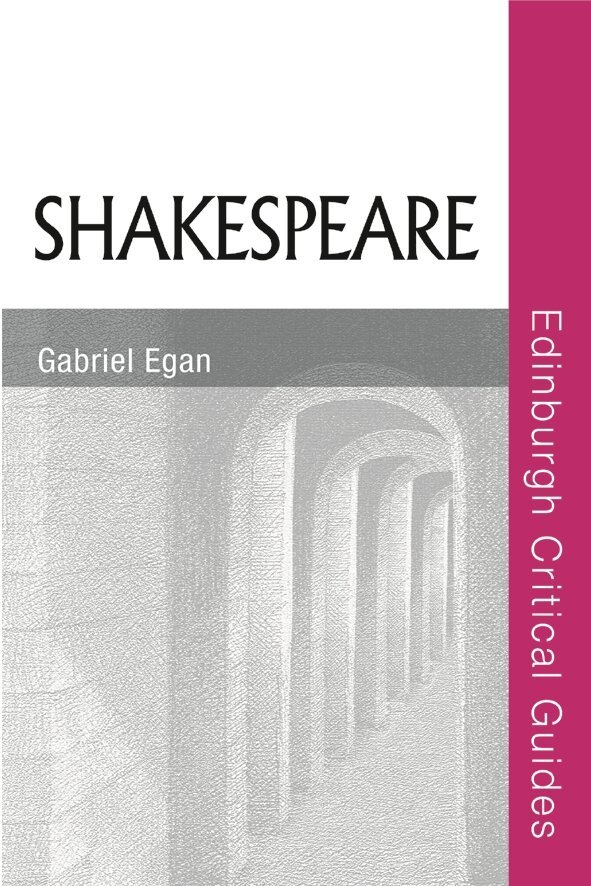
    Shakespeare

    AvGabriel Egan

    Häftad, Engelska, 2007

    Del i serien Edinburgh Critical Guides to Literature

    324 kr

    Tillfälligt slut

    Fler format och utgåvor

    Inbunden

    1 413 kr

    Beskrivning

    This book helps the reader make sense of the most commonly studied writer in the world. It starts with a brief explanation of how Shakespeare's writings have come down to us as a series of scripts for actors in the early modern theatre industry of London. The main chapters of the book approach the texts through a series of questions: 'what's changed since Shakespeare's time?', 'to what uses has Shakespeare been put?', and 'what value is there in Shakespeare?' These questions go to the heart of why we study Shakespeare at all, which question the book encourages the readers to answer for themselves in relation to their own critical writing.Key Features* A chronology of Shakespeare's career as an actor/dramatist that locates him within the theatre industry of his time* New readings of twelve plays that form a core of the Shakespeare canon: A Midsummer Night's Dream, Much Ado About Nothing, Richard 2, Henry 5, Hamlet, Othello, All's Well that Ends Well, The Winter's Tale, Macbeth, Measure for Measure, The Tempest, and Timon of Athens* Critical analyses organized by genre (comedies, histories, tragedies, and romance) and by four key critical approaches: authorship, performance, identities, and materialism* An extensive resources section, including a glossary of the important critical terms that are often used in debates about Shakespeare

    Produktinformation

    • Utgivningsdatum:2007-11-21
    • Mått:138 x 216 x 18 mm
    • Vikt:412 g
    • Format:Häftad
    • Språk:Engelska
    • Serie:Edinburgh Critical Guides to Literature
    • Antal sidor:224
    • Förlag:Edinburgh University Press
    • ISBN:9780748623723

    Utforska kategorier

    • Litteraturvetenskap inom Skönlitteratur

    Mer om författaren

    Gabriel Egan is Lecturer in English in the Department of English and Drama at Loughborough University.

    Recensioner i media

    In a series of direct, clear, unpatrionising chapters, Egan shows some of the ways in which questions of genre, authorship, context, performance and readers' preoccupations can enter into critical readings of Shakespeare's plays...'Shakespeare' can be genuinely useful for undergraduates, teachers who are not Shakespeare specialists, and some bright A level students. Use of English In a series of direct, clear, unpatrionising chapters, Egan shows some of the ways in which questions of genre, authorship, context, performance and readers' preoccupations can enter into critical readings of Shakespeare's plays...'Shakespeare' can be genuinely useful for undergraduates, teachers who are not Shakespeare specialists, and some bright A level students.

    Innehållsförteckning

    • Acknowledgements; A note on style; Chronology; Introduction; How Shakespeare's works come down to us; Part One. Dramatic Genres; Chapter One. Comedies: A Midsummer Night's Dream (1595) and Much Ado About Nothing (1598); Transformation, translation, and plays to pass the time; Much Ado About Nothing; Soldiers turned lovers; Determining genre; Dirty jokes and sexual mores; Chapter Two. Histories: Richard 2 and Henry 5; This England; Providence; Serialized history and the Tudor Myth; The order of composition; What kind of king is Henry 5?; Chapter Three. Tragedies: Hamlet and Othello; Large and small affairs in Hamlet; Sex, suicide, and scepticism; Testing the supernatural; The character of Othello in isolation; The character of Othello in the world; Racial difference -- cultural difference -- multiculturalism; Chapter Four. Problem plays and Romances: All's Well that Ends Well and The Winter's Tale; Not Hamlet in a dress, nor Helen in breeches; Choosing among the men; Helen's quest; Unsuitable husbands; Do Hermione and Polixenes paddle palms?; The Winter's Tale as proto-novel; Summer/Winter -- Man/Woman -- Land/Class; Part Two. Critical Approaches; Chapter Five. Authority and authorship: Measure for Measure; History: Then; Proposing to Isabella; Being a nun; Meaning: Now; Recovering Shakespeare's version; Chapter Six. Performance: Macbeth; The witches; The timing of exits and entrances; The bipolar stage; The apparitions; Indeterminacy; Chapter Seven. Identities: The Tempest; The identity of Caliban; Nature/Nurture; The New World; Colonialism in general; Ariel as subaltern; Chapter Eight. Materialism: Timon of Athens; Base and superstructure; Timon as unaccommodated man; Money, gold, and g(u)ilt: Shakespearian alchemy; The second law of thermodynamics; The new materialism versus Gaia; Conclusion; Student Resources; Electronic Resources and Reference Resources; Glossary; Guide to Further Reading.