• Fri frakt över 249 kr
  • •
  • Snabba leveranser
  • •
  • Billiga böcker
Kundservice

Du är på sajten för privatpersoner.

Företag, bibliotek eller offentlig verksamhet?

Du handlar på classic.bokus.com, där alla dina funktioner finns intakta.
Till classic.bokus.com
Bokus logotyp. Gå till startsidan.
  • Erbjudanden
  • Nyheter
  • Student
  • Topplistor
  • Barn & ungdom
  • Bokus Play
  • E-böcker
  • Pocketböcker
  • Spel & pussel

10% rabatt på allt med kod: NYSTART10 →

Sidfot

Mina sidor

    Hjälp

    • Kundservice
    • Vanliga frågor och svar
    • Frakt och leverans
    • Retur vid ångerrätt
    • Reklamera vara
    • Betalning
    • Köpvillkor
    • Allmänna villkor
    • Information om webbplatsens tillgänglighet

    Om Bokus

    • Om oss
    • Pressrum
    • För studenter
    • För företag
    • För bibliotek och offentlig verksamhet
    • För leverantörer
    • Hållbarhet

    Populärt

    • Aktuella erbjudanden
    • Presentkort
    • Studentlitteratur
    • Nya böcker
    • Topplistor
    • Signerade böcker
    • Engelska böcker

    Inspiration

    • Boktips
    • BookTok
    • Populära bokserier
    • Barnbokskaraktärer
    • Populära författare
    Logotyp för Bokus
    Följ oss på Facebook (extern länk)Följ oss på Instagram (extern länk)Följ oss på YouTube (extern länk)Följ oss på TikTok (extern länk)
    bokus @ CookiesAnpassa cookiesIntegritetspolicyKöpvillkor
    Till Citymail hemsida (extern länk)Till Budbee hemsida (extern länk)Till Postnord hemsida (extern länk)Till Schenker hemsida (extern länk)Till Early Bird hemsida (extern länk)Till Walleys hemsida (extern länk)
    1. Språk och ordböcker
    2. Språkvetenskap och lingvistik

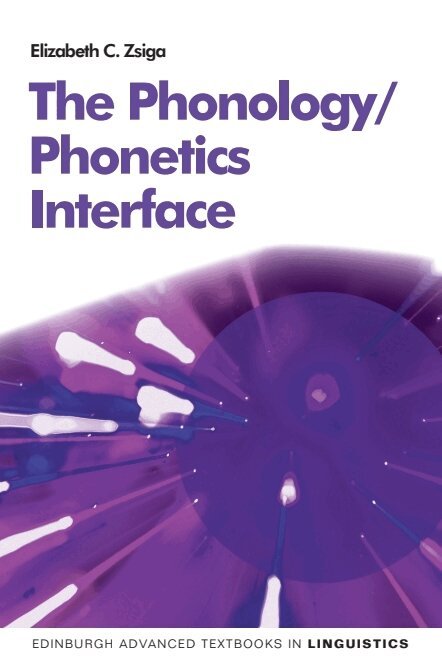
    Phonology/Phonetics Interface

    AvElizabeth Zsiga

    Inbunden, Engelska, 2020

    Del i serien Edinburgh Advanced Textbooks in Linguistics

    1 460 kr

    Beställningsvara. Skickas inom 7-10 vardagar. Fri frakt över 249 kr.

    Fler format och utgåvor

    Häftad

    324 kr

    Beskrivning

    Moves beyond the basics of phonetics and phonology and investigates their interactionDesigned for the advanced student who wants to move beyond the basics but is not yet expertSurveys both historical approaches and current theories of the phonology phonetics interface, including structuralist, derivational, and post-derivational approachesExamines the roles of both articulation and perception in creating and maintaining phonological patterns.Includes suggestions for further readings and end-of-chapter questions for use in class discussionsIs speech in the mouth or in the brain? Do we hear with our ears or with our minds? How different can phonology and phonetics be? How similar? Where exactly does the border between them lie? Examining classic and current linguistic theories of how physical and cognitive factors interact in the mind of the speaker, and in the language system as a whole, Elizabeth Zsiga provides a rigorous guide to the key debates for the advanced student.

    Produktinformation

    • Utgivningsdatum:2020-10-12
    • Mått:156 x 234 x undefined mm
    • Format:Inbunden
    • Språk:Engelska
    • Serie:Edinburgh Advanced Textbooks in Linguistics
    • Antal sidor:320
    • Förlag:Edinburgh University Press
    • ISBN:9780748681785

    Utforska kategorier

    • Språkvetenskap och lingvistik inom Språk och ordböcker

    Mer om författaren

    Professor and Chair, Linguistics Department, Georgetown University

    Innehållsförteckning

    • Chapter 1. Introduction: Approaches To The Interface1.1. 'Phonology' vs. 'Phonetics'1.2. The Beginnings of the Dichotomy1.3. What is 'Real'? Phonological Structure vs. Phonetic Substance1.4. Phonetics as Linguistics: Modularity1.5. There Is No Interface: Phonology Without Phonetics and Phonetics Without Phonology1.6. Organization of the Book: Questions at the Phonology/Phonetics InterfaceChapter 2. Categories And Contrasts2.1. The Delimitation of Units2.2. Orthography: Morpheme, Syllable, Segment2.3. Phonetic Transcription2.4. Selecting the Inventory2.5. The Building Blocks of Inventories: Phonetic Parameters and Phonological Features2.6. Categories and Contrast in Signed Languages Chapter 3. Distinctive Feature Theory3.1. Criteria3.2. Theories of Distinctive Features3.3. What If There Is No Canon of Features?Chapter 4: The Derivation4.1 Background and Antecedents4.2. The SPE Model4.3. Non-Universal Phonetics4.4. Lexical and Post-lexical Phonology4.5. Phonological and Phonetic rules4.6. A Porous Border?Chapter 5: Markedness, Naturalness And Abstraction5.1. What Is "Markedness"?5.2. Natural and Unnatural Phonology5.3. Optimality Theory5.4. Phonetics in Phonology5.5. Evolutionary Phonology5.6. Learning Biases5.7. ConclusionChapter 6. Suprasegmentals: Syllables, Stress And Phrasing6.1 'Segmental' vs. 'Suprasegmental'6.2. The Syllable6.3. Stress6.4. The Phonological Word and PhraseChapter 7. Intonation And Tone7.1. The Linguistic Uses of Pitch7.2. Intonation7.3. Tone Chapter 8. Articulatory Phonology8.1. Towards an Articulatory Phonology8.2. Gestures as Units of Contrast8.3. Alternation as Gestural Re-organization8.4. Is All Phonology Articulatory Phonology?8.5. Constraining Timing Relations: Coupled Oscillators8.6. Extending the ModelChapter 9. Speech Perception, Exemplar Theory, And The Mental Lexicon9.1. Hearing and Speech Perception9.2. Speech Perception Influences Phonology9.3. Phonology Influences Speech Perception9.4. Units of Perception9.5. Exemplar Theory9.6. Perception and RepresentationChapter 10. Conclusions And Directions For Further Research10.1. Questions and Some Possible Answers10.2. Some Big Unanswered Questions10.3. Directions for Future Research10.4. Revisiting the Metaphors