• Fri frakt över 249 kr
  • •
  • Snabba leveranser
  • •
  • Billiga böcker
Kundservice

Du är på sajten för privatpersoner.

Företag, bibliotek eller offentlig verksamhet?

Du handlar på classic.bokus.com, där alla dina funktioner finns intakta.
Till classic.bokus.com
Bokus logotyp. Gå till startsidan.
  • Erbjudanden
  • Nyheter
  • Student
  • Topplistor
  • Barn & ungdom
  • Bokus Play
  • E-böcker
  • Pocketböcker
  • Spel & pussel

Må bättre, för mindre! Upp till 50% rabatt på hälsoböcker

Sidfot

Mina sidor

    Hjälp

    • Kundservice
    • Vanliga frågor och svar
    • Frakt och leverans
    • Retur vid ångerrätt
    • Reklamera vara
    • Betalning
    • Köpvillkor
    • Allmänna villkor
    • Information om webbplatsens tillgänglighet

    Om Bokus

    • Om oss
    • Pressrum
    • För studenter
    • För företag
    • För bibliotek och offentlig verksamhet
    • För leverantörer
    • Hållbarhet

    Populärt

    • Aktuella erbjudanden
    • Presentkort
    • Studentlitteratur
    • Nya böcker
    • Topplistor
    • Signerade böcker
    • Engelska böcker

    Inspiration

    • Boktips
    • BookTok
    • Populära bokserier
    • Barnbokskaraktärer
    • Populära författare
    Logotyp för Bokus
    Följ oss på Facebook (extern länk)Följ oss på Instagram (extern länk)Följ oss på YouTube (extern länk)Följ oss på TikTok (extern länk)
    bokus @ CookiesAnpassa cookiesIntegritetspolicyKöpvillkor
    Till Citymail hemsida (extern länk)Till Budbee hemsida (extern länk)Till Postnord hemsida (extern länk)Till Schenker hemsida (extern länk)Till Early Bird hemsida (extern länk)Till Walleys hemsida (extern länk)
    1. Naturvetenskap och teknik
    2. Matematik och naturvetenskap
    3. Kemi
    4. Oorganisk kemi

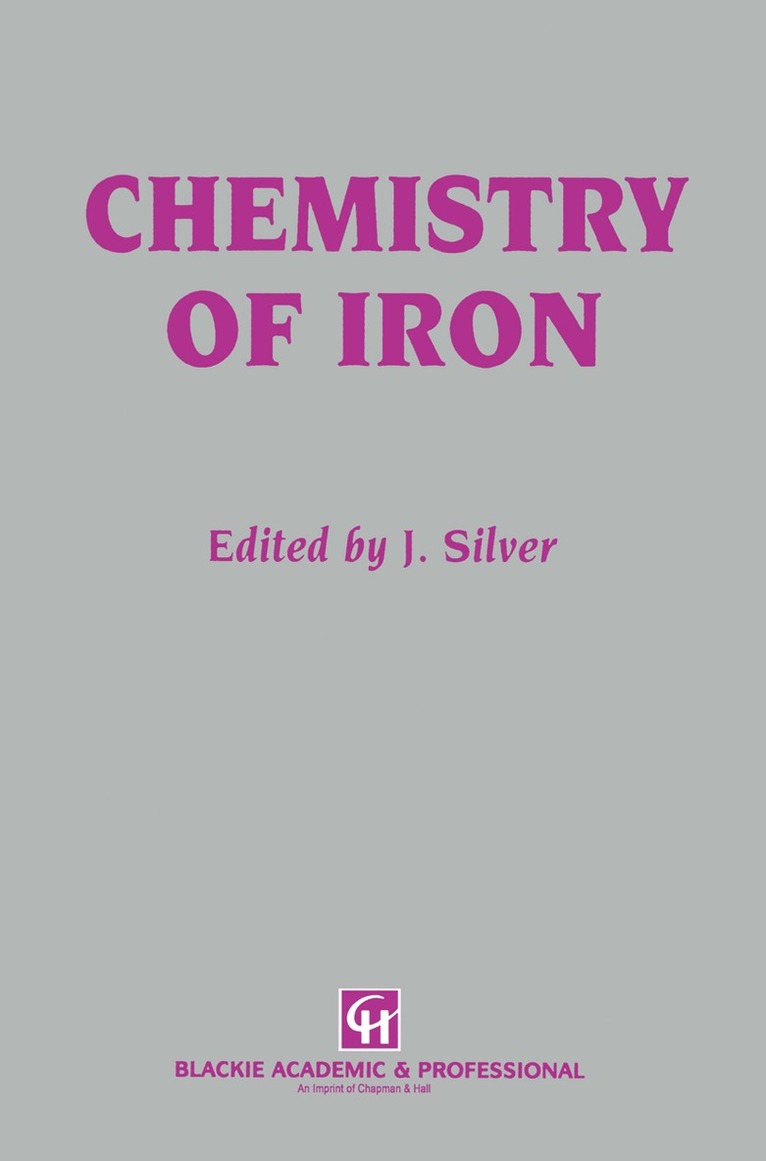
    Chemistry of Iron

    AvJ. Silver

    Inbunden, Engelska, 1992

    3 568 kr

    Beställningsvara. Skickas inom 10-15 vardagar. Fri frakt över 249 kr.

    Beskrivning

    This book is designed to be of use to the reader in two different ways. First, it is intended to provide a general introduction to all aspects of iron chemistry for readers from a variety of different scientific backgrounds. It has been written at a level suitable for use by graduates and advanced undergraduates in chemistry and biochemistry, and graduates in physics, geology, materials science, metallurgy and biology. It is not designed to be a dictionary of iron compounds but rather to provide each user with the necessary tools and background to pursue their ,individual interests in the wide areas that are influenced by the chemistry of iron. To achieve this goal each chapter has been written by a contemporary expert active in the subject so that the reader will benefit from their individual insight. Although it is generally assumed that the reader will have an understanding of bonding theories and general chemistry, the book is well referenced so that any deficiencies in the reader's background can be addressed. The book was also designed as a general reference book for initial pointers into a scientific literature that is growing steadily as the understanding and uses of this astonishingly versatile element continue to develop. To meet this aim the book attempts some coverage of all aspects of the chemistry of iron, not only outlining what understanding has been achieved to date but also identifying targets to be aimed at in the future.

    Produktinformation

    • Utgivningsdatum:1992-12-31
    • Mått:155 x 235 x 23 mm
    • Vikt:653 g
    • Format:Inbunden
    • Språk:Engelska
    • Antal sidor:306
    • Upplaga:1993
    • Förlag:Chapman and Hall
    • ISBN:9780751400625

    Utforska kategorier

    • Oorganisk kemi inom Naturvetenskap och teknik

    Recensioner i media

    All you wanted to know about the chemistry of iron is provided by eight contributed chapters...greatly welcomed for its contribution to the organometallic field. - Organometallic Compounds; Chapters on inorganic iron compounds and spectroscopic methods useful for iron complete the book which has a modest but useful index - Organometallic Compounds; Everything from the industrial history of iron and its inorganic chemistry to the biogical role of the metal is covered in enough detail to keep the straight chemistry undergraduate intrigued and to add chemical interest to a background reading list for geologists, metallurgists and biologists alike. - New Scientist; This [book] has been waiting to be written for years ... tremendously useful to a wide range of readers and researchers. - Education in Chemistry; Chemistry of ironprovides a skillful survey...a spread of topics conveying a true impression of the chemistry, and short articles of wide disparity...the book succeeds ingiving a clear and scholarly overview of its field. - Chemistry & Industry - London; This book is a timely collection of articles covering aspects of iron...and methods of metal protection. It is effectively written and provides just the right amount of information for undergraduates...the book should find a place on library shelves and will be a significant source of reference. - Chemistry in Britain

    Innehållsförteckning

    • 1 Introduction to iron chemistry.- 1.1 Introduction.- 1.2 Importance of iron.- 1.3 Iron minerals and ores.- 1.4 Pure iron and its main chemical and physical properties.- 1.5 Isotopes of iron.- 1.6 Ionisation energies.- 1.7 Oxidation states.- 1.8 Spin states.- 1.9 Magnetics.- 1.10 Electronic structure.- 1.11 Organometallic chemistry of iron.- 1.12 The biochemical importance of iron.- 1.13 The future of iron chemistry and biological chemistry.- References.- 2 Industrial chemistry of iron and its compounds.- 2.1 History.- 2.2 Production of iron.- 2.3 Chemistry in the blast furnace.- 2.4 Commercial iron.- 2.5 Pickling of steel.- 2.6 Main uses of steel.- 2.7 Corrosion of iron and steel.- 2.8 Prevention of corrosion.- 2.9 Use of iron compounds.- References.- 3 Inorganic chemistry of iron.- 3.1 Introduction.- 3.2 Lattice structures.- 3.3 High pressure effects.- 3.4 Spin equilibria.- References.- 4 Organo-iron compounds.- 4.1 Introduction.- 4.2 Iron carbonyls.- 4.3 Cyclopentadienyl iron complexes.- 4.4 Other hydrocarbon complexes.- 4.5 Miscellaneous complexes.- 4.6 Practical applications of organo-iron compounds.- Further reading.- References.- 5 Spectroscopic methods for the study of iron chemistry.- 5.1 Introduction.- 5.2 Hyperfine interactions.- 5.3 Interpretation of57Fe Mössbauer spectra.- References.- 6 Biological iron.- 6.1 Control of intracellular levels of iron.- 6.2 Iron-sulphur proteins.- 6.3 Haem proteins.- 6.4 Non-haem and non-Fe/S proteins.- References.- 7 Models for iron biomolecules.- 7.1 Models for iron biomolecules.- 7.2 Haem proteins.- 7.3 Models for iron—sulphur proteins.- 7.4 Proteins containing monomeric iron sites.- 7.5 Oxo-bridged di-iron centres.- 7.6 Models for the uptake and transport of iron.- 7.7 Models for biomineralisation processes.-References.- 8 Iron chelators of clinical significance.- 8.1 Iron transport and distribution.- 8.2 Systemic iron overload.- 8.3 Localised and temporary elevation of iron levels.- 8.4 Protection against cellular damage induced by redox cycling chemicals.- 8.5 Selective inhibition of non-haem containing enzymes.- 8.6 Treatment of anaemia with iron complexes.- References.