• Fri frakt över 249 kr
  • •
  • Snabba leveranser
  • •
  • Billiga böcker
Kundservice

Du är på sajten för privatpersoner.

Företag, bibliotek eller offentlig verksamhet?

Du handlar på classic.bokus.com, där alla dina funktioner finns intakta.
Till classic.bokus.com
Bokus logotyp. Gå till startsidan.
  • Erbjudanden
  • Nyheter
  • Student
  • Topplistor
  • Barn & ungdom
  • Bokus Play
  • E-böcker
  • Pocketböcker
  • Spel & pussel

10% studentrabatt med kod TERM26

Sidfot

Mina sidor

    Hjälp

    • Kundservice
    • Vanliga frågor och svar
    • Frakt och leverans
    • Retur vid ångerrätt
    • Reklamera vara
    • Betalning
    • Köpvillkor
    • Allmänna villkor
    • Information om webbplatsens tillgänglighet

    Om Bokus

    • Om oss
    • Pressrum
    • För studenter
    • För företag
    • För bibliotek och offentlig verksamhet
    • För leverantörer
    • Hållbarhet

    Populärt

    • Aktuella erbjudanden
    • Presentkort
    • Studentlitteratur
    • Nya böcker
    • Topplistor
    • Signerade böcker
    • Engelska böcker

    Inspiration

    • Boktips
    • BookTok
    • Populära bokserier
    • Barnbokskaraktärer
    • Populära författare
    Logotyp för Bokus
    Följ oss på Facebook (extern länk)Följ oss på Instagram (extern länk)Följ oss på YouTube (extern länk)Följ oss på TikTok (extern länk)
    bokus @ CookiesAnpassa cookiesIntegritetspolicyKöpvillkor
    Till Citymail hemsida (extern länk)Till Budbee hemsida (extern länk)Till Postnord hemsida (extern länk)Till Schenker hemsida (extern länk)Till Early Bird hemsida (extern länk)Till Walleys hemsida (extern länk)
    1. Skönlitteratur
    2. Litteraturvetenskap
    3. Litteraturvetenskap

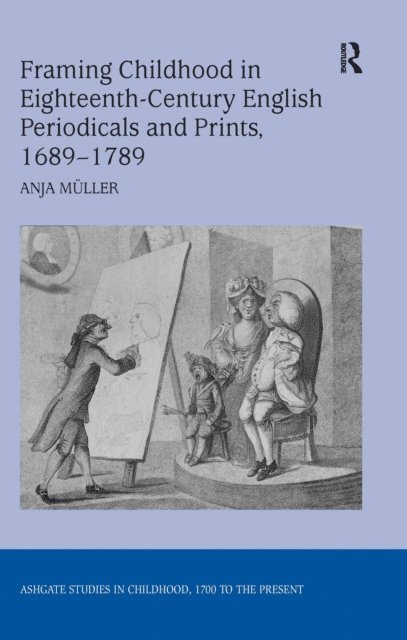
    Framing Childhood in Eighteenth-Century English Periodicals and Prints, 1689–1789

    AvAnja Müller

    Inbunden, Engelska, 2009

    Del i serien Studies in Childhood, 1700 to the Present

    2 799 kr

    Beställningsvara. Skickas inom 10-15 vardagar. Fri frakt över 249 kr.

    Fler format och utgåvor

    Häftad

    1 030 kr

    E-bok

    1 088 kr

    E-bok

    1 091 kr

    Beskrivning

    Shedding light on an important and neglected topic in childhood studies, Anja Müller interrogates how different concepts of childhood proliferated and were construed in several important eighteenth-century periodicals and satirical prints. Müller focuses on The Tatler, The Spectator, The Guardian, The Female Tatler, and The Female Spectator, arguing that these periodicals contributed significantly to the construction, development, and popularization of childhood concepts that provided the basis for later ideas such as the 'Romantic child'. Informed by the theoretical concept of 'framing', by which certain concepts of childhood are accepted as legitimate while others are excluded, Framing Childhood analyses the textual and graphic constructions of the child's body, educational debates, how the shift from genealogical to affective bonding affected conceptions of parent-child relations, and how prints employed child figures as focalizers in their representations of public scenes. In examining links between text and image, Müller uncovers the role these media played in the genealogy of childhood before the 1790s, offering a re-visioning of the myth that situates the origin of childhood in late eighteenth-century England.

    Produktinformation

    • Utgivningsdatum:2009-09-28
    • Mått:156 x 234 x 23 mm
    • Vikt:453 g
    • Format:Inbunden
    • Språk:Engelska
    • Serie:Studies in Childhood, 1700 to the Present
    • Antal sidor:276
    • Förlag:Taylor & Francis Ltd
    • ISBN:9780754665038

    Utforska kategorier

    • Litteraturvetenskap inom Skönlitteratur

    Mer om författaren

    Anja Müller, Universität Siegen, Germany

    Recensioner i media

    Prize: Named the 2009 Honor Book by the Children's Literature Association 'Thorough and meticulous in its survey of its primary materials, Muller’s study convincingly demonstrates the importance of early mass media in shaping and framing childhood in the eighteenth century. As Müller forcefully demonstrates, periodicals and prints were not merely reflective but rather constitutive in significant ways of both the pedagogical debates and the theories and technologies of childhood in the period. Further, her work points out how the discourses of childhood in the period were not as unified as many critics have hitherto suggested but housed a range of tensions, divisions, and contradictions.' Andrew O'Malley, Ryerson University, Canada 'This study’s well-researched and convincing analyses of textual and graphic constructions of the child’s body and mind, as well as of educational and political debates provide an outstanding contribution to childhood studies.' Anglia 'Müller's study is invaluable for the wealth of graphic materials it makes available, and it is at its best when she is examining the gap between the high art rendering of eighteenth-century families on which many of our conceptions of childhood are based and the varied perspectives on the child offered by mass-produced print media. This book is also important for the conversation it provokes with the reader. ... the ample illustrations provide plenty of opportunity to contest interpretations, and the author's enthusiasm for demonstrating the richness and diversity of the figure of the child in eighteenth-century culture keeps the reader eager to learn more.' Eighteenth-Century Fiction 'The work's great strengths include the author's great efforts to tell the reader what she is going to do in each given chapter and section, the wealth of details she finds to comment on in the periodical passages and prints she deals with, and her willingness to figure out the modern theories she draws on and to

    Innehållsförteckning

    • Contents: Preface; Introduction: representing childhood in 18th-century English prose and prints; Fashioning children's bodies; Framing children's minds; Educating the middle class - educational debates in The Tatler and The Spectator; Educational displacements; Family matters; Public children; Conclusion; Bibliography; Index.