• Fri frakt över 249 kr
  • •
  • Snabba leveranser
  • •
  • Billiga böcker
Kundservice

Du är på sajten för privatpersoner.

Företag, bibliotek eller offentlig verksamhet?

Du handlar på classic.bokus.com, där alla dina funktioner finns intakta.
Till classic.bokus.com
Bokus logotyp. Gå till startsidan.
  • Erbjudanden
  • Nyheter
  • Student
  • Topplistor
  • Barn & ungdom
  • Bokus Play
  • E-böcker
  • Pocketböcker
  • Spel & pussel

10% rabatt på allt med kod: NYSTART10 →

Sidfot

Mina sidor

    Hjälp

    • Kundservice
    • Vanliga frågor och svar
    • Frakt och leverans
    • Retur vid ångerrätt
    • Reklamera vara
    • Betalning
    • Köpvillkor
    • Allmänna villkor
    • Information om webbplatsens tillgänglighet

    Om Bokus

    • Om oss
    • Pressrum
    • För studenter
    • För företag
    • För bibliotek och offentlig verksamhet
    • För leverantörer
    • Hållbarhet

    Populärt

    • Aktuella erbjudanden
    • Presentkort
    • Studentlitteratur
    • Nya böcker
    • Topplistor
    • Signerade böcker
    • Engelska böcker

    Inspiration

    • Boktips
    • BookTok
    • Populära bokserier
    • Barnbokskaraktärer
    • Populära författare
    Logotyp för Bokus
    Följ oss på Facebook (extern länk)Följ oss på Instagram (extern länk)Följ oss på YouTube (extern länk)Följ oss på TikTok (extern länk)
    bokus @ CookiesAnpassa cookiesIntegritetspolicyKöpvillkor
    Till Citymail hemsida (extern länk)Till Budbee hemsida (extern länk)Till Postnord hemsida (extern länk)Till Schenker hemsida (extern länk)Till Early Bird hemsida (extern länk)Till Walleys hemsida (extern länk)
    1. Naturvetenskap och teknik
    2. Geovetenskap
    3. Regional planering

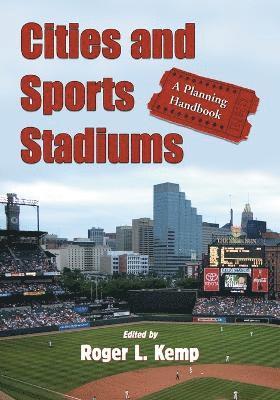
    Cities and Sports Stadiums

    A Planning Handbook

    AvRoger L. Kemp

    Häftad, Engelska, 2009

    472 kr

    Beställningsvara. Skickas inom 5-8 vardagar. Fri frakt över 249 kr.

    Beskrivning

    Throughout the United States, community development is increasingly focused on multi-use stadiums and arenas. Local governments and organizations are revitalizing their communities through these projects, which provide the best inner-city venues for sports, entertainment, cultural events, and business expositions.The first section of this book reveals how cities negotiate, approve, finance, design, and build stadiums and arenas. The second section includes case studies demonstrating measures and safeguards to take so the planned project will be a fiscal and political success. A final section examines the future of sports facilities.

    Produktinformation

    • Utgivningsdatum:2009-04-20
    • Mått:178 x 254 x 13 mm
    • Vikt:449 g
    • Format:Häftad
    • Språk:Engelska
    • Antal sidor:252
    • Förlag:McFarland & Co Inc
    • ISBN:9780786438082

    Utforska kategorier

    • Regional planering inom Naturvetenskap och teknik
    • Evenemang och organisation inom Sport, fritid och hobby

    Mer om författaren

    Roger L. Kemp, Ph.D., ICMA-CM, has been a city manager on both the East and West coasts for more than 25 years. He is presently Distinguished Adjunct Professor of Public Administration at Golden Gate University and a Fellow of The Academy of Political Science.

    Recensioner i media

    “Recommended. All readers.”—Choice.

    Innehållsförteckning

    • Table of ContentsAcknowledgments      Preface      Section I. Cities and Sports Facilities1. Cities and the Financing of Sports FacilitiesAdam M. Zaretsky      2. Sporting Events, Public Benefits, and Urban DevelopmentGreg Clark      3. Sports Facilities and Economic ProsperityGretchen Barta      4. Economic Precautions, Public Scrutiny, and Government FinancingCharles Mahtesian      5. Sports Facilities and the Quality of LifeJosh Goodman      Section II. The Best Practices6. Anaheim and the Influence of the AngelsBrian Judd      7. Arlington and Other Cities Weigh the Value of Stadiums for Public FinancingAlan Ehrenhalt      8. Boise Finances Multi-Use Facility for Community EventsStephanie Worrell      9. Boston and Other Cities Maximize Use of Inner-City Sports FacilitiesDavid Nardone      10. Chicago’s Two Sports Stadiums Have Different Economic ImpactsRobert A. Baade, Mimi Nikolova, and Victor A. Matheson      11. Corpus Christi Builds New Stadium for Minor League TeamSteve Bergsman      12. Denver and Other Cities Should Use Social Benefits to Justify Financing of Sports FacilitiesGerald A. Carlino and N. Edward Coulson      13. East Rutherford, Other Cities, Receive “Naming Rights” Revenues from New Sports StadiumHoward Bloom      14. Evansville Mayor Uses Advisory Board to Analyze Need for New StadiumRoberts Stadium Advisory Board      15. Fargo and Other Cities Ponder the “Public Good” in the Taxpayer Financing of New Sports FacilitiesRonald A. Wirtz      16. Frisco Focuses on Public-Private Partnerships for New Sports ComplexGeorge A. Purefoy      17. Glendale and Other Cities Have Mixed-Use Facility to Create Sports DistrictMarc Hequet      18. Harrisburg and Other Cities Consider Public Ownership of Sports TeamsCharles Mahtesian      19. Houston and Other Cities Design Their Sports Stadiums for ComfortChuck Ross      20. Kansas City and Other Towns Use Stadiums and Arenas for Inner-City RenewalParke M. Chapman      21. Landover and Other Cities Are Forced to Find New Uses for Old StadiumsCharles Mahtesian      22. Los Angeles and Other Cities Use Community Benefits Agreements to Develop Sports FacilitiesMadeline Janis-Aparicio and Roxana Tynan      23. Memphis Uses Minor League Team’s Stadium to Revitalize Their DowntownDesiree French      24. Miami Grapples with Use of Public Funding to Finance New Sports StadiumDavid Wilkening      25. Montgomery Receives Income from Stadium Operations to Offset Public ExpensesJim Noles      26. New York Sets Example for Partnership with Community Groups for Affordable Housing at Arena Project SiteJohn Atlas      27. Newark’s Proposed Arena Sparks Political Debate About City’s FutureJason Stevenson      28. Olympia and Other Cities Ask Their States to Fund Sports FacilitiesJim Brunner      29. Pasadena Asks Citizens to Vote on Sports Team and New FacilitiesRebecca Kuzins      30. Richmond and Other Cities Entice Minor League Sports Teams to Stimulate Their EconomyCharles Gerena and Betty Joyce Nash      31. Rock Hill Approves Innovative Financing Method to Construct Sports FacilityAmerican City & County      32. St. Paul Serves as Focus for Statewide Study on New Sports StadiumStadium Task Force      33. Salem and Other Cities Compete to Host Sporting Events at Their Stadiums and ArenasNancye Tuttle      34. San Francisco and Other Cities Use Sports Facilities as Anchor Tenants to Stimulate Inner-City LivingPhilip Langdon      35. Seattle Designs Its Stadium to Fit Both the Neighborhood and the CommunityRenée Young      36. Sioux Falls and Other Cities Favor Neighborhood Sports Centers Over Large-Scale FacilitiesRonald A. Wirtz      37. Trenton Credits Waterfront Ballpark for Bringing People Back DowntownJanet Ward      38. Washington, D.C., Think Tank Encourages Public Officials Not to Subsidize New Sports StadiumDennis Coates and Brad R. Humphreys      Section III. The Future39. The “Real” Economic Impact of Publicly Financed Sports FacilitiesDennis Coates and Brad R. Humphreys      40. The Changing Nature of America’s Sports FacilitiesChad Seifried and Dave Shonk      41. Sports Facilities, Public Benefits, and the FutureJordan Rappaport and Chad Wilkerson      42. Major Issues Shaping America’s Sports IndustryJohn Sweeney      43. The Future of the Sports Industry in AmericaIrving Rein, Philip Kotler, and Ben Shields      AppendicesA. Glossary      B. Acronyms and Abbreviations      C. Periodicals Bibliography      D. Books and Articles Bibliography      E. Foundation Resources      F. Federal Reserve Bank Resources      G. Federal Government Resources      H. Regional Resource Directory      I. National Resource Directory      J. International Resource Directory      About the Editor and Contributors      Index