• Fri frakt över 249 kr
  • •
  • Snabba leveranser
  • •
  • Billiga böcker
Kundservice

Du är på sajten för privatpersoner.

Företag, bibliotek eller offentlig verksamhet?

Du handlar på classic.bokus.com, där alla dina funktioner finns intakta.
Till classic.bokus.com
Bokus logotyp. Gå till startsidan.
  • Erbjudanden
  • Nyheter
  • Student
  • Topplistor
  • Barn & ungdom
  • Bokus Play
  • E-böcker
  • Pocketböcker
  • Spel & pussel

10% rabatt på allt med kod: NYSTART10 →

Sidfot

Mina sidor

    Hjälp

    • Kundservice
    • Vanliga frågor och svar
    • Frakt och leverans
    • Retur vid ångerrätt
    • Reklamera vara
    • Betalning
    • Köpvillkor
    • Allmänna villkor
    • Information om webbplatsens tillgänglighet

    Om Bokus

    • Om oss
    • Pressrum
    • För studenter
    • För företag
    • För bibliotek och offentlig verksamhet
    • För leverantörer
    • Hållbarhet

    Populärt

    • Aktuella erbjudanden
    • Presentkort
    • Studentlitteratur
    • Nya böcker
    • Topplistor
    • Signerade böcker
    • Engelska böcker

    Inspiration

    • Boktips
    • BookTok
    • Populära bokserier
    • Barnbokskaraktärer
    • Populära författare
    Logotyp för Bokus
    Följ oss på Facebook (extern länk)Följ oss på Instagram (extern länk)Följ oss på YouTube (extern länk)Följ oss på TikTok (extern länk)
    bokus @ CookiesAnpassa cookiesIntegritetspolicyKöpvillkor
    Till Citymail hemsida (extern länk)Till Budbee hemsida (extern länk)Till Postnord hemsida (extern länk)Till Schenker hemsida (extern länk)Till Early Bird hemsida (extern länk)Till Walleys hemsida (extern länk)
    1. Skönlitteratur
    2. Litteraturvetenskap
    3. Litteraturvetenskap

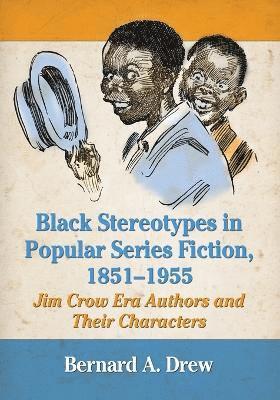
    Black Stereotypes in Popular Series Fiction, 1851-1955

    Jim Crow Era Authors and Their Characters

    AvBernard A. Drew

    Häftad, Engelska, 2015

    543 kr

    Beställningsvara. Skickas inom 5-8 vardagar. Fri frakt över 249 kr.

    Beskrivning

    Even well-meaning fiction writers of the late Jim Crow era (1900-1955) perpetuated racial stereotypes in their depiction of black characters. From 1918 to 1952, Octavus Roy Cohen turned out a remarkable 360 short stories featuring Florian Slappey and the schemers, romancers and ditzes of Birmingham's Darktown for The Saturday Evening Post and other publications. Cohen said, "I received a great deal of mail from Negroes and I have never found any resentment from a one of them." The black readership had to be satisfied with any black presence in the popular literature of the day.The best known white writers of black characters included Booth Tarkington (Herman and Verman in the Penrod books), Irvin S. Cobb (Judge Priest's houseman Jeff Poindexter), Roark Bradford (Widow Duck, the plantation matriarch), Hugh Wiley (Wildcat Marsden, the war veteran who traveled the country in the company of his goat) and Charles Correll and Freeman Gosden (radio's Amos 'n' Andy). These writers deservedly declined in the civil rights era, but left a curious legacy that deserves examination. This book, focusing on authors of series fiction and particularly of humorous stories, profiles 29 writers and their black characters in detail, with brief entries covering 72 others.

    Produktinformation

    • Utgivningsdatum:2015-04-28
    • Mått:178 x 254 x 15 mm
    • Vikt:517 g
    • Format:Häftad
    • Språk:Engelska
    • Antal sidor:292
    • Förlag:McFarland & Co Inc
    • ISBN:9780786474103

    Utforska kategorier

    • Litteraturvetenskap inom Skönlitteratur

    Mer om författaren

    Bernard A. Drew, an associate editor of The Lakeville Journal and its associated weekly newspapers in Northwest Connecticut, has written 50 books. He lives in Great Barrington, Massachusetts.

    Recensioner i media

    “Valuable reference source...highly recommended”—American Library Association; “informative and extremely useful…recommended”—ARBA; “Drew explores the way white fiction writers wrote about black characters in the Jim Crow era”—ProtoView.

    Innehållsförteckning

    • Table of ContentsPrefaceIntroduction: If That Is the Way They Are in Stories, That Must Be the Way They Are in LifeI. Writers of the Antebellum, Reconstruction and Early Jim Crow Era (1851–1899)Harriet Beecher Stowe (1811–1896)Mark Twain (1835–1910)Joel Chandler Harris (1848–1908)George Washington Cable (1844–1925)Thomas Nelson Page (1853–1922)Charles W. Chesnutt (1858–1932)Paul Laurence Dunbar (1872–1906)II. Writers of the Late Jim Crow Era (1900–1955)Richard F. Outcault (1863–1928)Henry Edwards Cowen (“Red Buck”) Bryant (1873–1967)Bridges Smith (1848–1930)Harris Dickson (1868–1946)Irvin S. Cobb (1876–1944)E.K. (Eldred Kurtz) Means (1878–1957)Booth Tarkington (1869–1946)James P. Alley (1885–1934) and Calvin Alley (1915–1970)Ambrose E. Gonzales (1857–1926)Robert McBlair (1888–1976)Octavus Roy Cohen (1891–1959)Harry Stillwell Edwards (1855–1938)Arthur LeRoy Kaser (1890–1956)Hugh Wiley (1884–1968)Arthur K. Akers (1886–1980)Roark Bradford (1896–1948)Charles Correll (1890–1972) and Freeman F. Gosden (1899–1982)Paul F. Ernst (1899–1985)Will Eisner (1917–2005)Langston Hughes (1902–1967)III. Additional Writers of InterestPhillis Wheatley (1753–1784)Robert Roberts (1780–1860)Thomas D. Rice (1808–1860)John Pendleton Kennedy (1795–1870)George Washington Dixon (1801–1861)Augustus Baldwin Longstreet (1790–1870)Caroline Gilman (1794–1888)Lydia Maria Child (1802–1880)Frederick Douglass (1818–1895)William Wells Brown (1814–1884)E.D.E.N. Southworth (1819–1899)Mary Henderson Eastman (1818–1887)Maria J. McIntosh (1803–1878)Caroline Lee Hentz (1800–1856)Mary J. Holmes (1825–1907)Thomas Chandler Haliburton (1796–1865)Johnson Jones Hooper (1815–1862)Martin Delany (1812–1885)Harriet E. Wilson (1825–1900)Harriet Ann Jacobs (1813–1897)Petroleum V. Nasby (1833–1888)Samuel W. Small (1851–1931)Irwin Russell (1853–1879)Thomas Worth (1834–1917)Colonel Prentiss Ingraham (1843–1904)Louise Clarke Pyrnelle (1850–1907)Katherine Sherwood Bonner McDowell (1849–1883)Ruth McEnery Stuart (1849–1917)Frances Ellen Watkins Harper (1825–1911)Polk Miller (1844–1913)John Trotwood Moore (1858–1929)Kate Chopin (1851–1904)Opie Pope Read (1852–1939)Bob Cole (1868–1911)Miss Howard Weeden (1846–1905)Martha Sawyer Gielow (1860–1933)Helen Bannerman (1862–1946)Alice ­Dunbar-Nelson (1875–1935)Will N. Harben (1858–1919)Booker T. Washington (1856–1915)Martha Strudwick Young (1862–1941)John Charles McNeill (1874–1907)Frederick H. Seymour (1850–1913)James D. Corrothers (1869–1917)W.E.B. Du Bois (1868–1963)Ella Middleton Tybout (1871–1952)Silas Xavier Floyd (1869–1923)William Marriner (1873–1914)John F. Dixon Jr. (1864–1946)Sara Cone Bryant (1873–?)Frances Boyd Calhoun (1867–1909) and Emma Speed Sampson (1868–1947)Joseph S. Cotter, Jr. (1861–1949)James Weldon Johnson (1871–1938)Marion F. Harmon (1861–1940)B.B. Valentine (1862–1919)Julia Mead Peterkin (1880–1961)Robert Emmet Kennedy (1877–1941)Jane Baldwin Cotton (d. 1932)Nella Larsen (1891–1964)Charles E. Mack (1887–1934)Annie Vaughan Weaver (1905–1982)Inez Hogan (1895–1973)E.V. White (1879–1955)Zora Neale Hurston (1891–1960)Richard Wright (1908–1960)Ellen Tarry (1906–2008)Enid Blyton (1897–1968)Jackie Ormes (1911–1985)Ralph Ellison (1914–1994)James Baldwin (1924–1987)Lorraine Hansberry (1930–1965)Index