• Fri frakt över 249 kr
  • •
  • Snabba leveranser
  • •
  • Billiga böcker
Kundservice

Du är på sajten för privatpersoner.

Företag, bibliotek eller offentlig verksamhet?

Du handlar på classic.bokus.com, där alla dina funktioner finns intakta.
Till classic.bokus.com
Bokus logotyp. Gå till startsidan.
  • Erbjudanden
  • Nyheter
  • Student
  • Topplistor
  • Barn & ungdom
  • Bokus Play
  • E-böcker
  • Pocketböcker
  • Spel & pussel

10% rabatt på allt med kod NYSTART10 →

Sidfot

Mina sidor

    Hjälp

    • Kundservice
    • Vanliga frågor och svar
    • Frakt och leverans
    • Retur vid ångerrätt
    • Reklamera vara
    • Betalning
    • Köpvillkor
    • Allmänna villkor
    • Information om webbplatsens tillgänglighet

    Om Bokus

    • Om oss
    • Pressrum
    • För studenter
    • För företag
    • För bibliotek och offentlig verksamhet
    • För leverantörer
    • Hållbarhet

    Populärt

    • Aktuella erbjudanden
    • Presentkort
    • Studentlitteratur
    • Nya böcker
    • Topplistor
    • Signerade böcker
    • Engelska böcker

    Inspiration

    • Boktips
    • BookTok
    • Populära bokserier
    • Barnbokskaraktärer
    • Populära författare
    Logotyp för Bokus
    Följ oss på Facebook (extern länk)Följ oss på Instagram (extern länk)Följ oss på YouTube (extern länk)Följ oss på TikTok (extern länk)
    bokus @ CookiesAnpassa cookiesIntegritetspolicyKöpvillkor
    Till Citymail hemsida (extern länk)Till Budbee hemsida (extern länk)Till Postnord hemsida (extern länk)Till Schenker hemsida (extern länk)Till Early Bird hemsida (extern länk)Till Walleys hemsida (extern länk)
    1. Historia och arkeologi
    2. Historia
    3. Militärhistoria

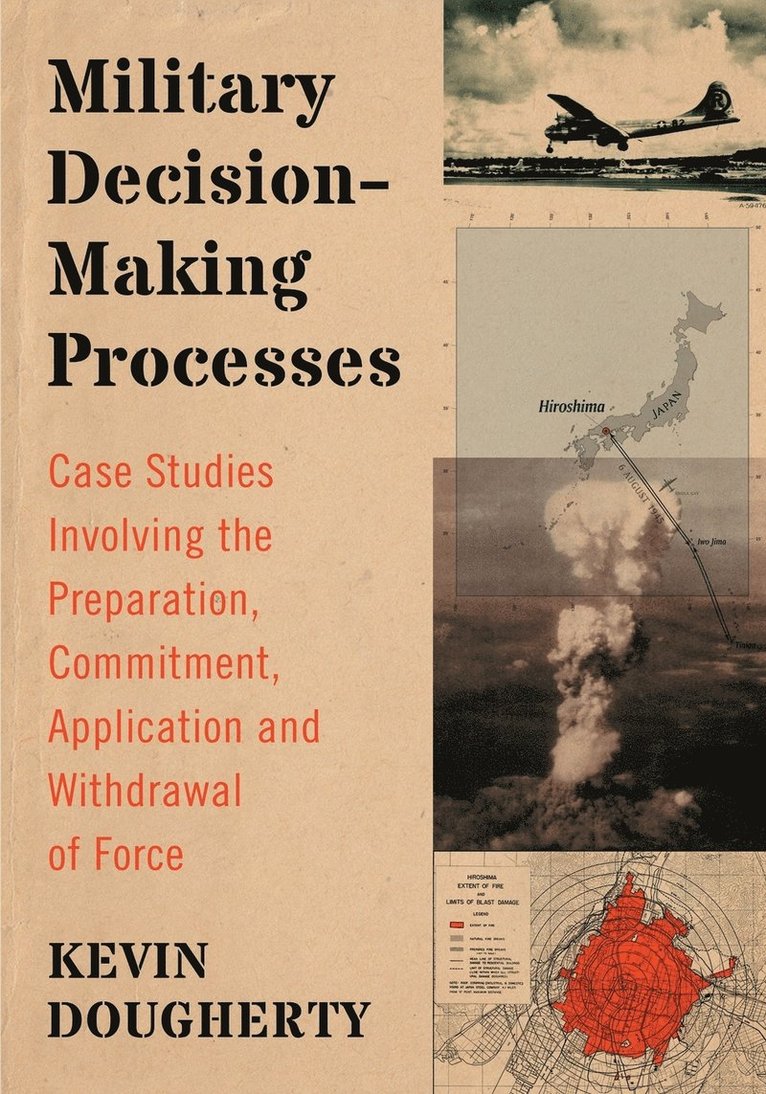
    Military Decision-Making Processes

    Case Studies Involving the Preparation, Commitment, Application and Withdrawal of Force

    AvKevin Dougherty

    Häftad, Engelska, 2013

    373 kr

    Beställningsvara. Skickas inom 5-8 vardagar. Fri frakt över 249 kr.

    Beskrivning

    President Bill Clinton, speaking as might any commander-in-chief, on the eve of his decision to deploy ground troops to Bosnia in 1995, declared he had "no responsibility more grave than putting soldiers in harm's way." Such a statement suggests that a study of the decision-making process associated with the weighty matters of using force would be enlightening. Indeed, it is. The decision-making process is far from standardized nor is it simple.While all individuals associated with important decisions about national security and the lives of America's service members take their responsibilities seriously, the processes by which they reach their conclusions are varied and complicated. The book traces eight traditional and emerging theories or models of decision-making by first explaining the components of each model and then by analyzing its practical application through three case studies. Each chapter concludes with a discussion of the utility and explanatory power of the particular model.Instructors considering this book for use in a course may request an examination copy here.

    Produktinformation

    • Utgivningsdatum:2013-11-08
    • Mått:178 x 254 x 9 mm
    • Vikt:313 g
    • Format:Häftad
    • Språk:Engelska
    • Antal sidor:172
    • Förlag:McFarland & Co Inc
    • ISBN:9780786477982

    Utforska kategorier

    • Militärhistoria inom Historia och arkeologi
    • Historia inom Historia och arkeologi

    Mer om författaren

    Kevin Dougherty, a retired Army lieutenant colonel, is the assistant commandant for leadership programs and an adjunct professor at The Citadel in Charleston, South Carolina.

    Innehållsförteckning

    • Table of ContentsPrefaceIntroductionChapter 1: The Rational Actor ModelExample 1: Truman’s Decision to Use the Atomic Bomb on Japan, 1945Example 2: Reagan’s Decision to Bomb Libya, 1986Example 3: Bush’s Decision to Halt Operation Desert Storm, 1991Utility of the Rational Actor ModelChapter 2: Prospect TheoryExample 1: Washington’s Decision to Attack Trenton, 1776Example 2: Meade’s Decision Not to Pursue Lee After Gettysburg, 1863Example 3: Clinton’s Decision to Withdraw from Somalia, 1993Utility of the Prospect TheoryChapter 3: Poliheuristic TheoryExample 1: Eisenhower’s Decision Not to Intervene in Hungary, 1956Example 2: Kennedy’s Authorization of the Bay of Pigs, 1961Example 3: Johnson’s Decision to De-escalate US Involvement in Vietnam, 1968Utility of the Poliheuristic TheoryChapter 4: The Bureaucratic ModelExample 1: The Confederate Departmental System’s Impact on the Vicksburg Campaign, 1862–1863Example 2: The ­Army–Air Force Helicopter Rivalry, 1950s–1960sExample 3: The Department of State and the Department of Defense and the Multinational Peacekeeping Force in Beirut, 1982Utility of the Bureaucratic ModelChapter 5: The Organizational Process ModelExample 1: Strategic Formulation in the Vietnam War, 1960s–1970sExample 2: The Decision to Abort the Iranian Hostage Rescue Mission, 1980Example 3: The Federalization of the California Army National Guard During the Los Angeles Riot, 1992Utility of the Organizational Process ModelChapter 6: The Small Group ModelExample 1: The Blockade Board in the Civil War, 1861Example 2: The Executive Committee During the Cuban Missile Crisis, 1962Example 3: The Restricted Interagency Group in Developing a Strategy Toward Nicaragua, 1980sUtility of the Small Group ModelChapter 7: The Elite TheoryExample 1: The Influence of the Congressional Black Caucus in the Decision to Intervene in Haiti, 1993 and 1994Example 2: The Role of the Media in the Decision to Intervene in Somalia, 1992Example 3: The Agenda of Secretary of State Madeline Albright in the Decision to Intervene in Kosovo, 1999Utility of the Elite TheoryChapter 8: The Pluralist ModelExample 1: Conscription in the Confederate Army, 1861–1864Example 2: The Reflagging of Kuwaiti Tankers in the Midst of the ­Iran-Iraq War, 1987–1988Example 3: The Implementation Force (IFOR) in Bosnia, 1995Utility of the Pluralist ModelEpilogueChapter NotesBibliographyIndex