• Fri frakt över 249 kr
  • •
  • Snabba leveranser
  • •
  • Billiga böcker
Kundservice

Du är på sajten för privatpersoner.

Företag, bibliotek eller offentlig verksamhet?

Du handlar på classic.bokus.com, där alla dina funktioner finns intakta.
Till classic.bokus.com
Bokus logotyp. Gå till startsidan.
  • Erbjudanden
  • Nyheter
  • Student
  • Topplistor
  • Barn & ungdom
  • Bokus Play
  • E-böcker
  • Pocketböcker
  • Spel & pussel

10% studentrabatt med kod TERM26

Sidfot

Mina sidor

    Hjälp

    • Kundservice
    • Vanliga frågor och svar
    • Frakt och leverans
    • Retur vid ångerrätt
    • Reklamera vara
    • Betalning
    • Köpvillkor
    • Allmänna villkor
    • Information om webbplatsens tillgänglighet

    Om Bokus

    • Om oss
    • Pressrum
    • För studenter
    • För företag
    • För bibliotek och offentlig verksamhet
    • För leverantörer
    • Hållbarhet

    Populärt

    • Aktuella erbjudanden
    • Presentkort
    • Studentlitteratur
    • Nya böcker
    • Topplistor
    • Signerade böcker
    • Engelska böcker

    Inspiration

    • Boktips
    • BookTok
    • Populära bokserier
    • Barnbokskaraktärer
    • Populära författare
    Logotyp för Bokus
    Följ oss på Facebook (extern länk)Följ oss på Instagram (extern länk)Följ oss på YouTube (extern länk)Följ oss på TikTok (extern länk)
    bokus @ CookiesAnpassa cookiesIntegritetspolicyKöpvillkor
    Till Citymail hemsida (extern länk)Till Budbee hemsida (extern länk)Till Postnord hemsida (extern länk)Till Schenker hemsida (extern länk)Till Early Bird hemsida (extern länk)Till Walleys hemsida (extern länk)
    1. Samhälle och politik
    2. Samhälle och kultur
    3. Sociala och etiska frågor

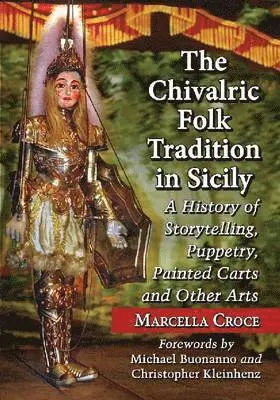
    Chivalric Folk Tradition in Sicily

    A History of Storytelling, Puppetry, Painted Carts and Other Arts

    AvMarcella Croce

    Häftad, Engelska, 2014

    355 kr

    Tillfälligt slut

    Beskrivning

    Tracing the development in Sicily of a chivalric tradition based on the medieval stories of Charlemagne and his knights, this is an analysis of Sicilian storytelling, puppetry, festivals, cart painting and other folk art. Interviews with puppeteers are documented, and hand painted cart panels and playbill posters are described and illustrated. The diffusion of the chivalric tradition in Sicily is explained in part by the "sense of honor" that has permeated Sicilian life. The story of one puppeteer, Girolamo Cuticchio, and his family sheds light on the hardships and uncertain future of this art.

    Produktinformation

    • Utgivningsdatum:2014-11-03
    • Mått:152 x 229 x 12 mm
    • Vikt:336 g
    • Format:Häftad
    • Språk:Engelska
    • Antal sidor:240
    • Förlag:McFarland & Co Inc
    • ISBN:9780786494156

    Utforska kategorier

    • Sociala och etiska frågor inom Samhälle och politik

    Mer om författaren

    Marcella Croce taught Italian at the University of Isfahan in Iran and Kyoto in Japan. She has given lectures on Sicilian culture for the Palermo Elderhostel Program. Since 2002 she has organizer the Palermo semester abroad program of Union College in Schenectady, New York. She has published numerous books on Sicilian traditions in Italian and in English. She lives in Palermo. Her website is www.marcellacroce.com.

    Recensioner i media

    “A little gem… invaluable”—Studies in Medieval and Renaissance Teaching

    Innehållsförteckning

    • Table of ContentsAcknowledgmentsForeword by Michael BuonannoForeword by Christopher KleinhenzPrefaceOne • From the Middle Ages to the PuppetsIntroducing Sicily—A Mosaic of CulturesThe Chivalric Stories Through the CenturiesThe Chivalric Tradition in Sicily Before the RenaissanceThe Success of Chivalric Romances in Sicily in the 16th CenturyProblems on the Origin of the Sicilian Puppet ShowTwo • The Oral TraditionThe Chivalric Tradition Between Learned and Popular LiteratureThe Role of the Storyteller in the Osmosis Process Between Dominant and Subordinate CulturesThree Types of Traditional Storytellers: Chivalric Tales, Sacred Stories and ChroniclesThe Tradition of Blind Storytellers (Orbi) in PalermoThe Traditional Epic Storytellers in Sicily and in NaplesSicilian Traditional Epic Storytellers in the Past and in the PresentTraces of the Chivalric Tradition in the Language of the Sicilian People—Idiomatic Expressions and ProverbsToponyms and Family NamesThree • The CelebrationsA Carnival Pantomime with a Knight: The Mastro di CampoDancing with Swords and a Holy Virgin in ArmsChivalric Stories with Drums and Bells in Monforte San GiorgioFour • The Puppet ShowsThe Sicilian Puppet Shows in a NutshellPuppets or Marionettes? The Opera dei Pupi and the Sicilian DialectThe Climax of the Sicilian Puppet Shows: The Famous Legendary Battle of RoncevauxRoncevaux in Lodico’s BookRoncevaux on the Stage of the Sicilian Puppet ShowsThe Rout of Roncevaux in the Ideology of the Opera dei PupiThe Puppet Shows as “Necessary Art” of the Sicilian PeopleFive • A Family of PuppeteersPresentation of Girolamo Cuticchio and His FamilyStory of the Family—Girolamo as an Apprentice PuppeteerA Puppeteer Is BornCrisis and Revival of a PassionLittle Puppeteers Grow UpTwo Artisans’ Workshops in Giacomo Cuticchio’s MemoriesOnce Upon a Time: The Corte delle Stelle Theater in CefalùBetween pages 100 and 101 there are 16 color plates containing 21 photographsSix • The Playbills (Cartelloni) of the Puppet TheaterDefinitions of Folk Art and Peculiar Characteristics of Sicilian Folk ArtChivalric Subjects for Sicilian Folk Art The Rout of Roncevaux in Playbill Posters for the Puppet ShowsSeven • The Sicilian Painted CartsThe Sicilian Carts in a NutshellHistory of the CartMakers of the CartThe Cart Builder and the SculptorThe Metal WorkerThe PainterChivalric Subjects Painted on the Carts Belonging to the Pitrè Museum in Palermo and to the Palazzo d’Aumale Museum in TerrasiniThe Maker of Horse TrappingsThe World of the Cart DriversThe Feast of St. Joseph in BagheriaThe Cart as a Sicilian SymbolLights and Shadows on the Sicilian CartsOther Objects for Chivalric Subjects and Revival in Today’s Folk ArtConclusionsAppendix: The Puppets and Their StoriesChapter NotesBibliographyIndex