• Fri frakt över 249 kr
  • •
  • Snabba leveranser
  • •
  • Billiga böcker
Kundservice

Du är på sajten för privatpersoner.

Företag, bibliotek eller offentlig verksamhet?

Du handlar på classic.bokus.com, där alla dina funktioner finns intakta.
Till classic.bokus.com
Bokus logotyp. Gå till startsidan.
  • Erbjudanden
  • Student
  • Topplistor
  • Barn & ungdom
  • Bokus Play
  • E-böcker
  • Ljudböcker
  • Pocketböcker
  • Spel & pussel

Upp till 25% på utvalda nyheter →

Sidfot

Mina sidor

    Hjälp

    • Kundservice
    • Vanliga frågor och svar
    • Frakt och leverans
    • Retur vid ångerrätt
    • Reklamera vara
    • Betalning
    • Köpvillkor
    • Allmänna villkor
    • Information om webbplatsens tillgänglighet

    Om Bokus

    • Om oss
    • Pressrum
    • För studenter
    • För företag
    • För bibliotek och offentlig verksamhet
    • För leverantörer
    • Hållbarhet

    Populärt

    • Aktuella erbjudanden
    • Presentkort
    • Studentlitteratur
    • Nya böcker
    • Topplistor
    • Signerade böcker
    • Engelska böcker

    Inspiration

    • Boktips
    • BookTok
    • Populära bokserier
    • Barnbokskaraktärer
    • Populära författare
    Logotyp för Bokus
    Följ oss på Facebook (extern länk)Följ oss på Instagram (extern länk)Följ oss på YouTube (extern länk)Följ oss på TikTok (extern länk)
    bokus @ CookiesAnpassa cookiesIntegritetspolicyKöpvillkor
    Till Citymail hemsida (extern länk)Till Budbee hemsida (extern länk)Till Postnord hemsida (extern länk)Till Schenker hemsida (extern länk)Till Early Bird hemsida (extern länk)Till Walleys hemsida (extern länk)
    1. Skönlitteratur
    2. Poesi

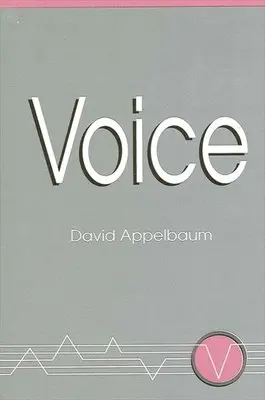
    Voice

    AvDavid Appelbaum

    Häftad, Engelska, 1990

    406 kr

    Beställningsvara. Skickas inom 7-10 vardagar. Fri frakt över 249 kr.

    Beskrivning

    Drawing on clues from Aristotle, Plato, Hobbes, Locke, Jacobson, Condillac, and Diderot, Appelbaum investigates the vocalized, acoustical aspect of audible expression. He analyzes the tendency to equate voice with speaking, and speaking with writing, the result being that vocalizing is equivalent to thinking aloud. Appelbaum affirms the body's role in vocalizing expression by proposing a new and radical interpretation of the truth of voice: that it is true if it provides a disclosure of our human contradictions. Sound, or the acoustical properties of a person's voice, is able to bring about the revolutionary new set of conditions which reveal the truth of one's condition.The author provides a unique account of the subjugation of voice by thought, indicating means for reversing the authority of the sound and for freeing up the voice. He concludes with the argument that poetic voice reconciles the search for semantic meaning with the raw, acoustical effect that the free voice causes.

    Produktinformation

    • Utgivningsdatum:1990-07-05
    • Mått:153 x 229 x 8 mm
    • Vikt:227 g
    • Format:Häftad
    • Språk:Engelska
    • Antal sidor:155
    • Förlag:State University of New York Press
    • ISBN:9780791402887

    Utforska kategorier

    • Poesi inom Skönlitteratur
    • Filosofi inom Filosofi och religion

    Mer om författaren

    David Appelbaum is professor of philosophy at The College at New Paltz, New York.

    Recensioner i media

    "Voice is fascinating; I could not put it down. The meaning of human speech to being human is a profound philosophical question. It is explored not only in its personal dimension, but also in its social and political dimensions. I regretted that the book was over when I reached the last page." — Robert Ginsberg, Pennsylvania State University"Appelbaum attacks the hyper-intellectualism of analytic philosophers and artificial intelligence advocates, and helps restore us to our own bodies, our own emotions, our own sufferings and joys." — Bruce Wilshire, Rutgers University

    Innehållsförteckning

    • Preface 1. The Cough 2. The Laugh 3. On the Breath 4. The Verge of Madness 5. The Metaphor of Voice 6. Babble 7. Chant/Song 8. How the Deaf Come to Speak 9. The Poem 10. Plato and the Poets Afterword Notes Partial Bibliography Index