• Fri frakt över 249 kr
  • •
  • Snabba leveranser
  • •
  • Billiga böcker
Kundservice

Du är på sajten för privatpersoner.

Företag, bibliotek eller offentlig verksamhet?

Du handlar på classic.bokus.com, där alla dina funktioner finns intakta.
Till classic.bokus.com
Bokus logotyp. Gå till startsidan.
  • Erbjudanden
  • Nyheter
  • Student
  • Topplistor
  • Barn & ungdom
  • Bokus Play
  • E-böcker
  • Pocketböcker
  • Spel & pussel

10% studentrabatt med kod TERM26

Sidfot

Mina sidor

    Hjälp

    • Kundservice
    • Vanliga frågor och svar
    • Frakt och leverans
    • Retur vid ångerrätt
    • Reklamera vara
    • Betalning
    • Köpvillkor
    • Allmänna villkor
    • Information om webbplatsens tillgänglighet

    Om Bokus

    • Om oss
    • Pressrum
    • För studenter
    • För företag
    • För bibliotek och offentlig verksamhet
    • För leverantörer
    • Hållbarhet

    Populärt

    • Aktuella erbjudanden
    • Presentkort
    • Studentlitteratur
    • Nya böcker
    • Topplistor
    • Signerade böcker
    • Engelska böcker

    Inspiration

    • Boktips
    • BookTok
    • Populära bokserier
    • Barnbokskaraktärer
    • Populära författare
    Logotyp för Bokus
    Följ oss på Facebook (extern länk)Följ oss på Instagram (extern länk)Följ oss på YouTube (extern länk)Följ oss på TikTok (extern länk)
    bokus @ CookiesAnpassa cookiesIntegritetspolicyKöpvillkor
    Till Citymail hemsida (extern länk)Till Budbee hemsida (extern länk)Till Postnord hemsida (extern länk)Till Schenker hemsida (extern länk)Till Early Bird hemsida (extern länk)Till Walleys hemsida (extern länk)
    1. Samhälle och politik
    2. Politik och statsskick
    3. Internationella relationer

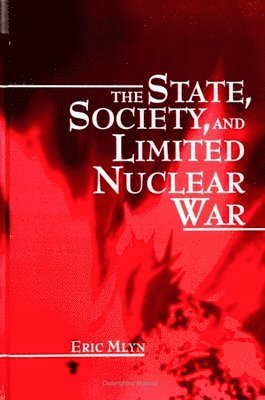
    State, Society, and Limited Nuclear War

    AvEric Mlyn

    Häftad, Engelska, 1995

    Del i serien SUNY series in The Making of Foreign Policy: Theories and Issues

    390 kr

    Tillfälligt slut

    Beskrivning

    An examination of the extent to which nuclear weapons policy has been democratically controlled, showing that a policy elite insulated from society eventually lost its autonomyThis book highlights the role that domestic politics has played in the evolution of U.S. nuclear weapons policy up to the present. Mlyn focuses on the relationship among the three levels of this policy: public statements, force posture, and nuclear targeting. He shows that although state officials since 1960 maintained a policy of Mutual Assured Destruction (MAD) in public, U. S. nuclear targeting in fact embraced Nuclear Utilization Theory (NUTS). Because this view of using nuclear weapons to fight a limited nuclear war was unpopular with the public, however, state officials did not articulate it fully until the early 1980s. Thus, although the Reagan administration was accused of radically changing nuclear weapons policy, it was actually continuing a long trend more openly.Drawing on theories of the state, archives, and interviews with top defense policymakers, this book tells an important story of interest to any reader concerned with how security policy is fashioned in the United States.

    Produktinformation

    • Utgivningsdatum:1995-02-03
    • Mått:153 x 229 x 13 mm
    • Vikt:340 g
    • Format:Häftad
    • Språk:Engelska
    • Serie:SUNY series in The Making of Foreign Policy: Theories and Issues
    • Antal sidor:241
    • Förlag:State University of New York Press
    • ISBN:9780791423486

    Utforska kategorier

    • Internationella relationer inom Samhälle och politik

    Mer om författaren

    Eric Mlyn is Assistant Professor of Political Science at the University of North Carolina at Chapel Hill.

    Recensioner i media

    "Mlyn has put together a new line of argument about the origins and evolution of U.S. nuclear weapons policy. Most of the literature on nuclear weapons has ignored the role of Congress and has assumed away the role of broader social forces. Mlyn's 'statist lens' therefore provides some valuable new insights." — Scott Sagan, Stanford University"A lucid, careful, and perceptive study of important questions about how Washington policymakers and forces in American society intersect and interact in the crucial area of nuclear weapons affairs. Mlyn throws light on a vital topic that is too little assessed: how and when nuclear policy is affected by the perceptions and intentions of American society." — Richard Smoke, Brown University

    Innehållsförteckning

    • Acknowledgments List of Acronyms 1. Introduction: An Overview of U.S. Nuclear Weapons Policy 2. U.S. Nuclear Weapons Policy and Theory Development:The Dominance of Bureaucratic Politics 3. The State and U.S. Nuclear Weapons Policy 4. The McNamara Years: The Shift to MAD? 5. Shifting Sands? 6. A Radical Departure? PD-59 and Forward 7. Conclusions: State, Society, and U.S. Nuclear Weapons Policy Notes Bibliography Index