• Fri frakt över 249 kr
  • •
  • Snabba leveranser
  • •
  • Billiga böcker
Kundservice

Du är på sajten för privatpersoner.

Företag, bibliotek eller offentlig verksamhet?

Du handlar på classic.bokus.com, där alla dina funktioner finns intakta.
Till classic.bokus.com
Bokus logotyp. Gå till startsidan.
  • Erbjudanden
  • Nyheter
  • Student
  • Topplistor
  • Barn & ungdom
  • Bokus Play
  • E-böcker
  • Pocketböcker
  • Spel & pussel

10% rabatt på allt med kod NYSTART10 →

Sidfot

Mina sidor

    Hjälp

    • Kundservice
    • Vanliga frågor och svar
    • Frakt och leverans
    • Retur vid ångerrätt
    • Reklamera vara
    • Betalning
    • Köpvillkor
    • Allmänna villkor
    • Information om webbplatsens tillgänglighet

    Om Bokus

    • Om oss
    • Pressrum
    • För studenter
    • För företag
    • För bibliotek och offentlig verksamhet
    • För leverantörer
    • Hållbarhet

    Populärt

    • Aktuella erbjudanden
    • Presentkort
    • Studentlitteratur
    • Nya böcker
    • Topplistor
    • Signerade böcker
    • Engelska böcker

    Inspiration

    • Boktips
    • BookTok
    • Populära bokserier
    • Barnbokskaraktärer
    • Populära författare
    Logotyp för Bokus
    Följ oss på Facebook (extern länk)Följ oss på Instagram (extern länk)Följ oss på YouTube (extern länk)Följ oss på TikTok (extern länk)
    bokus @ CookiesAnpassa cookiesIntegritetspolicyKöpvillkor
    Till Citymail hemsida (extern länk)Till Budbee hemsida (extern länk)Till Postnord hemsida (extern länk)Till Schenker hemsida (extern länk)Till Early Bird hemsida (extern länk)Till Walleys hemsida (extern länk)
    1. Samhälle och politik
    2. Samhälle och kultur
    3. Kultur och medier
    4. Referensverk och tvärvetenskap

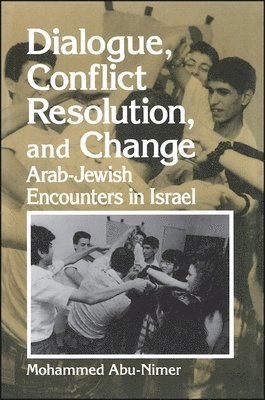
    Dialogue, Conflict Resolution, and Change

    Arab-Jewish Encounters in Israel

    AvMohammed Abu-Nimer

    Häftad, Engelska, 1999

    Del i serien SUNY series in Israeli Studies

    378 kr

    Tillfälligt slut

    Fler format och utgåvor

    Inbunden

    Tillf. slut

    Beskrivning

    Explores Arab-Jewish encounters and relations in Israel from both conflict resolution and educational perspectives.This is the first study to introduce the subject of Arab-Jewish relations and encounters in Israel from both conflict resolution and educational perspectives. Through a critical examination of Arab and Jewish encounter programs in Israel, the book reviews conflict resolution and intergroup theories and processes which are utilized in dealing with ethnic conflicts and offers a detailed presentation of intervention models applied by various encounter programs to promote dialogue, education for peace, and democracy between Arabs and Jews in Israel.The author investigates how encounter designs and processes can become part of a control system used by the dominant governmental majority's institutes to maintain the status quo and reinforce political taboos. Also discussed are the different conflict perceptions held by Arabs and Jews, the relationship between those perceptions, and both sides' expectations of the encounters. Abu-Nimer explores the impact of the political context (Intifada, Gulf War, and peace process) on the intervention design and process of those encounter groups, and contains a list of recommendations and guidelines to consider when designing and conducting encounters between ethnic groups. He reveals and explains why the Arab and Jewish encounter participants and leaders have different criteria of their encounter's success and failure. The study is also applicable to dialogue and coexistence programs and conflict resolution initiatives in other ethnically divided societies, such as South Africa, Northern Ireland, Bosnia, and Sri Lanka, where the minority and majority have struggled to find peaceful ways to coexist.

    Produktinformation

    • Utgivningsdatum:1999-05-13
    • Mått:152 x 229 x 12 mm
    • Vikt:327 g
    • Format:Häftad
    • Språk:Engelska
    • Serie:SUNY series in Israeli Studies
    • Antal sidor:199
    • Förlag:State University of New York Press
    • ISBN:9780791441541

    Utforska kategorier

    • Referensverk och tvärvetenskap inom Samhälle och politik

    Mer om författaren

    Mohammed Abu-Nimer is Assistant Professor at the International Peace and Conflict Resolution Program at the School of International Services at American University.

    Recensioner i media

    "In his in-depth examination of intervention models in Israel, Abu-Nimer provides a fresh insight into the important role of dialogue in conflict resolution. This comprehensive study will not only serve as a useful guide for future Arab-Israeli dialogues, but also a framework for other citizen diplomacy programs in areas of conflict around the world." — John W. McDonald, Ambassador, and Chairman and co-founder of the Institute for Multi-Track Diplomacy"Abu-Nimer critically examines an important aspect of the efforts to improve Jewish and Palestinian relations in Israel. Based on first hand experience and systematic analyses, he explores the pervasive limitations of programs bringing Palestinian and Jewish youth together for controlled educational encounters and dialogue. He locates the groups within a general socio-political context and he gives attention to the diversity of responses of students and staff regarding their experiences in these groups." — Louis Kriesberg, Syracuse University

    Innehållsförteckning

    • List of FiguresList of TablesAcknowledgmentsIntroductionList of AbbreviationsChapter 1.Intergroup Relations Approach Contact Hypothesis TheoryIntervention Models Based on the Contact Hypothesis and Intergroup Relations TheoriesContact Hypothesis Intervention: Shortcomings and Alternatives Chapter 2.Conflict Resolution Principles In Intergroup Conflicts: An Alternative Approach To Contact Hypothesis The Emergence of Conflict ResolutionConflict Resolution: Definitions and TheoryBasic Assumptions and Principles of Conflict ResolutionConflict Resolution: Intervention Models and ProcessesSelect Models of Conflict ResolutionCritique of Conflict Resolution ModelsConflict Resolution Responses to Critiques Chapter 3.Arab-Jewish Conflict In Israel: Historical, Social, And Political Background Context of Arab-Jewish Relations in IsraelArab-Jewish Relations on the Micro Level: Images and PerceptionsSpecial Characteristics of the Arab Educational System in IsraelChapter 4.The Arab-Jewish Coexistence Programs Development of the Coexistence ProgramsArab-Jewish Coexistence ProgramsArab-Jewish Coexistence ProgramsResearch on Arab-Jewish Encounters: Limitations and NeedsChapter 5.Methodological Considerations And The Arab-Jewish Programs The Six Case Study Organizations: Basic FeaturesChapter 6.The Encounter Programs' Designs: Components Of The Intervention Models ParticipantsAssumptionsGoalsStructureContentProcessThird-Party RoleArab-Jewish Encounters: Is There a Generic Model Chapter 7.Perceptions Of The Arab-Jewish Conflict In Israel Intervenors' Conflict PerceptionsIntervention Models and Perceptions of Arab-Jewish Conflict Chapter 8.Perception Of Success And Impacts Of The Encounter Models What Is Success?Measures and Criteria of SuccessActual SuccessExamples of SuccessParticipants' Perceptions of Outputs and ImpactsPerception of Success: The Need for Systematic MeasurementChapter 9.Impacts Of The Political Context On The Encounter Models Major Changes in the Encounter Programs Since the Mid-1980sImpacts of the Peace ProcessImpacts of the Intifada on Intervention ModelsImpacts of the Gulf War on the Encounter ProgramsImpacts of Soviet Jewish Immigration on Encounter ProgramsEncounter Models and Context: Avoidance, Confusion, and Slow Adjustment Chapter 10.Arab-Jewish Encounter Programs: Political Change Or Control? Limitations of the Arab-Jewish Encounter FieldLimitations in the AJP DesignsDo the Examined Intervention Models Contribute to Control or Change ProcessesArab-Jewish Encounter Programs and Educational Conflict Resolution ModelsConflict Resolution Approach in Arab-Jewish EncounterMajor Recommendations Appendixes 1. Participants and the Intifada's Impacts2. Participants and the Gulf War's Impacts3. Examples of Success in Arab-Jewish Intervention Notes BibliographyIndex