• Fri frakt över 249 kr
  • •
  • Snabba leveranser
  • •
  • Billiga böcker
Kundservice

Du är på sajten för privatpersoner.

Företag, bibliotek eller offentlig verksamhet?

Du handlar på classic.bokus.com, där alla dina funktioner finns intakta.
Till classic.bokus.com
Bokus logotyp. Gå till startsidan.
  • Erbjudanden
  • Nyheter
  • Student
  • Topplistor
  • Barn & ungdom
  • Bokus Play
  • E-böcker
  • Pocketböcker
  • Spel & pussel

10% rabatt på allt med kod: NYSTART10 →

Sidfot

Mina sidor

    Hjälp

    • Kundservice
    • Vanliga frågor och svar
    • Frakt och leverans
    • Retur vid ångerrätt
    • Reklamera vara
    • Betalning
    • Köpvillkor
    • Allmänna villkor
    • Information om webbplatsens tillgänglighet

    Om Bokus

    • Om oss
    • Pressrum
    • För studenter
    • För företag
    • För bibliotek och offentlig verksamhet
    • För leverantörer
    • Hållbarhet

    Populärt

    • Aktuella erbjudanden
    • Presentkort
    • Studentlitteratur
    • Nya böcker
    • Topplistor
    • Signerade böcker
    • Engelska böcker

    Inspiration

    • Boktips
    • BookTok
    • Populära bokserier
    • Barnbokskaraktärer
    • Populära författare
    Logotyp för Bokus
    Följ oss på Facebook (extern länk)Följ oss på Instagram (extern länk)Följ oss på YouTube (extern länk)Följ oss på TikTok (extern länk)
    bokus @ CookiesAnpassa cookiesIntegritetspolicyKöpvillkor
    Till Citymail hemsida (extern länk)Till Budbee hemsida (extern länk)Till Postnord hemsida (extern länk)Till Schenker hemsida (extern länk)Till Early Bird hemsida (extern länk)Till Walleys hemsida (extern länk)
    1. Samhälle och politik
    2. Samhälle och kultur
    3. Sociala och etiska frågor

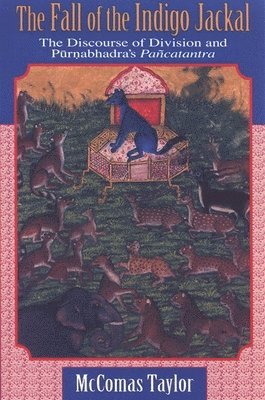
    Fall of the Indigo Jackal

    The Discourse of Division and Pūrṇabhadra's Pañcatantra

    AvMcComas Taylor

    Häftad, Engelska, 2008

    389 kr

    Tillfälligt slut

    Fler format och utgåvor

    Inbunden

    Tillf. slut

    Beskrivning

    Contemporary critical theory is brought to the consideration of caste in the Pañcatantra, one of the best-known cycles of Indian tales.Every child growing up in India knows the story of the jackal who fell into the vat of blue dye, and discovering the power of his majestic new appearance, declared himself king of the forest. In spite of his pretenses, the jackal, eventually betrayed by his own instincts, was set upon by the other animals. This and many similar narratives are found in the Pañcatantra, the collection of Sanskrit tales for children compiled by a Jaina monk named Pūrṇabhadra in 1199 CE.In this book, McComas Taylor looks at the discourses that give shape and structure to the fall of the indigo jackal and the other tales within the Pañcatantra. The work's fictional metasociety of animals, kings, and laundrymen are divided according to their jāti, or "kind." This discourse of caste holds that individuals' essential natures, statuses, and social circles are all determined by their birth. Taylor applies contemporary critical theory developed by Foucault, Bourdieu, Barthes, and others to show how these ideas are related to other Sanskritic master-texts, and describes the "regime of truth" that provides validation for the discourse of division.

    Produktinformation

    • Utgivningsdatum:2008-06-05
    • Mått:152 x 228 x 15 mm
    • Vikt:340 g
    • Format:Häftad
    • Språk:Engelska
    • Antal sidor:250
    • Förlag:State University of New York Press
    • ISBN:9780791471784

    Utforska kategorier

    • Sociala och etiska frågor inom Samhälle och politik

    Mer om författaren

    McComas Taylor is Head of the South Asia Centre, Faculty of Asian Studies at the Australian National University.

    Recensioner i media

    "…very interesting and innovative … Taylor's study has provided us with a new angle for methodology that will ensure the continuous progression of our field of study." — Journal of Asian Studies"This is a fine piece of scholarship. Nothing like this exists for the Indian folklore tradition. McComas Taylor presents the multifaceted significance of the Pañcatantra, which is possibly the most popular book within India. The stories from this collection spread across the world, so this book is also significant for the global study of folktales." — Patrick Olivelle, translator and editor of The Pañcatantra: The Book of India's Folk Wisdom

    Innehållsförteckning

    • AcknowledgmentsAbbreviationsConventions1. Introduction The Textual Families of the Sanskrit PañcatantraPurnabhadra’s PañcatantraAssigning Meaning to the PañcatantraQuestions Addressed in This Study2. The Discourse of Division in the Pañcatantra The Concept of Jati in the PañcatantraSvabhava—"Essential Nature"Jati and Social StatusEnmity/Amity3. The "Regime of Truth" and the Pañcatantra The Authoritative VoiceUniversalizing the Discourse: Space, Time, and AudienceThe Sastric ParadigmIntertextualityThe "Naturalization" of DiscourseA "Regime of Truth" for the Pañcatantra 4. The Discourse of Division and the Brahmanical Archive The Origins of VarnaSvadharma—"Essential Duty"StatusEnmity/AmityThe Cultural Context of the Discourse of Division5. Conclusion Appendix 1. Core Stories of the Pañcatantra FamilyAppendix 2. Summary of Stories in Purnabhadra’s PañcatantraNotesGlossary of Sanskrit TermsBibliographyIndex