• Fri frakt över 249 kr
  • •
  • Snabba leveranser
  • •
  • Billiga böcker
Kundservice

Du är på sajten för privatpersoner.

Företag, bibliotek eller offentlig verksamhet?

Du handlar på classic.bokus.com, där alla dina funktioner finns intakta.
Till classic.bokus.com
Bokus logotyp. Gå till startsidan.
  • Erbjudanden
  • Nyheter
  • Student
  • Topplistor
  • Barn & ungdom
  • Bokus Play
  • E-böcker
  • Pocketböcker
  • Spel & pussel

10% rabatt på allt med kod: NYSTART10 →

Sidfot

Mina sidor

    Hjälp

    • Kundservice
    • Vanliga frågor och svar
    • Frakt och leverans
    • Retur vid ångerrätt
    • Reklamera vara
    • Betalning
    • Köpvillkor
    • Allmänna villkor
    • Information om webbplatsens tillgänglighet

    Om Bokus

    • Om oss
    • Pressrum
    • För studenter
    • För företag
    • För bibliotek och offentlig verksamhet
    • För leverantörer
    • Hållbarhet

    Populärt

    • Aktuella erbjudanden
    • Presentkort
    • Studentlitteratur
    • Nya böcker
    • Topplistor
    • Signerade böcker
    • Engelska böcker

    Inspiration

    • Boktips
    • BookTok
    • Populära bokserier
    • Barnbokskaraktärer
    • Populära författare
    Logotyp för Bokus
    Följ oss på Facebook (extern länk)Följ oss på Instagram (extern länk)Följ oss på YouTube (extern länk)Följ oss på TikTok (extern länk)
    bokus @ CookiesAnpassa cookiesIntegritetspolicyKöpvillkor
    Till Citymail hemsida (extern länk)Till Budbee hemsida (extern länk)Till Postnord hemsida (extern länk)Till Schenker hemsida (extern länk)Till Early Bird hemsida (extern länk)Till Walleys hemsida (extern länk)
    1. Naturvetenskap och teknik
    2. Geovetenskap
    3. Geovetenskap

    Subduction

    Insights from Physical Modeling

    AvAlexander I. Shemenda

    Inbunden, Engelska, 1994

    Del 11 i serien Modern Approaches in Geophysics

    1 625 kr

    Beställningsvara. Skickas inom 10-15 vardagar. Fri frakt över 249 kr.

    Fler format och utgåvor

    Häftad

    1 625 kr

    E-bok

    2 044 kr

    Beskrivning

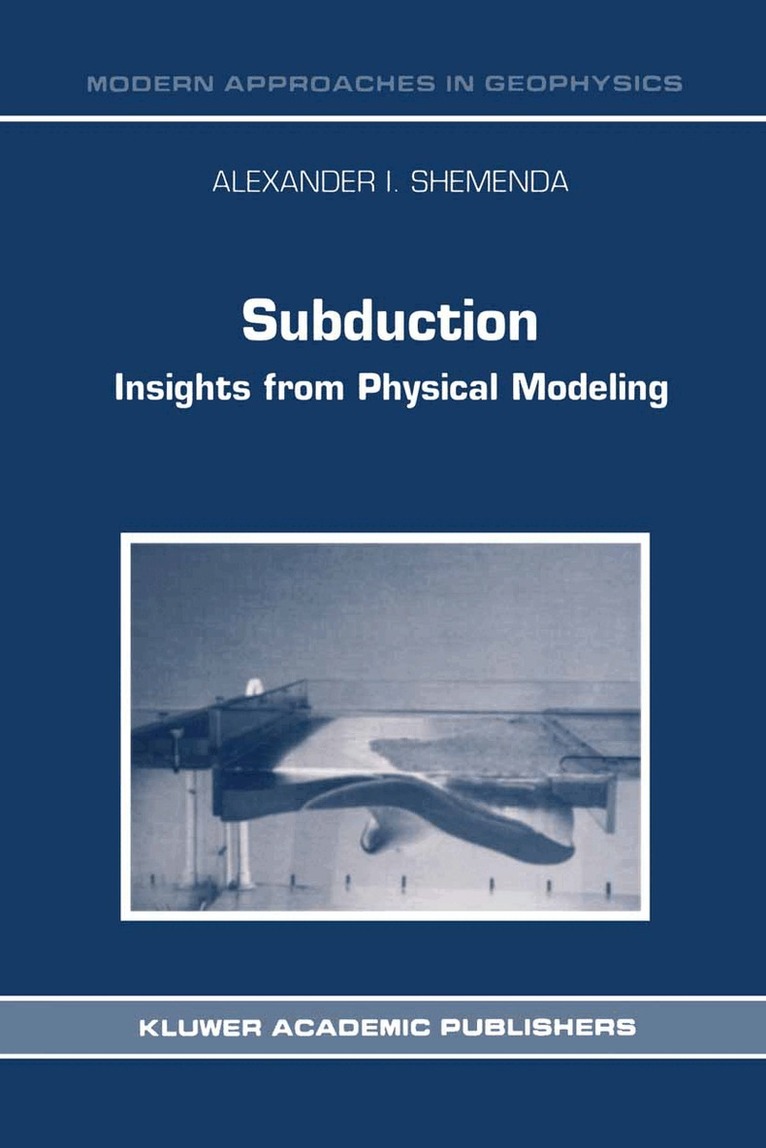
    This book is devoted to the quantitative physical modeling of subduction and subduction-related processes. It presents a coherent description of the modeling method (including similarity criteria, and a novel applied experimental technique), results from model experiments, theoretical analysis of results on the basis of continuum mechanics, and their geodynamic interpretation. Subduction is modeled in general as well as applied to particular regions using both 2-D and 3-D approaches, with both slab-push and slab-pull driving forces. The modeling covers all stages from subduction initiation to `death', different regimes of subduction producing back arc extension and compression, blocking of subduction and jumps of subduction zone, arc-continent collision and continental subduction. This work is for geologists and geophysicists interested in geodynamics of the convergent plate boundaries and in mechanics of the lithosphere.

    Produktinformation

    • Utgivningsdatum:1994-09-30
    • Mått:155 x 235 x 18 mm
    • Vikt:518 g
    • Format:Inbunden
    • Språk:Engelska
    • Serie:Modern Approaches in Geophysics
    • Antal sidor:217
    • Upplaga:1994
    • Förlag:Kluwer Academic Publishers
    • ISBN:9780792330424

    Utforska kategorier

    • Geovetenskap inom Naturvetenskap och teknik
    • Tillämpad fysik inom Naturvetenskap och teknik

    Innehållsförteckning

    • 1. Similarity Criteria.- 1.1. Introduction.- 1.2. The general approach to physical similarity.- 1.3. Derivation of similarity criteria from the equations of continuum mechanics.- 1.4. Dilatant plasticity and brittle failure.- 1.5. Conclusions.- 2. Model Setting, Technique and Facilities.- 2.1. Introduction.- 2.2. General modeling scheme.- 2.3. Model materials.- 2.4. Experimental installation and technique.- 3. Initiation and Development of Subduction Under Horizontal Compression of the Lithosphere.- 3.1. Introduction.- 3.2. Results of the experiments.- 3.3. Analysis of experimental results.- 3.4. Formation of a subduction zone in a homogeneous oceanic lithosphere.- 3.5. Initiation of a subduction zone on an old inclined fault.- 3.6. Strain and stress in the subducting plate.- 3.7. Estimation of pressure between the plates in the subduction zone.- 3.8. Elastico-plastic bending of the subducting plate, its yield limit and modulus of elasticity.- 3.9. Conclusions.- 4. Relationship Between Subduction Regime and Back Arc Dynamics.- 4.1. Introduction.- 4.2. Experimental results.- 4.3. Hydrostatic suction of the plates.- 4.4. Stress in the overriding plate due to subduction of an old (dense) lithosphere.- 4.5. Other mechanisms for tension in the overriding plate.- 4.6. Influence of crustal thickness and density of the overriding plate on its stress state.- 4.7. Geodynamic interpretation of modeling results.- 4.8. The location of back arc rifting.- 4.9. Relationship of the back arc regime to relief and the gravity field in subduction zones.- 4.10. Benioff zone dip angle and back arc regime.- 4.11. On the cyclicity of back arc tension and compression.- 4.12. Vertical movements in subduction zones.- 4.13. On causes of the arcuate configuration of subduction zones.- 4.14. Relationof seismicity in the subduction zone with back arc dynamics.- 4.15. On the mechanism of back arc tension in some particular subduction zones.- 4.16. South-Sandwich subduction zone.- 4.17. Possible mechanism for evolution of the Scotia Sea region.- 4.18. The Aegean region.- 4.19. Conclusions.- 5. Jumps of Subduction Zones, Subduction Reversal, and Closing of Back Arc Basins.- 5.1. Introduction.- 5.2. Location of the lithospheric failure and jump of subduction zone.- 5.3. Mechanism for lithospheric failure and polarity of a new subduction zone.- 5.4. Deformation of the overriding plate in the Kuril subduction zone.- 5.5. Subduction of the continental margin: arc-continent collision in Taiwan.- 5.6. Conclusions.- 6. Continental Subduction.- 6.1. Introduction.- 6.2. Modeling approach.- 6.3. Similarity criteria and the model materials.- 6.4. Experimental results.- 6.5. Analysis of the results.- 6.6. Concluding remarks and possible application of the results to the India-Eurasia collision.- References.- Notations.