• Fri frakt över 249 kr
  • •
  • Snabba leveranser
  • •
  • Billiga böcker
Kundservice

Du är på sajten för privatpersoner.

Företag, bibliotek eller offentlig verksamhet?

Du handlar på classic.bokus.com, där alla dina funktioner finns intakta.
Till classic.bokus.com
Bokus logotyp. Gå till startsidan.
  • Erbjudanden
  • Nyheter
  • Student
  • Topplistor
  • Barn & ungdom
  • Bokus Play
  • E-böcker
  • Pocketböcker
  • Spel & pussel

10% rabatt på allt med kod: NYSTART10 →

Sidfot

Mina sidor

    Hjälp

    • Kundservice
    • Vanliga frågor och svar
    • Frakt och leverans
    • Retur vid ångerrätt
    • Reklamera vara
    • Betalning
    • Köpvillkor
    • Allmänna villkor
    • Information om webbplatsens tillgänglighet

    Om Bokus

    • Om oss
    • Pressrum
    • För studenter
    • För företag
    • För bibliotek och offentlig verksamhet
    • För leverantörer
    • Hållbarhet

    Populärt

    • Aktuella erbjudanden
    • Presentkort
    • Studentlitteratur
    • Nya böcker
    • Topplistor
    • Signerade böcker
    • Engelska böcker

    Inspiration

    • Boktips
    • BookTok
    • Populära bokserier
    • Barnbokskaraktärer
    • Populära författare
    Logotyp för Bokus
    Följ oss på Facebook (extern länk)Följ oss på Instagram (extern länk)Följ oss på YouTube (extern länk)Följ oss på TikTok (extern länk)
    bokus @ CookiesAnpassa cookiesIntegritetspolicyKöpvillkor
    Till Citymail hemsida (extern länk)Till Budbee hemsida (extern länk)Till Postnord hemsida (extern länk)Till Schenker hemsida (extern länk)Till Early Bird hemsida (extern länk)Till Walleys hemsida (extern länk)
    1. Språk och ordböcker
    2. Språkvetenskap och lingvistik

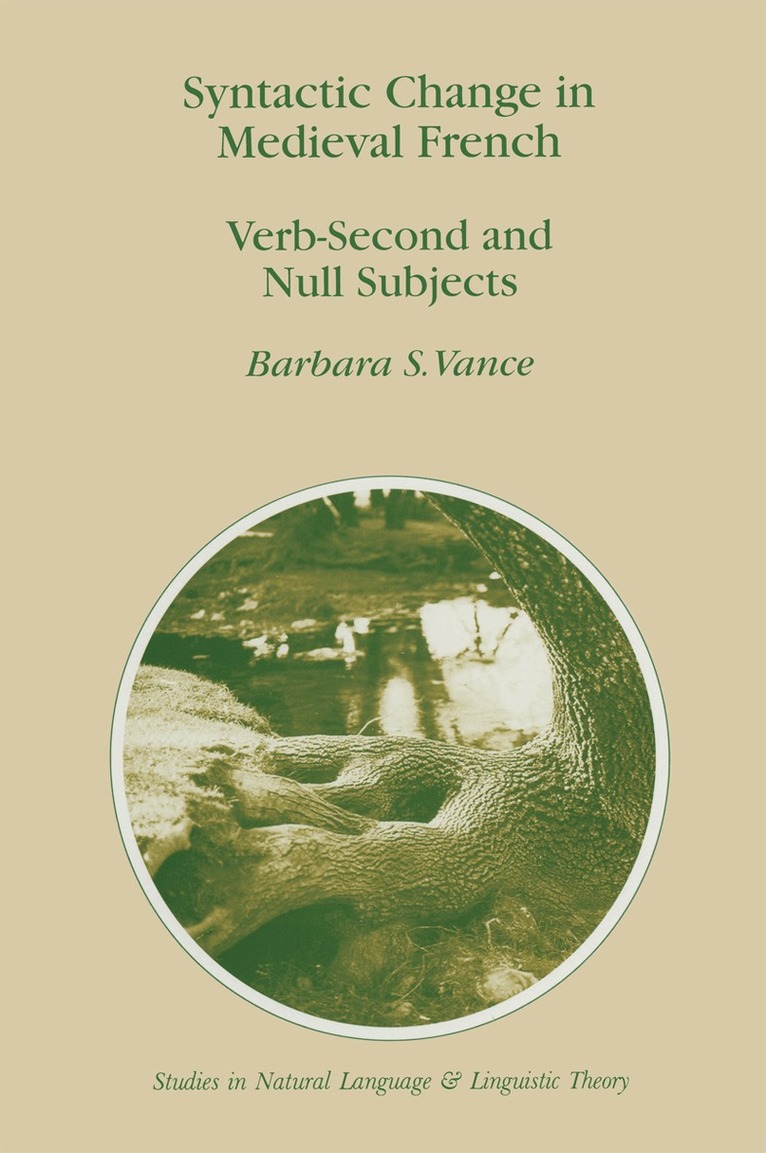
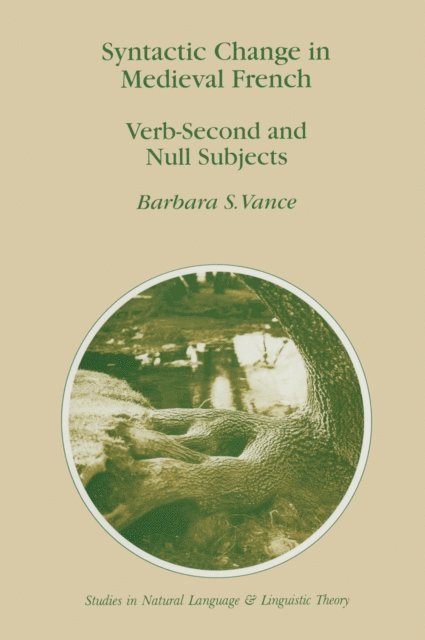
    Syntactic Change in Medieval French

    Verb-Second and Null Subjects

    AvBarbara S. Vance

    Inbunden, Engelska, 1997

    Del i serien Studies in Natural Language and Linguistic Theory

    1 673 kr

    Beställningsvara. Skickas inom 10-15 vardagar. Fri frakt över 249 kr.

    Fler format och utgåvor

    Häftad

    1 673 kr

    E-bok

    2 110 kr

    Beskrivning

    1. 0. V2 AND NULL SUBJECTS IN THE HIS TORY OF FRENCH The prototypical Romance null subject language has certain well­ known characteristics: verbal inflection is rich, distinguishing six per­ sonlnumber forms; subject pronouns are generally emphatic; and, when there is no need to emphasize the subject, the pronoun is not expressed at all. Spanish and Italian, for example, fit this description rather weIl. Modem French, however, provides a striking contrast to these lan­ guages; it does not allow subjects to be missing and, not unexpectedly, it has a verbal agreement system with few overt endings and subject pronouns which are not emphatic. One of the goals of the present work is to examine null subjects in two dialects of Romance that fit neither the Italian nor the French model: later Old French (12th-13th centriries) and MiddIe French (14th- 15th centuries). Old French has null subjects only in contexts where the subject would be postverbal if expressed (cf. Foulet (1928)), and Mid­ dIe French has null subjects in a wider range of syntactic contexts but does not freely allow a11 persons of the verb to be null. The work of Vanelli, Renzi and Beninca (1985) (along with many other works by these authors individually) shows that a number of other geographically proximate medieval dialects had similar systems, though it appears that there are significant differences in detail among them.

    Produktinformation

    • Utgivningsdatum:1997-09-30
    • Mått:156 x 234 x 28 mm
    • Vikt:793 g
    • Format:Inbunden
    • Språk:Engelska
    • Serie:Studies in Natural Language and Linguistic Theory
    • Antal sidor:402
    • Upplaga:1997
    • Förlag:Kluwer Academic Publishers
    • ISBN:9780792346692

    Utforska kategorier

    • Språkvetenskap och lingvistik inom Språk och ordböcker

    Recensioner i media

    '... this admirably meticulous study is a milestone in generativist historical linguistics.' Journal of French Language Studies, 9 (1999)

    Innehållsförteckning

    • 1: Introduction.- 1.0. V2 and Null Subjects in the History of French.- 1.1. The Theoretical Framework.- 1.2. The Texts and the Methodology.- 1.3. Outline.- Notes.- 2: Old French as a V2 Language.- 2.1. Verb-Second Word Order.- 2.2. Theoretical Approaches to V2 in Romance and Germanic.- 2.3. V2 in Embedded Clauses.- 2.4. Conclusion on Theories of V2.- Notes.- 3: Main Clause Word Order in Old French.- 3.0. Overview of the Chapter.- One: V2 Effects and Main Clause Word Order.- Two: V2 and the Nature of Spec, AgrP.- Notes.- 4: Subordinate Clause Word Order in Old French.- 4.0. Overview of the Chapter.- 4.1. SVX Clauses.- 4.2. SPCV and Relative QUI CV Clauses.- 4.3. The Status of V2 Inversion in Embedded Clauses.- 4.4. Non-V2 Inversion in Old French Embedded Clauses.- 4.5. Conclusion to Chapter Four.- Appendix I.- Appendix II.- Notes.- 5: Null Subjects in Old French.- 5.0. Introduction: Old French and the Romance Null Subject Languages.- 5.1. The Syntactic Distribution of pro in OFr.- 5.2. Identification of pro’s Content: The Role of Inflection.- 5.3. Exceptions to the Regular Distribution of pro in OFr.- 5.4. Null and Overt Atonic Pronouns in OFr Discourse.- 5.5. Conclusion to Chapter Five.- Notes.- 6: Null Subjects and Syntactic Change in Middle French.- 6.0. Overview.- 6.1. Syntactic Changes in the 15th Century.- 6.2. Against A V to C Analysis of CSV in Middle French.- 6.3. The Distribution of Null Subjects in the 15th Century.- 6.4. THE LOSS OF pro.- 6.5. Conclusion to Chapter Six.- Notes.- 7: The Decline and Loss of V2 in French.- 7.0. Introduction.- 7.1. Previous Accounts of the Loss of V2 in French.- 7.2. The Decline of V2.- 7.3. The Loss of V2.- 7.4. Conclusion: V2 and Null Subjects.- Notes.- References.- Index of Authors.- Index of Languages.