• Fri frakt över 249 kr
  • •
  • Snabba leveranser
  • •
  • Billiga böcker
Kundservice

Du är på sajten för privatpersoner.

Företag, bibliotek eller offentlig verksamhet?

Du handlar på classic.bokus.com, där alla dina funktioner finns intakta.
Till classic.bokus.com
Bokus logotyp. Gå till startsidan.
  • Erbjudanden
  • Nyheter
  • Student
  • Topplistor
  • Barn & ungdom
  • Bokus Play
  • E-böcker
  • Pocketböcker
  • Spel & pussel

10% rabatt på allt med kod NYSTART10 →

Sidfot

Mina sidor

    Hjälp

    • Kundservice
    • Vanliga frågor och svar
    • Frakt och leverans
    • Retur vid ångerrätt
    • Reklamera vara
    • Betalning
    • Köpvillkor
    • Allmänna villkor
    • Information om webbplatsens tillgänglighet

    Om Bokus

    • Om oss
    • Pressrum
    • För studenter
    • För företag
    • För bibliotek och offentlig verksamhet
    • För leverantörer
    • Hållbarhet

    Populärt

    • Aktuella erbjudanden
    • Presentkort
    • Studentlitteratur
    • Nya böcker
    • Topplistor
    • Signerade böcker
    • Engelska böcker

    Inspiration

    • Boktips
    • BookTok
    • Populära bokserier
    • Barnbokskaraktärer
    • Populära författare
    Logotyp för Bokus
    Följ oss på Facebook (extern länk)Följ oss på Instagram (extern länk)Följ oss på YouTube (extern länk)Följ oss på TikTok (extern länk)
    bokus @ CookiesAnpassa cookiesIntegritetspolicyKöpvillkor
    Till Citymail hemsida (extern länk)Till Budbee hemsida (extern länk)Till Postnord hemsida (extern länk)Till Schenker hemsida (extern länk)Till Early Bird hemsida (extern länk)Till Walleys hemsida (extern länk)
    1. Ekonomi och Ledarskap
    2. Nationalekonomi
    3. Internationell ekonomi

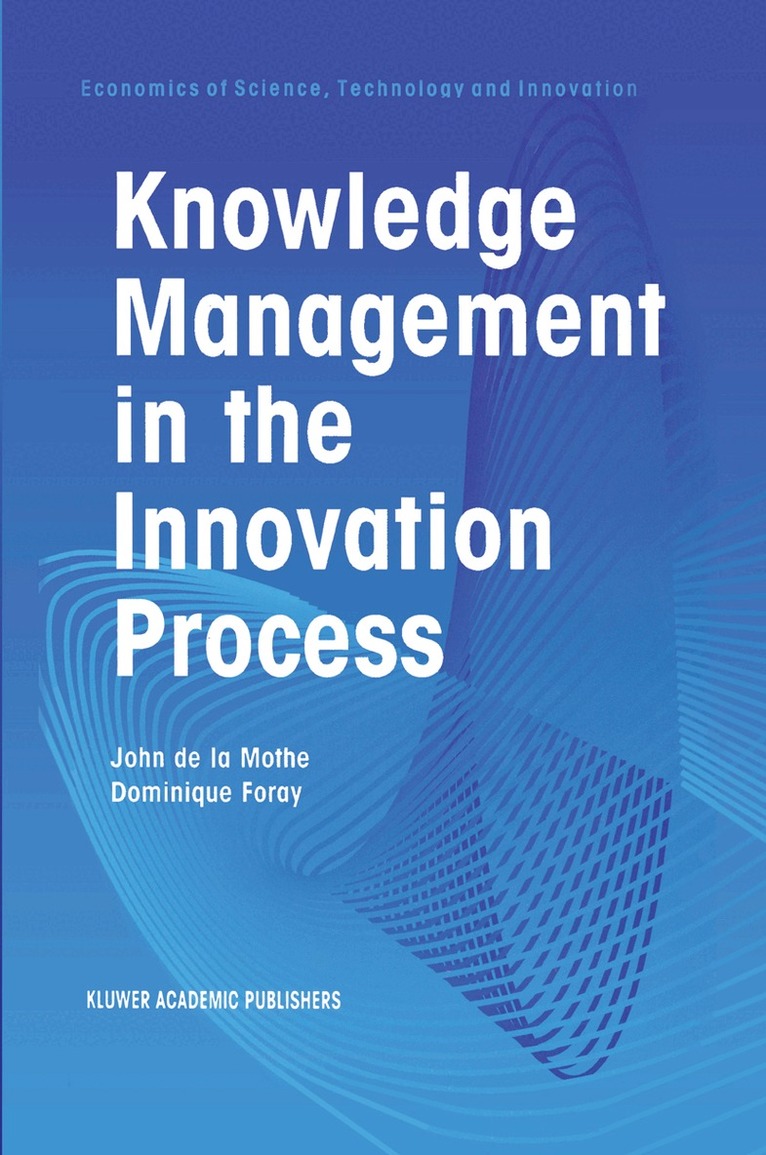
    Knowledge Management in the Innovation Process

    AvJohn de la Mothe,Dominique Foray

    Inbunden, Engelska, 2001

    Del i serien Economics of Science, Technology and Innovation

    1 672 kr

    Beställningsvara. Skickas inom 10-15 vardagar. Fri frakt över 249 kr.

    Beskrivning

    It is now recognized that many of the central unresolved problems in economic policy, management and research turn on questions of knowledge. Increasingly, complex firms and agencies must ask, and answer, such difficult questions as: What is knowledge?; Where is it?; Who has it?; Does the organization lose or gain competitive advantage or effectiveness by sharing knowledge?; Where can we find the knowledge we need?; How can we measure knowledge? In a knowledge-based economy, these queries are integral to the pursuits of every policy maker, analyst and strategist. This text - a joint project between Statistics Canada and Program of Research on Innovation Management and Economy (PRIME) at the University of Ottawa - brings together economic, social, measurement and policy views on these critical issues. This project fits into an ongoing research programme at Statistics Canada to develop meaningful indicators for science, technology and innovation in a technology-intensive economy. It also fits into the ongoing programme at PRIME to better understand technology policy and innovation strategy.This book tells the story of the dynamic interplay between knowledge and innovation with an eye to developing tools and frameworks for managing knowledge for social and economic benefit.

    Produktinformation

    • Utgivningsdatum:2001-08-31
    • Mått:155 x 235 x 20 mm
    • Vikt:585 g
    • Format:Inbunden
    • Språk:Engelska
    • Serie:Economics of Science, Technology and Innovation
    • Antal sidor:262
    • Upplaga:2001
    • Förlag:Kluwer Academic Publishers
    • ISBN:9780792374640

    Utforska kategorier

    • Internationell ekonomi inom Ekonomi och Ledarskap

    Innehållsförteckning

    • I: Introduction.- 1. Approaching the Management of Knowledge.- II: Frameworks.- 2. Visions, Technology, and Organizational Knowledge: An Analysis of the Interplay Between Enabling Factors and Triggers of Knowledge Generation.- 3. Continuities and Ruptures in Knowledge Management Practices.- III: Measurement.- 4. Creativity, Innovation and Business Practices in the Matter of Knowledge Management.- 5. Knowledge Flows From Public Institutions to Firms.- 6. Knowledge Management in Small Firms: Theoretical Perspectives and Evidence.- 7. Managing Surveys on Technological Knowledge: The French Experience in the Nineties.- IV: Impacts.- 8. Practice and Knowledge Management.- 9. Knowledge Management at NRC: A Practical Perspective to KM.- 10. Investing Knowledge in Universities: Rethinking the Firm’s Role in Knowledge Transfer.- 11. The Grammar of Productive Knowledge.- 12. Knowledge, Learning and Innovation Policy.- V: Conclusion.- 13. Conclusion.