• Fri frakt över 249 kr
  • •
  • Snabba leveranser
  • •
  • Billiga böcker
Kundservice

Du är på sajten för privatpersoner.

Företag, bibliotek eller offentlig verksamhet?

Du handlar på classic.bokus.com, där alla dina funktioner finns intakta.
Till classic.bokus.com
Bokus logotyp. Gå till startsidan.
  • Erbjudanden
  • Nyheter
  • Student
  • Topplistor
  • Barn & ungdom
  • Bokus Play
  • E-böcker
  • Pocketböcker
  • Spel & pussel

10% rabatt på allt med kod NYSTART10 →

Sidfot

Mina sidor

    Hjälp

    • Kundservice
    • Vanliga frågor och svar
    • Frakt och leverans
    • Retur vid ångerrätt
    • Reklamera vara
    • Betalning
    • Köpvillkor
    • Allmänna villkor
    • Information om webbplatsens tillgänglighet

    Om Bokus

    • Om oss
    • Pressrum
    • För studenter
    • För företag
    • För bibliotek och offentlig verksamhet
    • För leverantörer
    • Hållbarhet

    Populärt

    • Aktuella erbjudanden
    • Presentkort
    • Studentlitteratur
    • Nya böcker
    • Topplistor
    • Signerade böcker
    • Engelska böcker

    Inspiration

    • Boktips
    • BookTok
    • Populära bokserier
    • Barnbokskaraktärer
    • Populära författare
    Logotyp för Bokus
    Följ oss på Facebook (extern länk)Följ oss på Instagram (extern länk)Följ oss på YouTube (extern länk)Följ oss på TikTok (extern länk)
    bokus @ CookiesAnpassa cookiesIntegritetspolicyKöpvillkor
    Till Citymail hemsida (extern länk)Till Budbee hemsida (extern länk)Till Postnord hemsida (extern länk)Till Schenker hemsida (extern länk)Till Early Bird hemsida (extern länk)Till Walleys hemsida (extern länk)
    1. Ekonomi och Ledarskap
    2. Ledarskapsböcker
    3. Projektledning

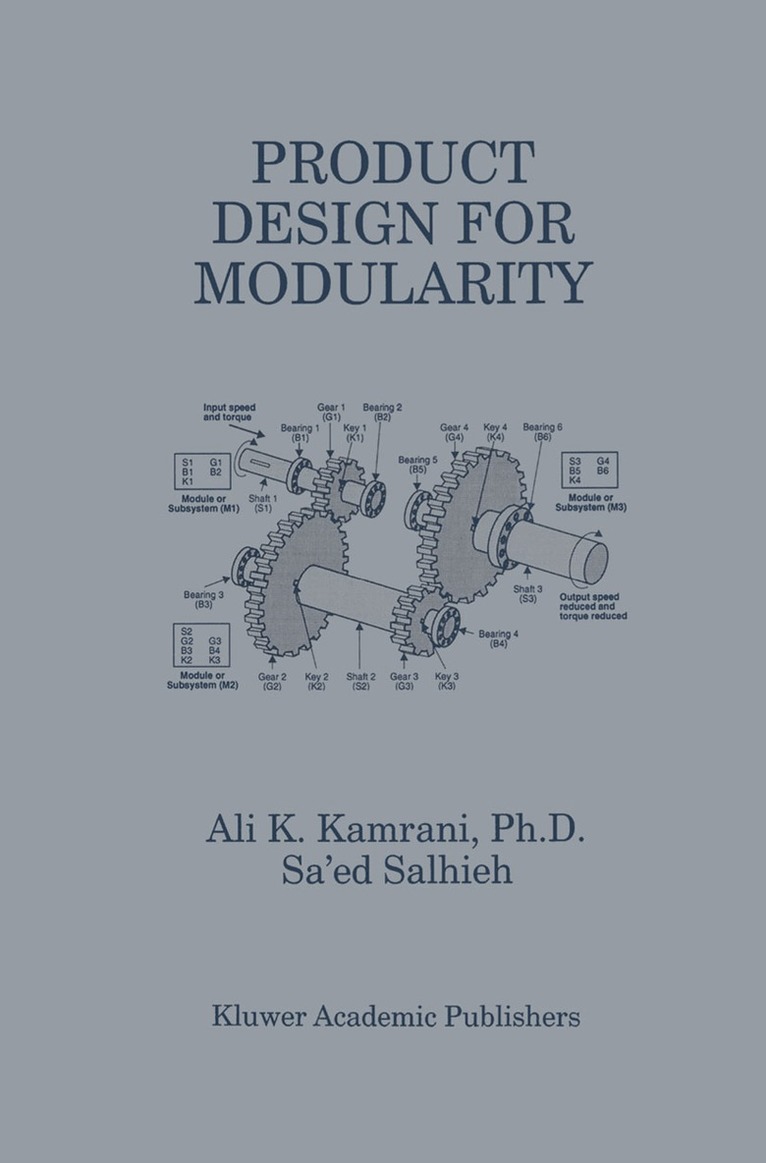
    Product Design for Modularity

    AvAli K. Kamrani,Sa'ed M. Salhieh

    Inbunden, Engelska, 2000

    1 117 kr

    Beställningsvara. Skickas inom 10-15 vardagar. Fri frakt över 249 kr.

    Fler format och utgåvor

    Inbunden

    2 005 kr

    Häftad

    2 005 kr

    Häftad

    1 085 kr

    Beskrivning

    The current marketplace is undergoing an accelerated pace of change that challenges corporations to innovate new techniques to respond rapidly to an ever-changing environment. At the center of this changing environment is a new generation of empowered buyers (customers) equipped with fast­ evolving technologies that allow them to buy from markets scattered across the globe. Empowering the customers has deprived organizations of what was once their right-to introduce new products slowly, at their own leisure. Organizations used to introduce new products every few years, and, for the most part, products offered limited functionalities and features. A low-priced quality product-irrespective of customer satisfaction-was a guaranteed ticket for success. New global economies and global markets changed business practices and focused on the customer as the major player in the economy. Organizations now fail or succeed based upon their ability to respond quickly to changing customer demands and to utilize new technological innovations. In such an environment, the advantage goes to the firm that can offer greater varieties of new products with higher performance and greater overall appeal. In order to compete in this fast-paced global market, organizations need to produce products that can be easily configured to offer distinctive capabilities compared to the competition. Furthermore, organizations need to develop new methods and techniques to react rapidly to required changes in products and market trends and to shorten the product development cycle, which will enable them to gain more economic competitiveness.

    Produktinformation

    • Utgivningsdatum:2000-10-31
    • Mått:155 x 235 x 17 mm
    • Vikt:512 g
    • Format:Inbunden
    • Språk:Engelska
    • Antal sidor:203
    • Upplaga:2001
    • Förlag:Kluwer Academic Publishers
    • ISBN:9780792385547

    Utforska kategorier

    • Projektledning inom Ekonomi och Ledarskap

    Innehållsförteckning

    • Chapter1: Product Development Process: An Introduction.- 1. The Evolution of Product Development.- 2. Sequential Product Development.- 3. Simultaneous/Integrated Product Development.- 4. Generic Product Development Process.- 5. Product Development Categories.- Chapter2: Modular Design.- 1. Modularity Types.- 2. Modular Systems Characteristics.- 3. Modular Systems Development.- 4. Modularity Advantages.- Chapter3: Design for Modularity.- 1. Needs Analysis.- 2. Product Requirements Analysis.- 3. Product/Concept Analysis.- 4. Product/Concept Integration.- 5. Case Study: Decomposition Analysis of a Four-Gear Speed Reducer Design Based on the Methodology.- Chapter4: Design for Assembly.- 1. DFMA Methodology.- 2. Case Study: DFMA Analysis of a Fog Lamp Design.- 3. Summary and Conclusion.- Chapter5: Design for Manufacture and Template-Based Process Planning.- 1. Geometric and Parametric Design.- 2. Group Technology (GT).- 3. Design for Manufacture.- 4. Structure for a Template-Based Process Planning System.- 5. APPENDIX A: Crankshaft Parametric File Structure and Listings.- 6. APPENDIX B: GD&T Data File.- 7. APPENDIX C: Formulation Used for Material Removal.- 8. APPENDIX D: Sample Process Plan.- Chapter6: Flexible and Modular Cell Design.- 1. Traditional Manufacturing Systems—An Overview.- 2. Cellular Manufacturing Systems.- 3. Cellular Manufacturing Systems Design.- References.