• Fri frakt över 249 kr
  • •
  • Snabba leveranser
  • •
  • Billiga böcker
Kundservice

Du är på sajten för privatpersoner.

Företag, bibliotek eller offentlig verksamhet?

Du handlar på classic.bokus.com, där alla dina funktioner finns intakta.
Till classic.bokus.com
Bokus logotyp. Gå till startsidan.
  • Erbjudanden
  • Nyheter
  • Student
  • Topplistor
  • Barn & ungdom
  • Bokus Play
  • E-böcker
  • Pocketböcker
  • Spel & pussel

10% rabatt på allt med kod NYSTART10 →

Sidfot

Mina sidor

    Hjälp

    • Kundservice
    • Vanliga frågor och svar
    • Frakt och leverans
    • Retur vid ångerrätt
    • Reklamera vara
    • Betalning
    • Köpvillkor
    • Allmänna villkor
    • Information om webbplatsens tillgänglighet

    Om Bokus

    • Om oss
    • Pressrum
    • För studenter
    • För företag
    • För bibliotek och offentlig verksamhet
    • För leverantörer
    • Hållbarhet

    Populärt

    • Aktuella erbjudanden
    • Presentkort
    • Studentlitteratur
    • Nya böcker
    • Topplistor
    • Signerade böcker
    • Engelska böcker

    Inspiration

    • Boktips
    • BookTok
    • Populära bokserier
    • Barnbokskaraktärer
    • Populära författare
    Logotyp för Bokus
    Följ oss på Facebook (extern länk)Följ oss på Instagram (extern länk)Följ oss på YouTube (extern länk)Följ oss på TikTok (extern länk)
    bokus @ CookiesAnpassa cookiesIntegritetspolicyKöpvillkor
    Till Citymail hemsida (extern länk)Till Budbee hemsida (extern länk)Till Postnord hemsida (extern länk)Till Schenker hemsida (extern länk)Till Early Bird hemsida (extern länk)Till Walleys hemsida (extern länk)
    1. Skönlitteratur
    2. Romaner
    3. Klassiska romaner/Klassiker

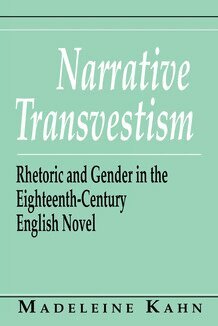
    Narrative Transvestism

    Rhetoric and Gender in the Eighteenth-Century English Novel

    AvMadeleine Kahn

    Inbunden, Engelska, 1992

    Del i serien Reading Women Writing

    806 kr

    Beställningsvara. Skickas inom 10-15 vardagar. Fri frakt över 249 kr.

    Fler format och utgåvor

    Häftad

    567 kr

    Beskrivning

    Many of the earliest canonical novels—including Defoe's Moll Flanders and Roxana and Richardson's Pamela and Clarissa—were written by men who assumed the first-person narrative voice of women. What does it mean for a man to write his "autobiography" as if he were a woman? What did early novelists have to gain from it, in a period when woman's realm was devalued and woman's voice rarely heard in public? How does the male author behind the voice reveal himself to readers, and how do our glimpses of him affect our experience of the novel? Does it matter if the woman he has created is believable as a woman? Why does "she" inevitably rail against the perfidy of men?Kahn maintains that the answers to such questions lie in the nature of "narrative transvestism" -her term for the device through which a male author directs the reader's interpretation by temporarily abandoning himself to a culturally defined female voice and sensibility and then reasserting his male voice.In her innovative readings of key eighteenth-century English novels, Kahn draws upon a range of contemporary critical approaches. Lucid and witty, Narrative Transvestism will serve as a model of analysis for readers interested in issues of gender in narrative, including feminist theorists, students and scholars of the eighteenth-century novel, and critics interested in the applications of psychoanalysis to literature.

    Produktinformation

    • Utgivningsdatum:1992-02-24
    • Mått:152 x 229 x 21 mm
    • Vikt:454 g
    • Format:Inbunden
    • Språk:Engelska
    • Serie:Reading Women Writing
    • Antal sidor:200
    • Förlag:Cornell University Press
    • ISBN:9780801425363

    Utforska kategorier

    • Klassiska romaner/Klassiker inom Skönlitteratur

    Mer om författaren

    Madeleine Kahn is Assistant Professor of English at Mills College.

    Recensioner i media

    This is a thought-provoking study designed to consider the implications for gender studies of what the author calls the 'explosive fact' that the first canonical English novels were written by men in the person of women.(British Journal of Eighteenth Century Studies)