• Fri frakt över 249 kr
  • •
  • Snabba leveranser
  • •
  • Billiga böcker
Kundservice

Du är på sajten för privatpersoner.

Företag, bibliotek eller offentlig verksamhet?

Du handlar på classic.bokus.com, där alla dina funktioner finns intakta.
Till classic.bokus.com
Bokus logotyp. Gå till startsidan.
  • Erbjudanden
  • Nyheter
  • Student
  • Topplistor
  • Barn & ungdom
  • Bokus Play
  • E-böcker
  • Pocketböcker
  • Spel & pussel

10% rabatt på allt med kod NYSTART10 →

Sidfot

Mina sidor

    Hjälp

    • Kundservice
    • Vanliga frågor och svar
    • Frakt och leverans
    • Retur vid ångerrätt
    • Reklamera vara
    • Betalning
    • Köpvillkor
    • Allmänna villkor
    • Information om webbplatsens tillgänglighet

    Om Bokus

    • Om oss
    • Pressrum
    • För studenter
    • För företag
    • För bibliotek och offentlig verksamhet
    • För leverantörer
    • Hållbarhet

    Populärt

    • Aktuella erbjudanden
    • Presentkort
    • Studentlitteratur
    • Nya böcker
    • Topplistor
    • Signerade böcker
    • Engelska böcker

    Inspiration

    • Boktips
    • BookTok
    • Populära bokserier
    • Barnbokskaraktärer
    • Populära författare
    Logotyp för Bokus
    Följ oss på Facebook (extern länk)Följ oss på Instagram (extern länk)Följ oss på YouTube (extern länk)Följ oss på TikTok (extern länk)
    bokus @ CookiesAnpassa cookiesIntegritetspolicyKöpvillkor
    Till Citymail hemsida (extern länk)Till Budbee hemsida (extern länk)Till Postnord hemsida (extern länk)Till Schenker hemsida (extern länk)Till Early Bird hemsida (extern länk)Till Walleys hemsida (extern länk)
    1. Historia och arkeologi
    2. Historia
    3. Historia: särskilda händelser och ämnen
    4. Kolonialism och imperialism

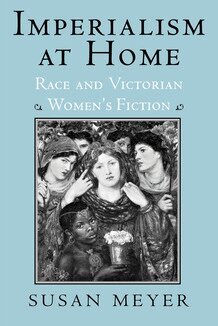
    Imperialism at Home

    Race and Victorian Women's Fiction

    AvSusan Meyer

    Inbunden, Engelska, 1996

    Del i serien Reading Women Writing

    1 860 kr

    Beställningsvara. Skickas inom 10-15 vardagar. Fri frakt över 249 kr.

    Fler format och utgåvor

    Häftad

    391 kr

    Beskrivning

    The implicit link between white women and "the dark races" recurs persistently in nineteenth-century English fiction. Imperialism at Home examines the metaphorical use of race by three nineteenth-century women novelists: Charlotte Brontë, Emily Brontë, and George Eliot. Susan Meyer argues that each of these domestic novelists uses race relations as a metaphor through which to explore the relationships between men and women at home in England.In the fiction of, for example, Anthony Trollope and Charles Dickens, as in nineteenth-century culture more generally, the subtle and not-so-subtle comparison of white women and people of color is used to suggest their mutual inferiority. The Bronte sisters and George Eliot responded to this comparison, Meyer contends, transforming it for their own purposes. Through this central metaphor, these women novelists work out a sometimes contentious relationship to established hierarchies of race and gender. Their feminist impulses, in combination with their use of race as a metaphor, Meyer argues, produce at times a surprising, if partial, critique of empire. Through readings of Jane Eyre, Wuthering Heights, The Mill on the Floss, Daniel Deronda, and Charlotte Brontë's African juvenilia, Meyer traces the aesthetically and ideologically complex workings of the racial metaphor. Her analysis is supported by careful attention to textual details and thorough grounding in recent scholarship on the idea of race, and on literature and imperialism.

    Produktinformation

    • Utgivningsdatum:1996-06-15
    • Mått:152 x 229 x 24 mm
    • Vikt:907 g
    • Format:Inbunden
    • Språk:Engelska
    • Serie:Reading Women Writing
    • Antal sidor:232
    • Förlag:Cornell University Press
    • ISBN:9780801431326

    Utforska kategorier

    • Kolonialism och imperialism inom Historia och arkeologi
    • Litteraturvetenskap inom Skönlitteratur

    Mer om författaren

    Susan Meyer is Professor of English at Wellesley College.

    Recensioner i media

    Meyer's readings are most interesting when she charts the different ways in which the metaphorical linkage between gender and race rebellion collapses or is rewritten as the narrative proceeds. By giving us a complex sense of the multiple routes the connection between race and gender could take, Meyer's book beautifully maps out the ideological limits of what Raymond Williams calls a 'structure of feeling'.(Modern Philology)