• Fri frakt över 249 kr
  • •
  • Snabba leveranser
  • •
  • Billiga böcker
Kundservice

Du är på sajten för privatpersoner.

Företag, bibliotek eller offentlig verksamhet?

Du handlar på classic.bokus.com, där alla dina funktioner finns intakta.
Till classic.bokus.com
Bokus logotyp. Gå till startsidan.
  • Erbjudanden
  • Nyheter
  • Student
  • Topplistor
  • Barn & ungdom
  • Bokus Play
  • E-böcker
  • Pocketböcker
  • Spel & pussel

10% rabatt på allt med kod: NYSTART10 →

Sidfot

Mina sidor

    Hjälp

    • Kundservice
    • Vanliga frågor och svar
    • Frakt och leverans
    • Retur vid ångerrätt
    • Reklamera vara
    • Betalning
    • Köpvillkor
    • Allmänna villkor
    • Information om webbplatsens tillgänglighet

    Om Bokus

    • Om oss
    • Pressrum
    • För studenter
    • För företag
    • För bibliotek och offentlig verksamhet
    • För leverantörer
    • Hållbarhet

    Populärt

    • Aktuella erbjudanden
    • Presentkort
    • Studentlitteratur
    • Nya böcker
    • Topplistor
    • Signerade böcker
    • Engelska böcker

    Inspiration

    • Boktips
    • BookTok
    • Populära bokserier
    • Barnbokskaraktärer
    • Populära författare
    Logotyp för Bokus
    Följ oss på Facebook (extern länk)Följ oss på Instagram (extern länk)Följ oss på YouTube (extern länk)Följ oss på TikTok (extern länk)
    bokus @ CookiesAnpassa cookiesIntegritetspolicyKöpvillkor
    Till Citymail hemsida (extern länk)Till Budbee hemsida (extern länk)Till Postnord hemsida (extern länk)Till Schenker hemsida (extern länk)Till Early Bird hemsida (extern länk)Till Walleys hemsida (extern länk)
    1. Samhälle och politik
    2. Politik och statsskick
    3. Internationella relationer

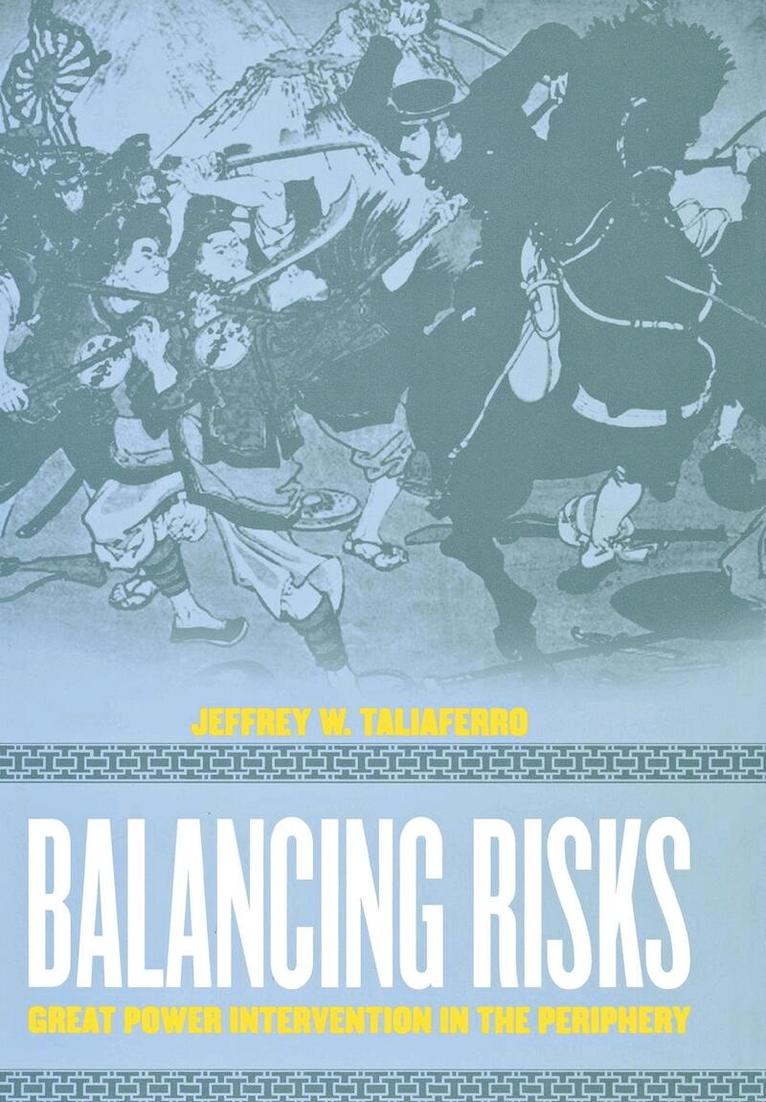
    Balancing Risks

    Great Power Intervention in the Periphery

    AvJeffrey W. Taliaferro

    Inbunden, Engelska, 2004

    Del i serien Cornell Studies in Security Affairs

    812 kr

    Beställningsvara. Skickas inom 10-15 vardagar. Fri frakt över 249 kr.

    Beskrivning

    Great powers often initiate risky military and diplomatic inventions in far-off, peripheral regions that pose no direct threat to them, risking direct confrontation with rivals in strategically inconsequential places. Why do powerful countries behave in a way that leads to entrapment in prolonged, expensive, and self-defeating conflicts? Jeffrey W. Taliaferro suggests that such interventions are driven by the refusal of senior officials to accept losses in their state's relative power, international status, or prestige. Instead of cutting their losses, leaders often continue to invest blood and money in failed excursions into the periphery. Their policies may seem to be driven by rational concerns about power and security, but Taliaferro deems them to be at odds with the master explanation of political realism. Taliaferro constructs a "balance-of-risk" theory of foreign policy that draws on defensive realism (in international relations) and prospect theory (in psychology). He illustrates the power of this new theory in several case narratives: Germany's initiation and escalation of the 1905 and 1911 Moroccan crises, the United States' involvement in the Korean War in 1950–52, and Japan's entanglement in the second Sino-Japanese war in 1937–40 and its decisions for war with the U.S. in 1940–41.

    Produktinformation

    • Utgivningsdatum:2004-04-15
    • Mått:155 x 235 x 25 mm
    • Vikt:907 g
    • Format:Inbunden
    • Språk:Engelska
    • Serie:Cornell Studies in Security Affairs
    • Antal sidor:336
    • Förlag:Cornell University Press
    • ISBN:9780801442216
    • Utmärkelser:Winner of the 2005 Jervis-Schroeder Award (Interna

    Utforska kategorier

    • Internationella relationer inom Samhälle och politik

    Mer om författaren

    Jeffrey W. Taliaferro is Associate Professor of Political Science at Tufts University.

    Recensioner i media

    Great powers have frequently become embroiled in costly wars in peripheral regions that pose no direct threat.... In this historically rich and theoretically elegant study, Taliaferro tackles the question of why states persist in such counterproductive interventions.... It provides a useful cautionary message as the United States embarks on far-flung counterterrorism operations in the periphery.(Foreign Affairs) Taliaferro skillfully blends two lines of theorizing defensive realism and prospect theory, to explain the conditions under which leaders of great powers are more or less likely to adopt risky foreign military policies.... Balancing Risks is a thoroughly researched and well written addition to the literature.(Virginia Quarterly Review)