• Fri frakt över 249 kr
  • •
  • Snabba leveranser
  • •
  • Billiga böcker
Kundservice

Du är på sajten för privatpersoner.

Företag, bibliotek eller offentlig verksamhet?

Du handlar på classic.bokus.com, där alla dina funktioner finns intakta.
Till classic.bokus.com
Bokus logotyp. Gå till startsidan.
  • Erbjudanden
  • Nyheter
  • Student
  • Topplistor
  • Barn & ungdom
  • Bokus Play
  • E-böcker
  • Pocketböcker
  • Spel & pussel

Må bättre, för mindre! Upp till 50% rabatt på hälsoböcker

Sidfot

Mina sidor

    Hjälp

    • Kundservice
    • Vanliga frågor och svar
    • Frakt och leverans
    • Retur vid ångerrätt
    • Reklamera vara
    • Betalning
    • Köpvillkor
    • Allmänna villkor
    • Information om webbplatsens tillgänglighet

    Om Bokus

    • Om oss
    • Pressrum
    • För studenter
    • För företag
    • För bibliotek och offentlig verksamhet
    • För leverantörer
    • Hållbarhet

    Populärt

    • Aktuella erbjudanden
    • Presentkort
    • Studentlitteratur
    • Nya böcker
    • Topplistor
    • Signerade böcker
    • Engelska böcker

    Inspiration

    • Boktips
    • BookTok
    • Populära bokserier
    • Barnbokskaraktärer
    • Populära författare
    Logotyp för Bokus
    Följ oss på Facebook (extern länk)Följ oss på Instagram (extern länk)Följ oss på YouTube (extern länk)Följ oss på TikTok (extern länk)
    bokus @ CookiesAnpassa cookiesIntegritetspolicyKöpvillkor
    Till Citymail hemsida (extern länk)Till Budbee hemsida (extern länk)Till Postnord hemsida (extern länk)Till Schenker hemsida (extern länk)Till Early Bird hemsida (extern länk)Till Walleys hemsida (extern länk)
    1. Skönlitteratur
    2. Litteraturvetenskap
    3. Litteraturvetenskap

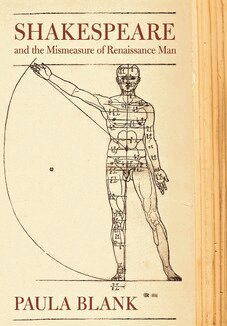
    Shakespeare and the Mismeasure of Renaissance Man

    AvPaula Blank

    Inbunden, Engelska, 2006

    758 kr

    Beställningsvara. Skickas inom 10-15 vardagar. Fri frakt över 249 kr.

    Beskrivning

    Shakespeare's poems and plays are rich in reference to "measure, number, and weight," which were the key terms of an early modern empirical and quantitative imagination. Shakespeare's investigation of Renaissance measures of reality centers on the consequences of applying principles of measurement to the appraisal of human value. This is especially true of efforts to judge people as better or worse than, or equal to, one another. With special attention to the Sonnets, Measure for Measure, Merchant of Venice, Othello, King Lear, and Hamlet, Paula Blank argues that Shakespeare, in his experiments with measurement, demonstrates the incommensurability of the aims and operations of quantification with human experience.From scales and spans to squares and levels to ratings and rules, Shakespeare's rhetoric of measurement reveals the extent to which language in the Renaissance was itself understood as a set of alternative measures for figuring human worth. In chapters that explore attempts to measure human feeling, weigh human equalities (and inequalities), regulate race relations, and deduce social and economic merit, Blank shows why Shakespeare's measures are so often exposed as "mismeasures"—equivocal, provisional, and as unreliable as the men and women they are designed to assess.

    Produktinformation

    • Utgivningsdatum:2006-07-26
    • Mått:152 x 229 x 24 mm
    • Vikt:907 g
    • Format:Inbunden
    • Språk:Engelska
    • Antal sidor:232
    • Förlag:Cornell University Press
    • ISBN:9780801444753
    • Utmärkelser:A Main Selection of The Readers' Subscription

    Utforska kategorier

    • Litteraturvetenskap inom Skönlitteratur

    Mer om författaren

    Paula Blank is Associate Professor of English at the College of William & Mary. She is the author of Broken English: Dialects and the Politics of Language in Renaissance Writings.

    Recensioner i media

    Shakespeare and the Mismeasure of Renaissance Man succeeds in combining wide-ranging interdisciplinary comment with minute scrutiny of language and verse. It is a satisfying read and one that will yield a wealth of interesting observations to scholars of Shakespeare and of early modern culture.(Times Literary Supplement)