• Fri frakt över 249 kr
  • •
  • Snabba leveranser
  • •
  • Billiga böcker
Kundservice

Du är på sajten för privatpersoner.

Företag, bibliotek eller offentlig verksamhet?

Du handlar på classic.bokus.com, där alla dina funktioner finns intakta.
Till classic.bokus.com
Bokus logotyp. Gå till startsidan.
  • Erbjudanden
  • Nyheter
  • Student
  • Topplistor
  • Barn & ungdom
  • Bokus Play
  • E-böcker
  • Pocketböcker
  • Spel & pussel

10% rabatt på allt med kod: NYSTART10 →

Sidfot

Mina sidor

    Hjälp

    • Kundservice
    • Vanliga frågor och svar
    • Frakt och leverans
    • Retur vid ångerrätt
    • Reklamera vara
    • Betalning
    • Köpvillkor
    • Allmänna villkor
    • Information om webbplatsens tillgänglighet

    Om Bokus

    • Om oss
    • Pressrum
    • För studenter
    • För företag
    • För bibliotek och offentlig verksamhet
    • För leverantörer
    • Hållbarhet

    Populärt

    • Aktuella erbjudanden
    • Presentkort
    • Studentlitteratur
    • Nya böcker
    • Topplistor
    • Signerade böcker
    • Engelska böcker

    Inspiration

    • Boktips
    • BookTok
    • Populära bokserier
    • Barnbokskaraktärer
    • Populära författare
    Logotyp för Bokus
    Följ oss på Facebook (extern länk)Följ oss på Instagram (extern länk)Följ oss på YouTube (extern länk)Följ oss på TikTok (extern länk)
    bokus @ CookiesAnpassa cookiesIntegritetspolicyKöpvillkor
    Till Citymail hemsida (extern länk)Till Budbee hemsida (extern länk)Till Postnord hemsida (extern länk)Till Schenker hemsida (extern länk)Till Early Bird hemsida (extern länk)Till Walleys hemsida (extern länk)
    1. Samhälle och politik
    2. Politik och statsskick
    3. Internationella relationer

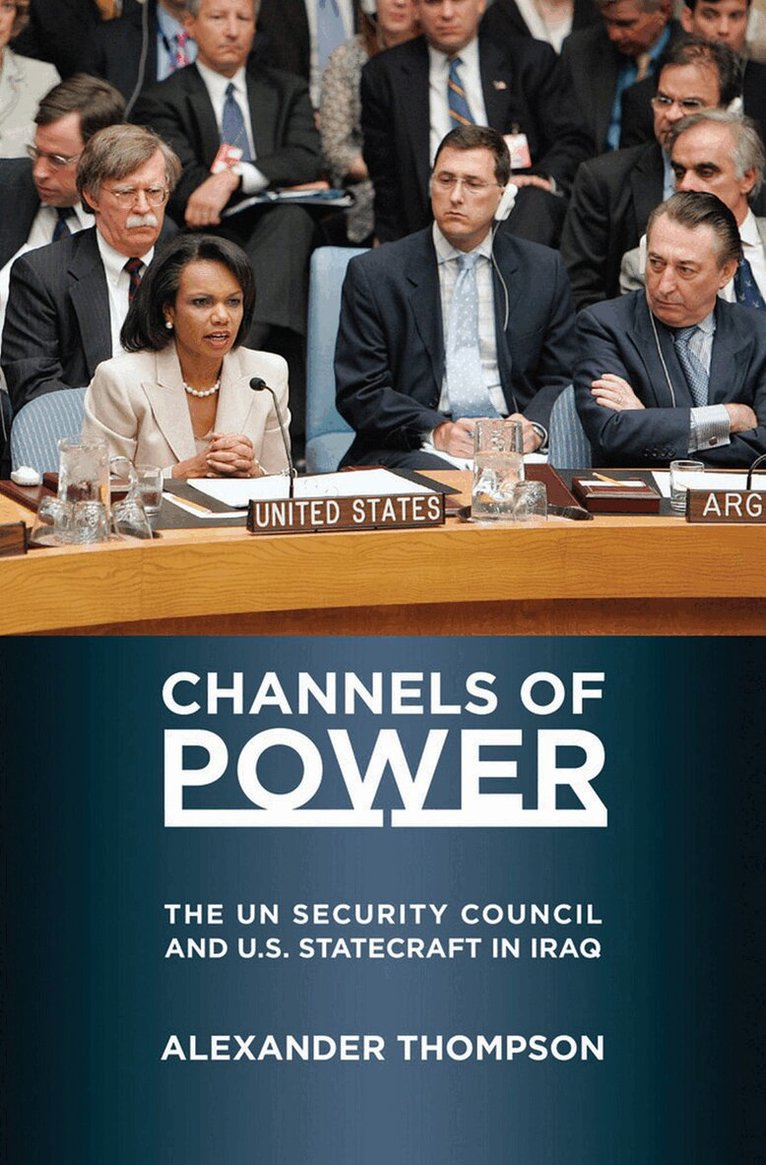
    Channels of Power

    The UN Security Council and U.S. Statecraft in Iraq

    AvAlexander Thompson

    Inbunden, Engelska, 2009

    722 kr

    Beställningsvara. Skickas inom 10-15 vardagar. Fri frakt över 249 kr.

    Fler format och utgåvor

    Häftad

    350 kr

    Beskrivning

    When President George W. Bush launched an invasion of Iraq in March of 2003, he did so without the explicit approval of the Security Council. His father's administration, by contrast, carefully funneled statecraft through the United Nations and achieved Council authorization for the U.S.-led Gulf War in 1991. The history of American policy toward Iraq displays considerable variation in the extent to which policies were conducted through the UN and other international organizations.In Channels of Power, Alexander Thompson surveys U.S. policy toward Iraq, starting with the Gulf War, continuing through the interwar years of sanctions and coercive disarmament, and concluding with the 2003 invasion and its long aftermath. He offers a framework for understanding why powerful states often work through international organizations when conducting coercive policies-and why they sometimes choose instead to work alone or with ad hoc coalitions. The conventional wisdom holds that because having legitimacy for their actions is important for normative reasons, states seek multilateral approval. Channels of Power offers a rationalist alternative to these standard legitimation arguments, one based on the notion of strategic information transmission: When state actions are endorsed by an independent organization, this sends politically crucial information to the world community, both leaders and their publics, and results in greater international support.

    Produktinformation

    • Utgivningsdatum:2009-03-06
    • Mått:152 x 229 x 25 mm
    • Vikt:907 g
    • Format:Inbunden
    • Språk:Engelska
    • Antal sidor:280
    • Förlag:Cornell University Press
    • ISBN:9780801447181

    Utforska kategorier

    • Internationella relationer inom Samhälle och politik
    • Mellanösterns historia inom Historia och arkeologi

    Mer om författaren

    Alexander Thompson is Associate Professor of Political Science at The Ohio State University.

    Recensioner i media

    Thompson's books adds to the small but growing body of work addressing why powerful countries would channel foreign policies through IOs. A major strength of Channels of Power is that it pays serious attention to theory development, generating falsifiable hypotheses about state behavior and international reaction to activity at the Security Council. Channels of Power is very well written and researched and its an important contribution to the literature on international organizations and security policy.- Terrence Chapman (Political Science Quarterly)

    Innehållsförteckning

    • PrefaceChapter 1. The Power of International OrganizationsIOs and Information TransmissionStatecraft and IOsThe United Nations and the Legitimation of ForceCase Selection and OutlineChapter 2. Coercion, Institutions, and InformationThe Politics and Costs of CoercionInstitutions and InformationCoercion through IOsTwo Pathways of Information TransmissionInstitutional Variation and the Security CouncilAlternative ArgumentsObservable Implications and Research DesignChapter 3. The Security Council in the Gulf War, 1990–1991Background and EventsChoosing (How) to InterveneSignaling Intentions to State LeadersTransmitting Policy Information to Foreign PublicsAssessing the Role of LegitimacyChapter 4. Coercive Disarmament: The Interwar YearsChanneling Power between the WarsThe Postwar HoneymoonCracks in the CoalitionThe Decline of UN InspectionsDesert Fox and Its AftermathThe Evolution of U.S. Coercive StrategyReviving Inspections: A Divided CouncilChapter 5. The Second Iraq War: Down the UN Path, 2002–2003From September 11 to IraqAppealing to the General AssemblyBack to the Council: Resolution 1441Renewed InspectionsA Second Resolution?Explaining U.S. MotivationsChapter 6. The Second Iraq War: Bypassing the Security CouncilWas It a "Unilateral" Policy?The Costs of Working through the UNSensitivity to IO ConstraintsRegional Options: Constrained Forum ShoppingInternational Reactions to Iraq 2003The International Political Costs of the WarChapter 7. Conclusion: How the Security Council MattersMultilateralism in U.S. Foreign PolicyBeyond the SuperpowerThe Security Council as a Political InstitutionAppendix: Selected Security Council ResolutionsBibliographyIndex